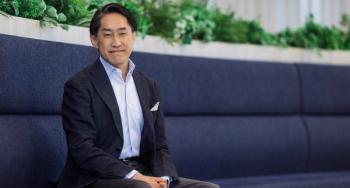
Astellas CEO Naoki Okamura is putting a “patient axis” operating model, a broader portfolio of strategic brands and a new generation of science to work in the company’s bid to return to record growth.
Jeff Golfman, founder and president of Send 123, in a conversation with Pharmaceutical Executive, discusses how rising geopolitical tensions around Iran and broader global disruptions are reshaping pharmaceutical and medical supply chains.
In a conversation with Pharmaceutical Executive, Jeff Golfman, founder and president of Send 123, discusses how and why pharmaceutical and medical supply chains are being disrupted and notes some alternative ways company’s can better prevent supply chain disruptions.
Drawing on lessons from the Covid-19 pandemic, he explains how shrinking global capacity, shipping bottlenecks, and regional instability are driving up costs and threatening access to critical therapies such as vaccines, cancer treatments, and insulin. Goffman also outlines practical strategies for procurement leaders, emphasizing diversification beyond single-source suppliers, building buffer inventory, leveraging AI-driven purchasing tools, and reconsidering traditional RFP processes in favor of more collaborative, value-focused vendor relationships.
A transcript of Golfman’s conversation with Pharmaceutical Executive can be found below.
Pharmaceutical Executive: As tensions around Iran raise the risk of disruption in the Strait of Hormuz, which pharmaceutical supply chains, are
Jeff Golfman: What we're seeing right now, not just in medical supply or pharmaceutical supply, but what we're seeing in all industries is as supply is shrinking, it means that availability is also shrinking. That means the prices are going to go up, right? So yes, it's impacting pharmaceutical and medical, but it's also impacting every facet of our lives, every facet of our businesses, and that's all the way around the world. I think that's first and foremost, its impacting everything.
In terms of medical specifics, we at Send 123 supply a lot of doctors’ offices and a lot of pharmacies, also some medical supply companies as well, and what we're seeing right now is definitely there's a restriction in supply. There's less supply available because there's less ships available and prices are going up.
It's a very tricky situation in the region, because you've got India, that's so close there. You got Europe, that's so close, you got Asia, that's so close, and so you've got a very high percentage of the world's population in a very close proximity to this conflict, and that's impacting everything. As an example, you could see things like vaccines and cancer therapies and insulins and other stuff that's coming out of that region that the rest of the world relies on that are immediately impacted. I think India, especially Pakistan, you look at Dubai, the entire region is impacted right now.
PE: From a procurement standpoint, how should teams
Golfman: One of the issues, especially in pharmaceuticals, is if there's shelf life on that product. Some products might have a one year or five year shelf life, let's say, but if there's something that's got a very short shelf life that can expire, that's a big risk that that product can go stale, it can expire, it can overheat, whatever, have you, and that will then further shrink supply.
So like right now, we have a bottleneck, because supply has gone down, and shipping is harder to find, and again, we're seeing that all over the world, like, if we're shipping shoes or clothing, or we're shipping food, it's impacted, and it's going to impact the pharmaceutical and medical side as well, because there's just less ships available, there's less trucks available, there's less cargo that's available, so prices go up.
I think the biggest risk right now is anything with an expiry date that's in that region or tied up in that region could be a time sensitive problem in terms of how would this impact us, or how do we move forward from here? I think we all have to look at the lessons we learned from the pandemic, and they're very similar lessons to today, in that when supply chains shrunk and we couldn't get hand sanitizers or toilet paper or we couldn't find those kind of everyday products that we need for our houses and our businesses, how did we adjust? Well, you have to diversify. I would say that's the number one lesson that we at Send 123, took away in our company.
If you're single sourcing, I think that's the biggest lesson that came out of the pandemic and you see this in natural disasters, you see it in conflicts around the world, that if you're single sourcing, issues may arise. Let's say you're sourcing from that region that has a conflict that's going to impact you, but if you have multiple suppliers, and if you've diversified your supply chain and your secondary suppliers can pull from other regions, then you're going to have less impact, you're going to have less risk. You're going to have less problems from these conflicts. I would say the lessons that we should learn is, how do we prevent supply chain disruptions in our homes and in our businesses?
As an example, in our house we buy in bulk, and a lot of businesses are buying in bulk rather than relying on just in time production, just in time delivery, or same day delivery, like we're so used to in our in our fast society. Well, what happens if that supply chain breaks down? Well, then what? What are you going to do? That's why I think diversification and having excess supply, having several weeks or several months of inventory on hand allows you to manage the kind of ups and downs of these global things.
PE: When traditional supply routes or suppliers become unreliable, what
Golfman: One of the things that we do for our clients at Send 123, is we track country of manufacturing for every product that is sold through our platform, so you could do sort of a like tactical audit, internal audit of where of all your supplies are coming from around the world, and then start making decisions to diversify that. So, if all your stuff is coming from, let's say, Asia, or from South America or from the U.S., you'd be vulnerable to situations in those regions, whether it be man-made or natural or what have you, whatever kind of supply chain conflict or shocks happen, you would be vulnerable to those.
I would say the first one is to go do a self-audit, or bring in an expert to do that audit for you, then start looking to see if you move away from a just in time delivery to a longer delivery time, keeping a little bit more inventory on hand so that you have a little bit of a buffer, and then start looking at the AI, tools that are out there that are available to help you look at your supply chain and look at ways that you can diversify and make better buying decisions.
Again, I think what we've learned, and I think a lot of procurement specialists make this mistake that they look at a product, and they say, oh, this product, let's say, is $1 and this product is 80 cents. Well, then let's go with the 80 cents choice, but that's not always the best decision. Yes, it's 20% cheaper, but what if it is different payment terms, or maybe it's not the same quality, or maybe it doesn't have the same guarantee, or maybe it doesn't perform in the same environments, or maybe it takes longer for it to arrive, and your capital is out for longer.
I think you have to look at best overall solution in supply chain, and I would argue that running an RFQ, RFP style of purchasing is hurting your business, because it's driving everybody to the bottom, not driving you to the best solution. The way to do procurement in a stronger way is you shortlist maybe two or three vendors. It's not through an RFP. It's not through an RFQ. You shortlist a few vendors, and you get really deep with those vendors, and you come up with the best possible solution as a collaborative approach, I would argue that a collaborative approach to procurement is a much stronger play than just looking at best price, because best price is not a long-term solution. It's a drive to the bottom, and ultimately, it's going to be a drive to inefficiency and higher costs.