

Feature|Videos|November 6, 2026
Navigating Challenges When Adopting New Technologies
Pharma leaders on building trust in AI through transparency and validation—and helping teams adapt as analytics roles evolve with the technology.
Advertisement
Episodes in this series







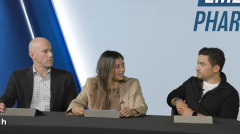



Building trust in AI tools requires transparency from the ground up. A tool designed to predict lifetime cardiovascular risk, for example, needs clear explanations of how it was built, how its underlying data is validated, and why its outputs can be trusted by both consumers and physicians. Broad adoption is unlikely to happen quickly — it will depend on published evidence, transparency about methodology, and potentially FDA approval or endorsement from recognized industry groups.
At the team level, the path forward runs through experimentation. Encouraging people to explore what tools like Codex can do opens up possibilities, but moving from experiment to production requires rigor around data security, privacy, coding standards, and validation. As AI takes on more analytical work, roles in analytics may shift toward data structure and validation rather than disappear — and leaders have a responsibility to explain that evolution clearly, so team members understand how their work is changing rather than fearing they’re being replaced.
Advertisement
Related to this article

As Medicare negotiation, PBM reform, and cash-pay channels converge, winning on auditable net value matters more than cutting list prices.

Hims & Hers partners with Eli Lilly to sell Zepbound and Foundayo directly on its platform, Novo Nordisk terminates its research collaboration with Korro Bio, and the FDA grants accelerated approval to Johnson & Johnson’s Rybrevant Faspro in head and neck cancer.

The agreement provides access for prescribed patients to Lilly's obesity medicines self-pay pricing starting at $149 per month without leaving the platform.

The termination ends a cardiometabolic RNA-editing partnership that was paused for 12 months, closing out a deal under which Korro earned no milestone payments.

Accelerated approval of subcutaneous Rybrevant Faspro (amivantamab) based on a 42% response rate in 102 patients; a phase 3 confirmatory trial is under way.
When tumors shift, old treatments stop working. Dr. Brian Corgiat explains why real-time tumor profiling is critical to effective therapy.
ANI Pharmaceuticals makes an offer to acquire Egetis Therapeutics as Egetis separately sells its priority review voucher for $190 million, Novartis exits its BrainTransporter deal with BioArctic 14 months after signing, and Ignite Proteomics’ Dr. Brian Corgiat on improving how tumors are tested after recurrence.

ANI Pharmaceuticals makes an offer to acquire Egetis Therapeutics, as Egetis separately agrees to sell its priority review voucher for $190 million.
Advertisement
Advertisement
Trending on PharmExec
1
ANI Pharmaceuticals to Acquire Egetis Therapeutics, Egetis Sells Priority Review Voucher for $190 Million
2
FDA Grants Accelerated Approval to Rybrevant Faspro in Head and Neck Cancer
3
Pharmaceutical Executive Daily: Nxera Licenses EP4 Agonist to AbbVie
4
Hims & Hers Partners with Eli Lilly to Sell Obesity Medicines
5