
Feature|Articles|June 12, 2026 (Updated: June 12, 2026)
- Pharmaceutical Executive: June 2026
- Volume 46
- Issue 5
Rick Winningham: Building Leaders Behind the Pipeline
Author(s)Nicholas Jacobus
Listen
0:00 / 0:00
Key Takeaways
- HBA recognition reflects a mentorship philosophy that prioritizes mentee outcomes, emphasizing that leadership development is inseparable from advancing scientifically rigorous, high-integrity drug programs.
- Early oncology and virology work crystallized a mission orientation: biopharma decisions tangibly affect morbidity, hospitalization and survival, demanding disciplined judgment and accountability.
Fresh off the HBA's Honorable Mentor award, Rick Winningham, CEO of Theravance Biopharma, reflects on a career defined by cultivating the cultures driving the science.
Advertisement
Rick Winningham’s leadership has long been measured not only by the organizations he has helped build but also by the medicines they advance and the leadership culture he has helped carry beyond any one company. As longtime CEO of South San Francisco-based Theravance Biopharma, he has spent nearly three decades mentoring leaders and building a culture grounded in scientific rigor and high integrity. For Winningham, mentorship is not separate from pipeline progress; it is how companies cultivate the judgment and leadership depth required to advance medicines with rigor and turn scientific progress into meaningful patient impact. This year, the industry took notice.
At the 2025 Healthcare Businesswomen's Association (HBA) gala in San Diego, Winningham was named HBA’s Honorable Mentor of the Year, an honor he describes as one of the most meaningful recognitions of his career. But ask him about it, and the conversation turns almost immediately to the people behind the nomination.
"It was one of the most memorable recognitions I've ever had in my life, professionally, not because of me but because of the people that were involved in nominating me," Says Winningham in an interview with Pharmaceutical Executive. "Looking at how successful they had become, and if I could have had a small impact on those people and their career arc, that's what was meaningful to me. The award sort of symbolized that."
His oldest daughter introduced him at the ceremony, adding personal resonance to a recognition rooted in his professional life. The moment underscored something Winningham has carried throughout his career, that the impact of biopharma is never confined to a company, a program or a product. It reaches patients, families, caregivers and loved ones whose lives are shaped by what medicine can make possible.
A mission that goes to the core
Long before Winningham became a biopharmaceutical CEO, he was drawn to the work by a sense of purpose rooted in the belief that medicine could change the course of a person’s life when it mattered most. After completing his graduate studies, he joined Bristol Myers Squibb at a time when the company’s pharmaceutical division was, by his own account, a relatively modest component of a larger enterprise.
“The pharmaceutical part of Bristol Myers was a very small part of the overall company,” he recalls. “It sounds odd now, but that’s the way it was in the mid-1980s.”
What drew him in was simple: the idea that a treatment, whether a pill, an injection or an inhaler, could keep someone out of a hospital. Medicine could meet people at some of their most vulnerable moments and change what came next, giving patients and families more time and more room to focus on what matters most to them. In those early years, he gravitated toward oncology and virology, areas where that purpose was especially clear and where the products being developed could, in the most direct sense, extend lives.
“Once I entered Bristol Myers, I became really attached to the mission of the company,” he says. “Specifically in oncology, where I spent a lot of my earlier years in the development of oncology, extending oncology products and enhancing the lives of patients [with cancer]. That just went to my very core. And to enable that, to work toward that mission — if you can’t be motivated by that, you need to check into your soul.”
That sense of mission also carries with it a weight of responsibility that Winningham has never shed.
“The decisions that you make, the actions you take, they can in fact improve others’ lives,” he says. “So you want to make sure that you’re making good decisions.”
From Big Pharma to a small startup
After 15 years at Bristol Myers Squibb, building commercial expertise across oncology, virology and anti-infectives, Winningham made a move that surprised some of his peers. He left one of the world's largest pharmaceutical companies for a small startup then known as Advanced Medicine.
It was a leap into uncertainty, but one that aligned with the very instinct he now passes on to younger leaders: Don't wait for the perfect moment.
That startup would eventually evolve into what is today known as Theravance Biopharma, a company Winningham has now led for 25 years.
When asked about his first big success, Winningham doesn’t rush to point to any single milestone or transaction. It's an answer that reveals an essential aspect of how he views his career.
"I wouldn't say there was sort of one success," he says. "I would say, as opposed to kind of one success, being able to work with some fantastic people early in my career at Bristol Myers, working in oncology, working in virology and advancing products both into development and into the market. Those were early successes that really motivated me to try and do it again."
Winningham’s desire to replicate the feeling, to be close to something that matters, was what drove him toward the startup environment.
"In a small company, you're so close to what's happening. Every decision is important. The values of the company are important because you've got to hire people that are aligned with the values of the company so that you're all behaving in the same way, such that you can achieve the mission of the organization," Winningham tells Pharm Exec.
No rest in respiratory
Over its history, Theravance has been a meaningful contributor to the treatment of respiratory disease, particularly chronic obstructive pulmonary disease (COPD), a condition that affects millions of Americans and remains one of the leading causes of hospitalization and death in the United States.
The company collaborated with GSK on the development of several significant respiratory medicines, including Breo Ellipta, Anoro Ellipta and Trelegy Ellipta. More recently, in partnership with Innoviva, it developed Yupelri (revefenacin), a once-daily nebulized bronchodilator that offers patients with COPD a simpler inhalation option.
Today, Yupelri is the centerpiece of Theravance's commercial focus. "It treats about 5,700 to 5,800 people every week in hospitals in the United States," Winningham notes. "And many of those people go on to take the medicine to help them breathe after their hospitalization." The goal, he says, is straightforward: maximize the reach of a product that demonstrably improves lives while continuing to generate value for the company's shareholders.
Looking back across those 25 years, Winningham sees an industry that is almost unrecognizable from the one he entered and views that transformation as an unambiguous good.
"The industry has grown tremendously, and as a result of that growth, it is extraordinarily competitive," he says. "But the plus is that the insight we have into biology and into disease enables the industry to solve more problems and to treat more patients, to see their healthcare improve and their ability to live their lives improve because of the innovations of this industry."
The competitive intensity, he argues, has been a catalyst rather than a constraint. "That level of competition has created the opportunity to solve problems such that we can treat diseases today that we would have never dreamed we could have made a difference in 25 years ago. All that means is what's possible 25 years from now, if we keep building on the knowledge that we have today with energy, enthusiasm and with the patient really at the center of the target."
The mentor before the mentor
Winningham’s approach to mentorship has roots in his own early experience. Long before he became known for developing leaders, he was the beneficiary of people who took the time to guide him.
By Winningham’s own description, he was the beneficiary of unusual generosity. Mentors at university noticed something in him and redirected it. Senior figures at Bristol Myers Squibb sat down and explained how drugs were developed, how decisions were made and what it took to lead. He also credits Dr. P. Roy Vagelos, the former CEO of Merck, who later served as chairman of Advanced Medicine.
"Dr. Vagelos was the chairman, and he hired me, and he was a fantastic mentor to me," Winningham says. "I wouldn't be who I am today without all of those mentors."
Winningham also notes another important mentor in his life: his wife.
"That includes my wife,” he says. “We've been married over 40 years, and she has always been a terrific mentor to me."
The point, for Winningham, is that mentorship is often found in people who are willing to invest their time, perspective, candor and belief in someone else. Having benefited from that kind of guidance throughout his life and career, he came to see mentorship as a responsibility he could carry forward, first in graduate school, where he taught, and then increasingly through his role as CEO, where the platform for mentorship expanded to an organizational scale.
"That is exactly — somebody did this for me," he says, when asked what first prompted him to mentor others. "Somebody sat down and explained to me a particular process, a particular insight, that helped advance me, my career and the mission of the organization. And I felt that I needed to do that."
What he came to understand, over time, is that effective mentorship is never really about the mentor. It is about the other person, their goals, their arc and their potential.
"It's not about me," he says plainly. "It's about the mentee. If they have successfully achieved their goal, then I am elated for them, and for some small role I might have played, because it is a small role. It's what those individuals choose to do, day in and day out, with their lives."
Leading at scale
Winningham's leadership philosophy, as he describes it, is grounded in a few deceptively simple principles: candor, high expectations, trust and a fundamental orientation toward the people around him rather than the architecture of the organization itself.
"I have high expectations of myself. I have high expectations of the people that work with me. And I believe in telling them the truth, even though it might be a little bit uncomfortable from time to time, because it will advance them in their career and advance the organization toward accomplishment of its mission."
For Winningham, that honesty is part of the responsibility of leadership, a way to help people grow while keeping the organization focused on its mission. He is careful to distinguish between having high expectations and demanding conformity. The goal, he says, is not to replicate himself but to help people develop their own judgment and capacity to lead. "My goal is not to create people that think like I do. It's exactly the opposite. It's about creating people and helping them become who they can be."
In practice, this means a significant investment of personal time, one-on-one conversations — even brief ones — to understand what each person is working on and what barriers he, as CEO, can help remove. "I want them to know I'm invested in them," Winningham says.
Applied across an organization, that kind of mentorship can create its own compounding return, a point he makes with a vivid image.
"If you can help others, if you can teach them skills and approaches to solving problems, then they're going to be more likely to pass that on to somebody else. And you know, that just creates ripples in a pond. You can really make a significant difference, not only on an organization, not only on an industry, but on an entire ecosystem."
Advice for the next generation
When Winningham turns to the subject of advice for emerging leaders, his counsel is both concrete and hard-won.
"Don't wait for the perfect time to take advantage of opportunity," he says. "There is never a perfect time. There are always trade-offs. Assess the trade-offs, see what the opportunity is and if, net-net, it's going to help you in your career, and you can help an organization succeed, take advantage of the opportunity and step forward."
He recommends building a circle of trusted advisers to help pressure-test major decisions, not to outsource judgment but to reinforce it. And once the decision is made, commit to it.
"Opportunities don't come along every day,” adds Winningham. “You've got to be ready to seize it."
Looking forward
Theravance's near-term priorities are focused squarely on maximizing the commercial opportunity for Yupelri while continuing to generate shareholder value as a public company. Winningham is measured but resolute on the subject of what lies ahead.
"Our focus is on growth and value," he says. "We've faced challenges, as every company does. But it's about overcoming those challenges in pursuit of the mission."
The mission, for Winningham, has never really changed. It was articulated in the mid-1980s, when a young business professional decided that an industry capable of keeping people out of hospitals was one worth spending a career in. It has been refined through decades of oncology, virology and respiratory medicine. It has been transmitted through mentorship to hundreds of others, who now carry it forward in their own organizations.
“Mentorship matters because people matter,” he says. For Winningham, that belief is deeply connected to the mission of advancing medicines that can change lives.
Building a strong pipeline starts with building and mentoring the people behind it. By investing in their growth, companies strengthen the leadership needed to carry that work forward for patients, today and for years to come.
Articles in this issue
4 months ago
Driving Progress4 months ago
The New Capital of Care in Rare DiseaseAdvertisement
Related to this article
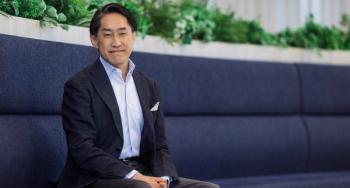
Astellas CEO Naoki Okamura is putting a “patient axis” operating model, a broader portfolio of strategic brands and a new generation of science to work in the company’s bid to return to record growth.

Thomas Appio has been named interim CEO of Bausch + Lomb, a move coinciding with an expected upward revision to the company’s full-year guidance.
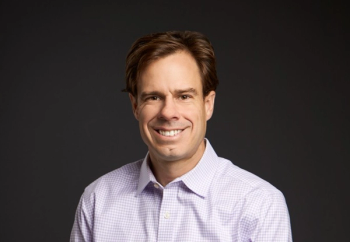
A conversation with Geoffrey T. Sanzenbacher, a research fellow at the Center for Retirement Research.

A passing FDA inspection tells pharma senior leadership very little about whether the next significant revenue vulnerability is already taking shape. But continuous, AI-enabled quality management maturity (QMM) has the potential to do so months before the issue reaches the realm of P&L.
Waiting for perfect data before deploying AI is a trap — and why 60-70% accuracy is often good enough to start.
Fox Rothschild's Mark Wagner on why the FDA counts 70 drugs in shortage while ASHP counts 188 — and what's driving the gap.
The FDA approves Roche’s Tecentriq for a subset of colon cancer patients, TRexBio and Retension Pharmaceuticals price new IPOs, and a Pharmaceutical Executive feature examines what it takes to turn precision medicine’s biological gains into deliverable therapies.

As established gains in personalized and targeted therapy have enabled increasingly precise approaches to disease, novel technologies are expanding what is possible while creating new challenges for drug developers.
Advertisement
Advertisement
Trending on PharmExec
1
The Manufacturing Issues That Continue to Contribute to Drug Shortages
2
Bausch + Lomb Appoints Thomas Appio as Interim CEO
3
AI and the Apprenticeship Gap: Rethinking Work for Experienced and Early-Career Talent in Professional Services
4
Viatris Acquires Pacira BioSciences for $1.65 Billion
5