- Pharmaceutical Executive: June 2026
- Volume 46
- Issue 5
China Pharma Trends: Premium Pricing and Priority Access for True Innovations
China’s latest policy guidance sets new expectations for the pricing and reimbursement of novel drugs, and highlights the growing role of real-world evidence.
2026 marks the beginning of the 15th five-year plan for China, and biomedicine is featured prominently as a pillar industry in the nation’s push toward an innovation-driven economy. On a sunny weekend in March, global pharma CEOs gathered in Beijing for the China Development Forum, a perfect venue to demonstrate commitment and to provide input on industry policies, with drug pricing and access as a key topic.
Three weeks later, China’s State Council issued a guidance on the framework for drug pricing. With the style typical of the top administrative authority, it builds on many existing policies already in practice, outlines overarching considerations across different life cycle stages and channels in broad strokes, while highlighting a few new elements around launch price setting, multi-layered reimbursements and real-world evidence (RWE) among other things.
First of all, the guidance places a strong emphasis on encouraging premium launch pricing for new innovative therapies. Theoretically, drug companies can set China launch prices at will but typically see market access challenges ranging from provincial tendering to hospital listing as well as cost-containment measures such as diagnosis-related group requirements. The new policy makes a clear distinction between innovative drugs and others and supports premium pricing and priority access for true innovations. It further states that price premiums could be maintained and even adjusted upward as appropriate if supported by robust RWE and clinical outcomes. While this may sound overly idealistic, the signaling effect is unmistakably refreshing and encouraging.
On the reimbursement front, the State Council guidance reiterates the positioning of the National Reimbursement Drug List (NRDL) formulary in covering basic health care needs, while highlighting the importance of alternative payment options such as commercial health insurance schemes, charities and special funds. In this context, the launch of the first C-List, also known as the Commercial Health Insurance Innovative Drug List, is of particular interest. Introduced last year, C-List is a unique hybrid of NRDL and commercial health insurance, designed to create synergy between the two and accelerate adoption of the latter.
The first C-List features 19 innovative drugs, including some high-value oncology therapies such as CAR-Ts and T-cell engagers, with annual treatment costs over $200,000, as well as rare disease drugs such as enzyme-replacement therapies for Gaucher disease, costing up to $300,000. In this regard, C-List does open up a new possibility without the price ceiling constraints and price-cut concessions typical of NRDL listing, while the actual uptake to date has seen large variance across different products and regions. In light of this, the State Council guidance calls for more concerted efforts to accelerate C-List landing.
Duly and timely but wanting in detail, how the policy would fare on the ground will be closely followed as an indicator for future listings.
Across the pricing, access and reimbursement dimensions, RWE is becoming an increasingly important consideration in China. In fact, compelling real-world data and China-specific evidence were behind some of the notable successes of the NRDL and the C-List last year, and the role of RWE has been further underscored in the State Council guidance, in a set of guidelines issued by the National Healthcare Security Administration (NHSA) earlier this year, and in the latest NRDL 2026 guideline issued in May.
Indeed, the 2026 NRDL and C-List processes are already underway. For the first time, NHSA introduced the pre-communication mechanism for NRDL comparators, so that Class 1 new drugs could finalize comparators prior to formal NRDL dossier submission.
The mechanism is welcomed by the industry as it helps to streamline the process and reduce uncertainty, and the 31 innovative drugs in the first batch have already received the first round of expert panel review results, with another opportunity to appeal if needed.
China’s pharma landscape continues to see new developments and will be shaped by the latest policies going forward. Embracing these changes can be the key to success, especially in a dynamic market like China.
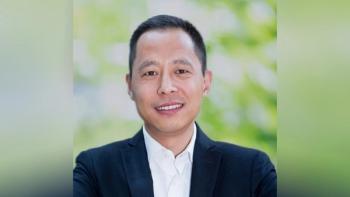
Bruce Liu is a partner at Simon-Kucher & Partners, leading its life sciences division in greater China.
- With contributions from Shiying He and Elena Zheng, Simon-Kucher Shanghai office.
Articles in this issue
4 months ago
Driving Progress4 months ago
The New Capital of Care in Rare DiseaseRelated to this article