
Feature|Articles|August 13, 2026
- Pharmaceutical Executive: August 2026
- Volume 46
- Issue 6
What C-Suite Readiness Really Requires
Author(s)Mike Hollan
Fact checked by: Ronald Panarotti
Listen
0:00 / 0:00
Key Takeaways
- Building a high-performing R&D organization hinges on recruiting exceptional functional leaders who can translate compelling biology into executable development, regulatory, and launch pathways.
- Effective stakeholder management requires synthesizing complex oncology data into simple, credible options that build trust with boards, investors, and scientific experts.
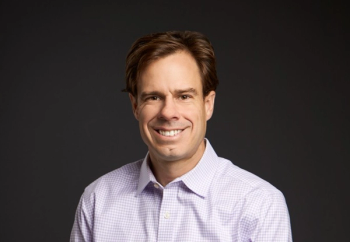
Dr. Nick Botwood, chief medical officer and head of research and development at Syndax Pharmaceuticals, draws on his career to explain what separates good R&D organizations from great ones.
Advertisement
Throughout his career, Dr. Nick Botwood, M.B.B.S., has worked across multiple major sectors of the industry. These include clinical development, regulatory strategy, medical affairs, and commercial strategy. Mastering one of these roles is an impressive feat. Being able not just to master these roles but also to move seamlessly between them is something else entirely.
As both head of research and development (R&D) and chief medical officer (CMO) at Syndax Pharmaceuticals, Botwood has learned to balance the various aspects of the industry.
He says, “For me, when you become a CMO or head of R&D, the most important thing is hiring the best talent and building a team of exceptionally capable leaders. That's what really differentiates us at Syndax as an R&D organization. We have a proven track record [three FDA approvals in the past two years], driven by a team of leaders across these disciplines who have taken compelling science, translated it into innovative clinical development plans, driven it through regulatory submissions, and supported the commercialization of important medicines for patients. That is our special sauce. You can't do that without the right leaders, and it's a privilege to be able to integrate all of those leaders into a comprehensive R&D strategy.”
Clarity from complexity
Part of being a leader in the pharma industry is knowing how to present to both a board of directors and the wider investment community. Although this is true of other industries, pharma requires leaders to find ways to make complex science easy for someone on the business side to understand. Doing this successfully requires an ability to build trust with these various groups.
“The only true demonstration that you've really understood a complex problem is your ability to synthesize it and create clarity and simplicity around it,” he says. “What we do [at the end of the day, we're trying to cure cancer] is genuinely complicated. But you can tell when someone has truly understood a problem because they can summarize it, simplify it, and present clear options despite the underlying complexity. Creating clarity from complexity is a guiding principle when I'm speaking with any stakeholder.”
According to Botwood, the best way to develop these skills is to build fluency across the various sectors of the industry. And the best way to do that, according to him, is from experience.
He explains, “It helps enormously to have experience working in areas like clinical development, regulatory strategy, or medical affairs, because that gives you fluency across all of them. Once you have that fluency, the biggest challenge is integrating and switching between them depending on your audience. If you're speaking with a thought leader, you want to be able to go deep on a clinical development plan. If you're speaking with an investor, you want to convey the vision for R&D and how you're creating value for patients.”
Ultimately, for those looking to make their way to the C-suite, Botwood says there’s no substitute for experience. Leaders who pull from their own experiences understand situations better and are prepared for both problems and opportunities.
“You can't teach it,” he says, “you have to have been in different situations and navigated them. That experience also enables you to attract and develop the best people, which is a huge part of C-suite readiness. The higher the leadership role you take, the more important it becomes to bring in great talent, because you simply cannot do all of it yourself. Attracting exceptional people and then bringing out the best in them is probably the most important thing you can do as a C-suite leader.”
He continues, “That's really what has driven our success at Syndax and why we have the R&D organization we do. It comes down to the talent of the leaders within it.”
A shared vision
According to Botwood, it’s important to have diverse opinions around the table. However, as important as it is to bring together people with different perspectives, it’s just as important to make sure that everyone gets on the same page.
“Engaging the team and establishing a shared vision are at the core of how I lead,” he says. “In my experience, when things go wrong, it's usually because people don't share a vision or aren't aligned around a common ambition. When everyone is pointed toward the same goal, teams tend to be successful. However, that requires careful thought and consistent communication.”
Articles in this issue
about 2 months ago
Pharmaceutical Executive: August 2026 Interactive Digital Editionabout 2 months ago
More Than Titles2 months ago
2026 Pharm Exec Top 50 Companies2 months ago
2026 Emerging Pharma Leaders2 months ago
Making the Smart Career Moves2 months ago
Finding the Universal Truth in a Drug's StoryAdvertisement
Related to this article

Astellas CEO Naoki Okamura is putting a “patient axis” operating model, a broader portfolio of strategic brands and a new generation of science to work in the company’s bid to return to record growth.

Roche licenses Rona Therapeutics’ ALK7-targeting RNAi candidate for obesity, while Pfizer partners with Enodia Therapeutics on Sec61 inhibitor discovery.

Thomas Appio has been named interim CEO of Bausch + Lomb, a move coinciding with an expected upward revision to the company’s full-year guidance.
A conversation with Geoffrey T. Sanzenbacher, a research fellow at the Center for Retirement Research.

As established gains in personalized and targeted therapy have enabled increasingly precise approaches to disease, novel technologies are expanding what is possible while creating new challenges for drug developers.

ESC 2026 marked a turning point — GLP-1s earn their first formal heart failure guideline recommendation and become a cardiometabolic platform.

A passing FDA inspection tells pharma senior leadership very little about whether the next significant revenue vulnerability is already taking shape. But continuous, AI-enabled quality management maturity (QMM) has the potential to do so months before the issue reaches the realm of P&L.

Caribou Biosciences is discontinuing its two allogeneic CAR-T programs and exploring strategic alternatives to maximize shareholder value.
Advertisement
Advertisement
Trending on PharmExec
1
Prediction Markets Expose a Gap in Pharmaceutical Vendor Contracts
2
The Bottlenecks That Slow Manufacturer Response to Increased Demand for Production
3
Bausch + Lomb Appoints Thomas Appio as Interim CEO
4
The Manufacturing Issues That Continue to Contribute to Drug Shortages
5