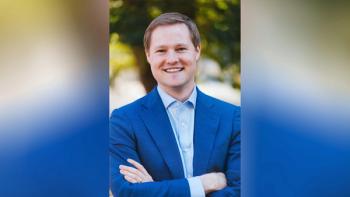
Transparency and infrastructure are equally critical. “You need trusted people…trying to give the facts really not colored by any judgment…just saying, look, this is the situation,” Marrazzo said, reinforcing that standing with science means clearly communicating both risks and evidence.
Lindsay Bealor Greenleaf
Beyond infectious disease, the principle of grounding decisions in evidence extends to policy.
In a separate conversation with Pharmaceutical Executive, Lindsay Bealor Greenleaf, head of market access policy strategy at ADVI, described how proposed most favored nation pricing models could reshape drug access and innovation.
While aiming at addressing cost concerns,Bealor Greenleaf cautioned that policy design must carefully consider downstream effects. “We’re very concerned about the innovation impact that would occur if those two policies are finalized,” she said, referring to Medicare proposals that could alter incentives for future drug development.
Evidence-based projections play a central role in that debate, as Bealor Greenleaf cited analyses suggesting that pricing constraints could reduce the number of new therapies reaching patients. “There was…a projection…that said just focusing on Part B with MFN pricing would result in 60 fewer drugs to launch over the next decade,” she noted, underscoring how data-driven forecasting informs policy risk assessment.
Yerem Yeghiazarians
In drug discovery, standing with science also means rethinking long-held assumptions.
Yerem Yeghiazarians, MD, co-founder and CEO of Soley Therapeutics told Pharmaceutical Executive, about a shift from single-target approaches towards a more systems-level understanding of disease biology.
“Most complex diseases do not reduce neatly to a single target or pathway,” Yeghiazarians said, pointing to high failure rates as evidence of the limitations of traditional models.
Soley’s platform instead focuses on how cells process environmental stress signals to determine survival or death. “We wanted to figure out a scientific question: how do cells determine their fate?” he explained. By leveraging cells as “the most powerful sensor,” the approach aims to decode complex biological responses and identify more effective therapeutic strategies.
Across all three conversations a common thread emerges: science is not static, but a process that requires rigorous evidence, open communication, and sustained investment.