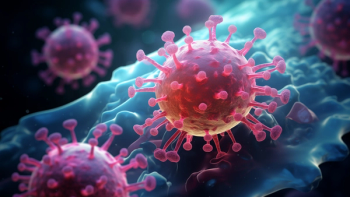
When a cell is used as a strong sensor, it can sense anything in its environment, not just the oxygen and nutrient level, but also drugs in the environment. The platform that we've created takes advantage of the cell as the most powerful sensor to sense different drugs in the environment, and we've able to decode that cellular information.
We can selectively screen drugs to increase the stress level in a cell and kill it if the indication is cancer or antimicrobials. Or we can revert that process to make the cell work better, live longer, and function properly. This is what the platform does. It took us over 10 years of work in academia at UCSF to create this image based, first in class platform.
PE: What was unique about Soley Therapeutics' approach to developing its core technology?
Yeghiazarians: Typically, for the last several decades, the traditional approach to drug development is that we think of a disease that we're interested in, then we think of a potential target within that disease, and then we try to discover drugs that bind a given target. And then we do the downstream experiments.
For most diseases, that's a great approach. For monogenic simple diseases, that works amazingly well. But most complex diseases do not reduce neatly to a single target or pathway, and despite advancements in science, unfortunately, many drugs for complex diseases don't end up working in patients.
In fact, there is over 90-to-95% failure rate for many reasons. One of them is a lack of understanding of the complexity of complex diseases. So, we've switched, or flipped, drug discovery 180 degrees.
We initially identify novel molecules that drive a desired sulfate. By doing that, we can filter out broadly toxic molecules early. Once we have a drug of interest, we then define key targets, networks, and mechanism of action at the whole cellular level, not simply at an upstream target. Then we match the compounds to disease biology to identify disease indications and which patients with that disease we want to enroll in upcoming clinical trials.
PE: Can damage to a stressed cell be reversed?
Yeghiazarians: For many non-oncology diseases, the cells are exposed to many different stressors over time. The stress level in the cell goes up, and then that cell becomes highly dysfunctional. For example, take islet cells in the pancreas. If over time, they become highly dysfunctional. They stop producing insulin. You can take Parkinson's disease, the dopaminergic releasing cells, they become highly dysfunctional, and they stop producing dopamine, and that leads to the Parkinsonian symptoms.
In hair loss, hair follicles become highly stressed, and they become highly dysfunctional until the cell is completely dead. You can actually intervene and revert that process. Think of it as IPs, but without gene manipulation. Instead, it uses small molecules to revert that cellular stress to make it better, functional, and healthier and allow it to survive longer. This is also applicable to many other diseases.
PE: How effective has Soley's discovery process been?
Yeghiazarians: Yes, it's been fairly effective. Over just the last two-to-three years, we have a robust and growing pipeline in oncology. We have discovered over 10 novel oncology assets, all first in class, novel chemical entities with new mechanism of action. With the recent funding that we have raised, we are now in a position to take two of these lead compounds to clinical trials.
We just announced that our first molecule is going to be a treatment for the hematologic indication acute myeloid leukemia, and we expect that trial to start towards the end of this year. The second drug in cancer will have a clinical trial starting in solid tumors within the next year. So, it's been quite productive.
We use our own platform to discover and develop our own assets. There's no disconnect between our platform and our clinical programs. We do not license any drugs from elsewhere.