
Feature|Articles|March 13, 2026
- Pharmaceutical Executive: March 2026
- Volume 46
- Issue 2
Andrew Hall: The Discipline of Conviction
Author(s)Michael Christel
Listen
0:00 / 0:00
Inside Consano Bio’s bet on first-in-class nerve repair—and what it takes to lead an early-stage biotech through uncertainty.
Advertisement
For clinical-stage biotechnology companies, progress is rarely linear. Capital cycles tighten, regulatory expectations shift, therapeutic markets evolve. Meanwhile, amid such dynamics — throw in future drug pricing and patient access considerations for good measure — scientific promise and early-stage innovation must continually prove itself. For Andrew Hall, a veteran of Big Pharma-turned biotech builder, he has spent much of his recent career operating inside those constraints — and learning how to lead through them.
Today, as CEO of Consano Bio, an early-stage biotech based in Greater Boston, Hall is helping to advance a first-in-class therapeutic approach aimed at repairing damaged nerves in patients with chronic radicular pain (radiculopathy), including sciatica. It is a strategy, Hall notes in an interview with Pharmaceutical Executive, that runs counter to much of the pain management treatment landscape, which has historically focused on symptom relief rather than disease modification. It is also a strategy that reflects lessons Hall accumulated over the course of several years spent inside large biopharma organizations, where scale, structure, and risk tolerance are fundamentally different from those of an early-stage company.
“We’ve [recently] opened a 24-patient study, with three cohorts,” Hall says, referring to Consano’s lead investigational drug, C-1101, an injection being developed for chronic sciatica, a common and often debilitating condition. “It’s the first trial of this new therapeutic category in people. The primary endpoint is safety; we are also measuring the clinical efficacy endpoints important for FDA approval, and while the study is small, we hope to see signs of clinical improvement.”
The stakes for the targeted patient population — reportedly, up to 80% of people will experience sciatic pain during their lifetime — are potentially much larger.
“If it reads positively, the whole field changes, which is massive for people living in pain,” Hall adds on Consano’s novel treatment approach, which focuses on harnessing the biology of platelet-derived proteins.
Path and preparation
Prior to stepping into biotech leadership, starting initially in Big Biotech with Celgene, Hall built his foundation through a combination of formal business training and operational experience inside large pharma. He earned a Bachelor of Medical Science (honors) from the University of Melbourne, before picking up a master’s degree from the Royal Melbourne Institute of Technology. The dual study focus would later shape Hall’s emphasis on translating science into strategy.
The Australian native would go on to spend more than 15 years at Schering-Plough, Bristol Myers Squibb (BMS), and Merck & Co. in leadership roles spanning Asia Pacific, Europe, and the U.S.
After working as a product manager with BMS, Hall joined Merck in 2005, where he served more than nine years in a series of commercial and franchise leadership positions in multiple geographies. The roles exposed Hall to global markets, portfolio planning, and the operational discipline required to scale innovation inside a multinational pharma manufacturer. The experience, he says, provided valuable early understanding of how promising and novel science must ultimately align with commercial execution, governance, and long-term value creation.
After Merck, Hall joined Celgene for a seven-year run during a period of rapid company growth and pipeline expansion, driven by its blockbuster multiple myeloma drug Revlimid (in late 2019, the oncology power, famously, would be acquired by BMS for $74 billion). While at Celgene, Hall led corporate development and pipeline strategy for immunology, as well as business development and strategic alliances, working on deals from discovery to commercialization.
Those responsibilities and his time, overall, immersed in large biopharma formed a lasting imprint on how Hall views leadership. At Celgene, for example, he says he learned early on how a strong scientific culture could coexist with disciplined decision-making and the willingness to tackle R&D risk swiftly and pragmatically — or to “fail fast,” as he describes it.
“Find out those risks early,” Hall tells Pharm Exec, “so you’re not burning investor capital through to something that you should have probably known to kill years ago. The mindset of seeing the risks, confronting them, and then finding the right people to get over them is what biotech is.”
Hall’s path to Consano moved a step closer when, in November 2020, he joined clinical-stage biotech IMV Inc. as chief business officer based in New York City. The company, headquartered in Canada, focused on T cell-activating immunotherapies, including developing the DPX platform, a proprietary delivery technology designed for in vivo, target-killing immune cell activation. IMV also had a drug candidate in phase 2 clinical trials for various cancers, including diffuse large B-cell lymphoma, ovarian cancer, and breast cancer.
In August 2021, Hall was named interim CEO and five months later, he formally assumed the chief role. Navigating a particularly challenging biotech investment and venture funding stretch at the time, IMV’s portfolio and assets would eventually be acquired by BioVaxys Technology Corp.
“I’ve been a CEO of a public company in crisis, and having to deal with all of the realities of that,” says Hall, when discussing what qualities today he believes are most critical to life sciences leadership. “I’ve started a company now and living through a version of a salad days where everything is going right. I think the most powerful thing you can be as a CEO is be a cheerleader for everyone’s effort. And it goes two ways — you take accountability for the bad; and when it’s good, your obligation is to pass it down through the organization.”
Early arrival
Those principles helped guide Hall in his entrance to the early-stage setting with the August 2023 launch of Consano. After all, as often the case, operating in this space is a steadfast calling, with leaders and teams usually accustomed to accepting and embracing its inherent unknowns.
“If there was no uncertainty and no risk in this, every company that started would be worth a billion dollars and there would be nothing to worry about,” says Hall.
The CEO’s leadership team at Consano includes Jennifer Schmitke, Ph.D., as chief development officer and head of R&D. Schmitke, who earned her doctorate in biological chemistry from Massachusetts Institute of Technology, was previously senior vice president, technical operations, quality, and portfolio management with Epizyme, a commercial-stage oncology company, where she led the prioritization of the corporate R&D portfolio. Notably, earlier in her career, Schmitke was senior director at Biogen in early pipeline leadership.
Mark Versavel, M.D., Ph.D., MBA, is Consano’s fractional chief medical officer, overseeing clinical strategy, program execution, and medical governance, while Rahul Bansal, CPA, serves as the company’s vice president of finance and investor relations. Bansal was previously senior director of investor relations at BMS.
Reframing platelet biology
Consano’s scientific foundation centers on platelet biology, an area Hall believes has long been clinically relevant but underdeveloped from a pharmaceutical perspective. Platelets, by nature, he reminds, are part of circulating blood volume; they do not carry oxygen or fight infections. Their singular purpose is to be the repair engines of the bloodstream.
The field of platelet enrichment, and use of platelet-rich plasma therapy, which concentrates a patient’s own platelets and injects them back into damaged areas, has gained popularity in sports medicine and orthopedics in recent decades, but its broader research and utility as traditional treatment has been limited, Hall says. At the same time, however, he adds that an abundance of patient data “where science and medicine crosses” has accumulated to study, offering significant opportunity to recast and harness the space’s therapeutic potential.
“We said, let’s take a pharmaceutical development mindset to it,”Hall tells Pharm Exec. “Let’s create a biologically consistent protein solution that emulates platelet functionality; in other words, take all of the things a platelet is, reduce it down into a vial, and then inject it as if you’re giving a high dose of platelets to a very localized (and often poorly vascularized) area. That’s the whole concept of the company.”
C-1101 is a purified, multi-protein candidate derived from human platelets in plasma collected from healthy donors. The drug, delivered via an epidural injection, contains consistent concentrations of cytokines, growth factors, and matrix proteins to help trigger the body’s natural healing response. It’s designed to modulate inflammation and shift the macroenvironment toward reparative inflammation, while providing a catalyst for proliferation and cellular repair.
Consano’s initial focus, as mentioned, is advancing a disease-modifying, non-opioid solution for chronic radicular pain, where prolonged nerve compression can lead to structural damage.
“Once sciatica becomes chronic, you’re not just dealing with pain — you’re dealing with nerve degeneration,” Hall notes. “Our goal is to deliver a local catalyst for cellular recovery. Hopefully it’ll be manifesting in patient benefit.”
In November 2025, Consano released positive data from its nonclinical safety and toxicology program for C-1101, results that supported the mentioned initiation of its phase 1 trial in patients with chronic sciatica. Meanwhile, in February, the company highlighted another milestone, unveiling its scientific advisory board, which will provide strategic guidance in trial design, translational science, manufacturing, and regulatory pathways as the clinical program advances. The board is composed of recognized leaders in regulatory affairs, pain medicine, transfusion science, and biologics development.
Leadership as translation
Hall’s confidence in Consano’s science is matched by his clarity about what his role is — and should not be— as CEO. He believes the greatest impact and contribution he can provide is being an effective translator.
“I have this wonderful group of individuals that work with me and are far smarter and more competent and more capable in so many levels,” Hall says. “But the one thing that I can bring to that group is I can take what they give me and I can pass it into digestible messaging. I can take what they put together and create an organizational strategy to it. And I can take what it is we are developing and create meaningful utility to a broader audience.”
That approach, for Hall, was shaped by the observation and experience amassed through his career, regardless of organization size. At Merck, for instance, that translation often meant aligning global teams around common objectives. At Celgene, it meant balancing speed with discipline as programs moved through development. At Consano, it means building clarity in an environment where certainty is limited.
Such distinctions, most will likely agree, do take on added resonance in the biotech startup world, where science-rooted founders-now-turned CEOs are more apt to get “lost in the mechanism and forget the forest through the trees,” Hall says.
“I do believe the best CEOs, they set culture, they keep people accountable,” he adds. “They take accountability for organizational pluses and minuses, and they cheer-lead. I think if you get those things in a CEO and the science is good, you typically get a pretty decent outcome.”
To help Consano’s odds, Hall placed an early emphasis on culture, drawing parallels on what he absorbed at “massive companies with wonderful cultures” earlier in his career.
“Culture forms really quickly in a small company, but if you don’t control and put good direction into it, bad culture can form equally as quickly,” he tells Pharm Exec.
Hall recalls early in Consano’s formation, its initial five-person leadership core sequestered for two days in hopes of formulating a set of value-driven principles based on “what we want this company to be if we imagine success.” The result were clearly framed principles covering traits such as authenticity, integrity, collaboration, courage, and accountability.
“If you set all of those value points alongside everyone that comes to the organization, it creates a center to have every conversation you need to ever have with an employee,” says Hall. “That establishment of culture is so important and something, I think, we have done well. It is something we took on from day one.”
Risk beyond the baseline
For smaller life sciences companies as well, culture-building may be more easily aligned to their fundamental business model and mandate, where drug development is largely a process of risk management, Hall notes, echoing earlier thoughts.
“The reality is, when you start something, you have to look forward enough into the future to understand when those risks happen, when those risks are going to get taken off the table, and when those risks are still on the table,” he says. “They may create a discount on value, but they create an opportunity for you to overcome.”
To that end, Hall believes the ideal drug development mindset — and applied to organizational strategy — begins with the end in mind, but then cultivates an appreciation of all of the different binaries that will be experienced along the journey.
“Can you find the right binding on the target? Can you find the right safety on the molecule? Can you find the right specificity on the outcome?” he notes as examples. “All of these things bundle into, is the risk worth the reward in the end?”
The goal, Hall adds, is to remove levels of risk with each step, whether that be, for example, in nonclinical modeling, satisfying regulators to enter the clinic, demonstrating benefit in a small clinical population first, and so on.
“All of these things are the purpose of what you’re doing it for, which is that the risk exists for you and your management teams and your leadership to find ways to overcome,” he says.
Separately, of course, there are still the usual, and fluid, risks to contend with related to capital investment and regulatory change. While public market sentiment toward biotech has improved from its recent-year lows, early-stage companies continue to face challenges in accessing funding. A resurgence of multibillion-dollar M&A activity, along with buyers increasingly prioritizing late-stage financings that favor more well-known, or “de-risked,” assets, have dominated the industry dealmaking and investment pictures of late.
“What you really want to see, which is the lifeblood of biotech, is $30 million- to $50 million-dollar Series As led by good venture. And that’s still not happening as much,” says Hall, who notes when Consano first launched, it lent heavily into high net worth, private individual family office-backed funding. “When money flows into biotech, the whole industry rises. You’ve seen the XBI (Biotech ETF) go up significantly this year. There’s a whole lot of reasons to feel good about it. But there are a lot of companies not getting access to that funding because it’s still going to the blue chips, the big financings and M&A events, and it hasn’t pulled all the way down to say, ‘getting capital for good innovation is easy’ because it just isn’t.”
On the regulatory front, Hall notes the downstream effects of ongoing volatility from U.S. health agency overhauls and still-unclear potential impacts from clinical development-related reforms being discussed, such as slashing drug review times.
“I do believe that the FDA will be a better vehicle with some changes that are being suggested,” says Hall. “[But] living through it this year and last year, it’s tough. When all of the investment and hard work has gone into showing something works clinically, if you take it in front of the regulators and you don’t have a certainty that a good clinical product with a safe, tolerable profile won’t not get approved because of regulatory chaos — that’s just another one of those uncertainties you throw into the risk matrix.”
Articles in this issue
7 months ago
Data and Trust7 months ago
Cautious Momentum: Biopharma Review and Outlook7 months ago
Orphan Product Risk ContractingAdvertisement
Related to this article

Astellas CEO Naoki Okamura is putting a “patient axis” operating model, a broader portfolio of strategic brands and a new generation of science to work in the company’s bid to return to record growth.

As established gains in personalized and targeted therapy have enabled increasingly precise approaches to disease, novel technologies are expanding what is possible while creating new challenges for drug developers.

A passing FDA inspection tells pharma senior leadership very little about whether the next significant revenue vulnerability is already taking shape. But continuous, AI-enabled quality management maturity (QMM) has the potential to do so months before the issue reaches the realm of P&L.
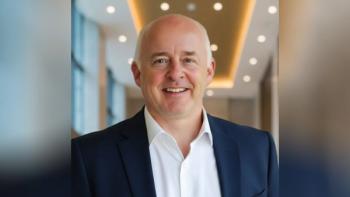
Why hub vendor transitions fail — and the four questions every manufacturer should answer before signing with a new patient support program vendor.

ESC 2026 marked a turning point — GLP-1s earn their first formal heart failure guideline recommendation and become a cardiometabolic platform.

Caribou Biosciences is discontinuing its two allogeneic CAR-T programs and exploring strategic alternatives to maximize shareholder value.
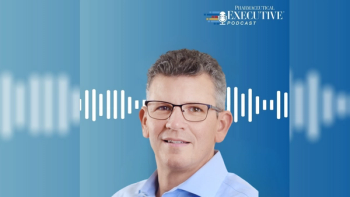
Trialbee CEO Matt Walz explores the current impact of AI in delivering practical gains in clinical development and reflects on its future potential, where enrollment predictability may be the biggest prize of all.
Why effective RWD linkage starts with a specific research objective — and how tokenization, clean rooms, and AI make it possible.
Advertisement
Advertisement
Trending on PharmExec
1
Roundup: TRexBio & Retension Pharmaceuticals Announce IPO Pricing
2
FDA Approves Tecentriq for Stage III dMMR Colon Cancer
3
The Most Important Lessons Learned from Building CGT Supply Chains: LogiPharma 2026
4
Viatris Acquires Pacira BioSciences for $1.65 Billion
5