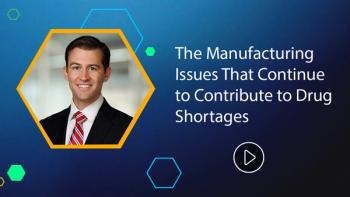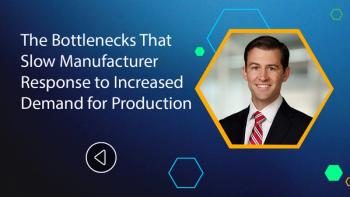
Fox Rothschild's Marc Wagner on why scaling drug production is so slow — overseas API sourcing, supplier qualification, and FDA site approvals that take years.
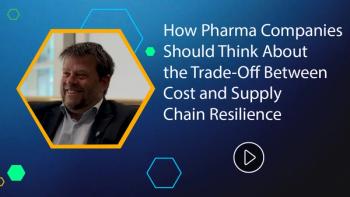
Krieger Scientific's Joseph Morwald on why well-positioned pharma companies treat the FDA as a partner, invest in unbiased third-party oversight, and continuously raise the bar on compliance rather than treating it as a fixed threshold to clear.
In July of this year, Krieger Scientific issued a release addressing the increase in 303 drug warning letters issued by FDA. In 2025, as new leadership took over the agency, FDA sent 303 drug warning letters, up 59% from the previous year.1
Krieger’s founder and CEO Joseph Morwald believes that the increase is the result of structural problems within the industry. In his original statement, he said, “The FDA recommended outside compliance expertise in 87 percent of the warning letters it reviewed last year. That is not a coincidence. That is a diagnosis. When validation, calibration, and quality functions are managed in silos, by phase, by vendor, by department, with no single point of accountability, organizations lose the ability to catch problems before they become violations.”
Morwald spoke with Pharmaceutical Executive about the increase in warning letters and what he sees as the exact issues causing it. According to him, new technologies may be pushing companies away from human expertise, resulting in an increase in issues.
Pharmaceutical Executive: How would you describe a company that is well-prepared for regulatory inspection?
Joseph Morwald: Companies that are well-positioned for the future are the ones at the forefront of regulatory compliance — continuously improving, actively engaging with the regulatory framework, and understanding that the FDA is a partner in the delivery of safe products, not an adversary.
One of the most important things the FDA has consistently emphasized is the value of unbiased, third-party independence. A company should not be doing everything internally. You need an outside perspective to remove bias, because it's too easy for internal teams to look at their own work and conclude that it's fine. The question is never simply whether the internal team understands the data, or whether the FDA understands it. The standard is whether any informed person — a common reviewer with no stake in the outcome — can look at the data and confirm that it is what it claims to be, and that it is good.
A company that is truly well-positioned, both today and for the future, will use all available tools — including AI — but will also validate and verify the results those tools produce. It will continuously improve, and it will keep raising the bar on regulatory compliance rather than treating it as a fixed target to meet and move on from.