
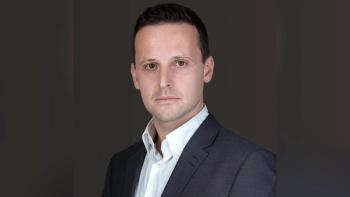
Norstella’s VP of thought leadership discusses why pharma spent more on R&D, got fewer drugs, and is heading toward a $500 billion patent cliff unprepared.
Mike Hollan is an assistant managing editor for Pharmaceutical Executive and Medical Device and Technology and can be reached at mhollan@mjhlifesciences.com.
Norstella’s VP of thought leadership discusses why pharma spent more on R&D, got fewer drugs, and is heading toward a $500 billion patent cliff unprepared.

Spherix's VP of market access discusses how the IRA's maximum fair price is reshaping payer strategy, formulary design, and patient out-of-pocket costs far beyond negotiated drugs.
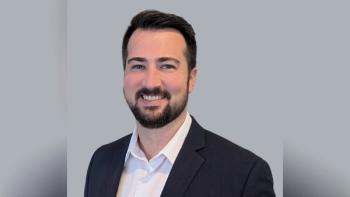
ADVI’s associate director of market access policy strategy discusses how 340B grew to $100 billion, lost its safety-net purpose, and became a compliance nightmare when the IRA arrived.

ADVI's Tyler Seville on how the IRA's drug pricing provisions are creating compliance burdens manufacturers can't meet without data they don't have.

From guiding pursuits in artificial intelligence and R&D to scientific marketing and company building, meet Pharm Exec’s new slate of select rising leaders who are helping to shape the next generation of biopharma innovation.
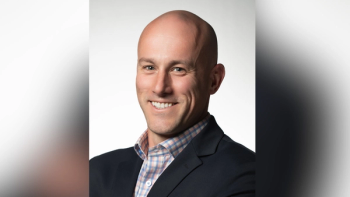
Christopher Savage, managing director, Propensity4, and chief of staff, Inizio Engage, on creating lasting impact over chasing the next opportunity.

Abid Rahman, head of AI Agency and innovation at EVERSANA, explains how the pharmaceutical industry is moving from generative to agentic AI.

Sarah Ghosh, U.S. scientific marketing lead in oncology at Regeneron, discusses developing and adapting the narrative for a medication for every global market.
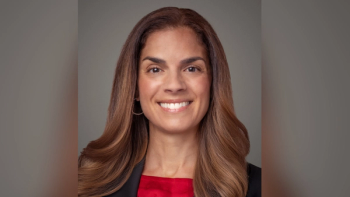
Rena Denoncourt, chief operating officer at Corsera Health, discusses the operational challenges of building a startup and how she balances prioritization with the flexibility drug development demands.
Dr. Nick Botwood, chief medical officer and head of research and development at Syndax Pharmaceuticals, draws on his career to explain what separates good R&D organizations from great ones.

ADVI's Tyler Seville on how 340B has become a financial liability for manufacturers while covered entities expand into wealthy suburban markets.

ADVI's Tyler Seville on how 340B grew from under $10 billion to over $100 billion annually — now larger than Medicaid and Medicare Part B.

Krieger Scientific’s founder and CEO discusses how various factors, such as siloed systems and misuse of AI, may be responsible for the increase of warning letters from FDA.

Platelet count alone can't define ITP treatment success—and what multi-pathway immune targeting actually requires.

Krieger Scientific's Joseph Morwald on why well-positioned pharma companies treat the FDA as a partner, invest in unbiased third-party oversight, and continuously raise the bar on compliance rather than treating it as a fixed threshold to clear.

Krieger Scientific's Joseph Morwald on why unverified AI-generated documentation in pharma is a complex issue with potentially significant consequences.
Krieger Scientific's Joseph Morwald explains how siloed departments, disconnected systems, and a lack of cross-functional accountability are creating the structural compliance gaps that FDA warning letters keep exposing.

Krieger Scientific's Joseph Morwald on why over-reliance on AI and under-reliance on human expertise is driving the surge in FDA warning letters.

Incubate’s executive director discusses China’s rise in biotech and why the US’ best response may be to focus on its own issues.

AstraZeneca and BMS held merger talks, Incubate's John Stanford on fixing the US pharma ecosystem, and why real-time clinical trial data matters.

Incubate’s executive director discusses China’s rise in biotech and why the US’ best response may be to focus on its own issues.

John Stanford, executive director at Incubate, explains the COINS Act debate: should Treasury restrict US biotech investment in China, and what happens to American leadership if it does.

Incubate’s executive director John Stanford defines the three buckets of the US-China pharma challenge: API manufacturing, clinical trial competitiveness, and the complex ethics of licensing Chinese innovation.

LucyRx’s chief commercial officer explains why the traditional two-bucket approach to GLP-1 coverage, which focuses on diabetes and weight loss, leaves high-risk populations without access.

John Stanford, executive director at Incubate, discusses how China's two decades of biotech investment are paying off.

TruTechnologies chairman and co-founder argues that while Operation TrialBlazer is directionally correct in targeting regulatory friction, it misses the larger problem.
TruTechnologies’ Dr. Richard Graham explains where he sees the actual issues that need to be addressed at FDA.

Susan Thomas, chief commercial officer at LucyRx, discusses how women in a certain age range are disproportionately impacted by cardiovascular risk.

Dr. Stoehr, neuroscience researcher at AbbVie discusses how biomarkers are opening a new window into Parkinson’s disease.

Chief commercial officer Susan Thomas from LucyRx explains why coverage isn’t a one-size-fits all problem.