
Dr. Richard Graham, chairman and co-founder of TruTechnologies, discusses the importance of global clinical trials while also being a center for these trials.
Mike Hollan is an assistant managing editor for Pharmaceutical Executive and Medical Device and Technology and can be reached at mhollan@mjhlifesciences.com.
Dr. Richard Graham, chairman and co-founder of TruTechnologies, discusses the importance of global clinical trials while also being a center for these trials.
TruTechnologies’ chairman and co-founder Dr. Richard Graham explains why Australia and China are the main competitors for clinical trials.

LucyRx’s chief commercial officer Susan Thomas discusses the impact that only looking at immediate cost impact has on certain indications.

Dr. Richard Graham from TruTechnologies details the likelihood that Project Trialblazer reduces trial times by 6-to-12 months.

Susan Thomas, chief commercial officer at LucyRx, explains the areas where GLP-1 coverage still lacks.

Nuvation Bio’s president, CEO, and founder discusses the company’s mission, approach to developing a global strategy, and how it manages its increasing pipeline.

Nuvation CEO David Hung discusses his leadership style, success stories for building camaraderie, and his inspiration for joining the pharma and biotech industry.

David Hung, CEO of Nuvation Bio, details the company’s ongoing trials for new drugs and new indications for existing molecules.
Nuvation’s CEO David Hung details the various cancer medications the company has on the market and in clinical trials.
David Hung, CEO of Nuvation Bio, explains the company’s current focus on US operations and how it utilizes partners for global impact.

Nuvation Bio’s CEO David Hung discusses the how Nuvation built a relatiohsip with Daichii Sankyo.
RedSail Technologies’ vp of clinical services discusses awareness and education gaps in how patients understand GLP-1s.

David Hung, Nuvation Bio’s CEO, explains the company’s focus on providing patients with better drugs.

In today's Pharmaceutical Executive Daily, Novartis files notices to lay off 322 employees at its East Hanover, New Jersey location, Evogene partners with Tel Aviv University's Blavatnik Center for Drug Discovery to accelerate AI-powered small-molecule discovery, and Sanofi's Chief Digital Officer Emmanuel Frenehard on why genuine AI transformation requires concentrated investment—not just automation.

The two companies will work together to advance the development of small molecule discovery at the research center.

Novartis filed paperwork in NJ revealing plans to layoff 322 workers in October of this year.
In today's Pharmaceutical Executive Daily, Vertex Pharmaceuticals announces a $10 billion acquisition of Crinetics Pharmaceuticals and its approved acromegaly therapy Palsonify, Catalent expands its partnership with Nanoscope Therapeutics to support potential commercialization of an optogenetic gene therapy for retinal degenerative diseases, and Cencora's Alina Chesnokova examines how the rise of specialty therapies is making cold chain logistics a front-line strategic priority.

Catalent will support Nanoscope’s commercialization of Nanoscope’s MCO-010.

The deal will bring Palsonify into Vertex’s pipeline.
The acquisition adds Myricx’s NMTi ADC delivery platform to Novartis’ pipeline.
The Troutman Pepper Locke senior associate discusses strategies for pharma and biotech companies to implement ahead of the July 31st tariff deadlines.
Troutman Pepper Locke senior associate Ryan Last explains when markets will start to significantly react to the upcoming pharma tariffs.
Ryan Last, senior associate at Troutman Pepper Locke explains how existing regulations and potential foreign countermeasures have a significant impact on reshoring efforts.
Troutman Pepper Locke senior associate Ryan Last explains how thin margins on certain product will impact the effectiveness of tariffs.
Ryan Last, senior associate at Troutman Pepper Locke, details the key steps that pharma companies must make before the July 31st deadline hits.

The decision was made based on the results of the BRUIN CLL-313 clinical study.
In today's Pharmaceutical Executive Daily, the FDA approves Gilead's Trodelvy for the first-line treatment of metastatic triple-negative breast cancer — as both a monotherapy and in combination with Keytruda — marking the first new backbone therapy option for this aggressive disease in more than two decades, Novartis announces a $105 million collaborative agreement with Antares Therapeutics to jointly discover and develop first-in-class precision medicines in oncology and other serious diseases, with potential milestones totaling $1.8 billion, and Pharmaceutical Executive speaks with Kyle Smith, president and COO of Aprecia Pharmaceuticals, on the real-world benefits and persistent challenges of operating as a fully domestic manufacturer in an era of tariffs and supply chain pressure.

Novartis will fund Antares’ development of first-in-class precision medicines in cancer and other serious diseases.
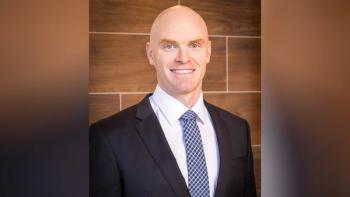
Aprecia’s president and COO discusses the impact 3D printing technology is having on drug development, along with the benefits and challenges of being a company that is 100-percent US-based for its manufacturing.
In today's Pharmaceutical Executive Daily, Eli Lilly and Abbisko Therapeutics announce a new strategic research collaboration in which Abbisko will leverage its early-stage drug discovery platform to advance targets selected by Lilly, building on a prior partnership between the two companies, Pharmaceutical Executive speaks with Kyle Smith, president and COO of Aprecia Pharmaceuticals, on how the company's 3D printing technology enables real-time quality monitoring and rapid iteration to accelerate drug production, and life sciences industry advisor Partha Anbil examines the economics of the 340B Drug Pricing Program — including the forces driving its record $81.4 billion in 2024 purchases, the legal battles over manufacturer restrictions and rebate models, and what it all means strategically for pharmaceutical manufacturers in 2026.