

Abbisko will utilize its drug development platform and R&D ecosystem to develop drug targets determined by Lilly.
Mike Hollan is an assistant managing editor for Pharmaceutical Executive and Medical Device and Technology and can be reached at mhollan@mjhlifesciences.com.
Abbisko will utilize its drug development platform and R&D ecosystem to develop drug targets determined by Lilly.
Aprecia’s president and COO discusses the benefits of using 3D printing technology to quickly produce high quality drug tablet in a variety of dosages.
In today's Pharmaceutical Executive Daily, the FDA announces Operation TrialBlazer, a pilot program aimed at cutting early-stage clinical trial timelines by six to 12 months as the US looks to reclaim its footing in global clinical research, market access expert Manasi Salgaonkar explains why Class of Trade classification is becoming one of the hardest — and most consequential — problems in pharmaceutical commercial operations, and Pharmaceutical Executive speaks with Kyle Smith, president and COO of Aprecia Pharmaceuticals, on how DARPA's EQUIP-A-Pharma program is using federal investment to incentivize the reshoring of drug manufacturing to the United States.
Kyle Smith, president and COO of Aprecia, explains how the EQUIP-A-Pharma program is promoting the reshoring of pharma and biotech manufacturing.
In today's Pharmaceutical Executive Daily, AbbVie announces a $10.9 billion agreement to acquire Apogee Therapeutics, adding a suite of clinical-stage immunology assets to its portfolio, Insilico Medicine enters an AI-powered drug discovery collaboration with SK Biopharmaceuticals valued at up to $2.5 billion to advance neuroimmune treatments in the central nervous system, and Pharmaceutical Executive speaks with Kyle Smith, president and COO of Aprecia Pharmaceuticals, on the real-world benefits and persistent challenges of operating as a fully domestic manufacturer in an era of tariffs and supply chain pressure.

Insilico will use its AI platform for the drug development process, while SK handles the late-stage and commercialization processes.

The acquisition will bolster AbbVie’s pipeline, including the addition of monoclonal antibody treatment zumilokibart.
Aprecia’s president and COO Kyle Smith explains the challenges domestic manufacturers face when sourcing certain API and materials.
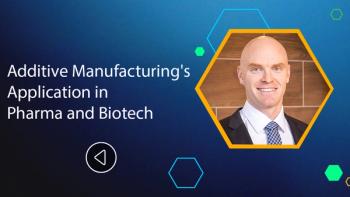
Kyle Smith, president and COO of Aprecia, discusses how additive manufacturing allows for the rapid development and manufacturing of a variety of dosage forms.

Novavax’s EVP of corporate affairs and head of its Sweden division discusses new vaccine technologies, such as its adjuvant matrix technology, are bringing new players into the space.
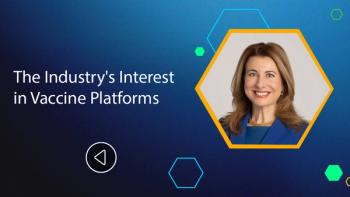
Silvia Taylor of Novavax explains how major biotechs like Eli Lilly and Sanofi are developing vaccine strategies for the coming years.
5 Prime Sciences CEO discusses how simply building a massive data set can cause more problems than it solves during clinical trials.

Polaryx’s chief medical officer discusses the regulatory environment for rare, pediatric treatments and how it’s directly impacting clinical trials.
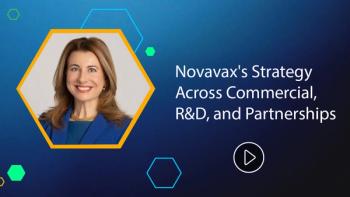
Silvia Taylor of Novavax details how the company leverages its expertise in vaccine development to build partnerships across the industry.

The two executives discuss joining Persica Pharmaceuticals and how they’re driving the company forward with non-opioid pain medication.
Silvia Taylor of Novavax discusses the role that regulatory agencies play in vaccine usage, who can receive vaccines, how they’re administered, and under what conditions.
Polaryx’ chief medical officer Lisa Bollinger explains the struggles finding ways to reduce patient costs for gene therapies for rare diseases.
Lisa Bollinger, chief medical officer at Polaryx, explains how treatments for lysosomal disorders struggle due to the fact that these diseases each have a unique mutation.
Silvia Taylor of Novavax discusses how new vaccine technologies are reducing side effects, lowering costs, and enhancing immune response.
Polaryx’s chief medical officer Lisa Bollinger explains how basket-trials are uniquely beneficial to rare disease therapy development.

Lisa Bollinger, chief medical officer at Polaryx, discusses signs that regulatory agencies are taking the issues related to rare disease therapy development seriously.

Between 2026 and 2030, billions of dollars in revenue will be at risk due to expiring patents and periods of exclusivity.

The former lead counsel discusses FDA’s efforts to bring about strict oversight on DTC drug ads and the difficulties the agency faces in doing so.
With recent leadership shakeups, many are wondering how FDA will change its approach to regulating DTC pharma advertisements.
Former chief counsel for FDA Dan Troy explains why there is no firm timeline for regulatory reform or update at FDA for DTC pharma advertisements.
Dan Troy, former FDA chief counsel, explains limits on what regulations FDA can put on DTC advertisements.
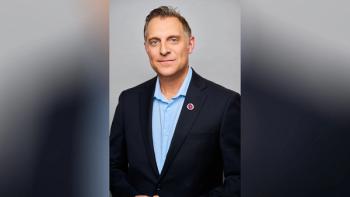
The Lupus Research Alliance’s CEO and president discusses how recent treatment breakthroughs are changing the patient experience in Lupus treatment.
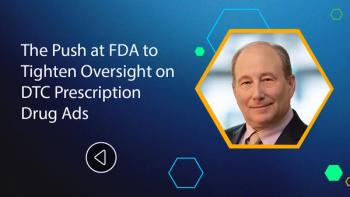
Former FDA chief counsel Dan Troy discusses the motivation behind potential DTC pharma ad bans.
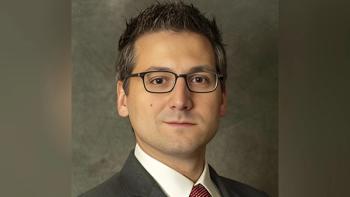
The Deloitte Consulting partner discusses how GLP-1s are becoming key value drivers and driving R&D focus during a period of market concentration.

Kevin Dondarskit of Deloitte Consulting discusses the risks that drug makers face if they decide to put too much focus on an area where they may lack expertise, such as the emerging GLP-1 market.