This year's J.P. Morgan Conference in San Francisco showed that smaller “stealth pharma” players are beginning to show solid organic growth. William Looney reports.
This year's J.P. Morgan Conference in San Francisco showed that smaller “stealth pharma” players are beginning to show solid organic growth. William Looney reports.
Pharmaceutical Executive
The small biotech space-credited with ending the drought in new FDA drug approvals in recent years-takes center stage at this year's J.P. Morgan Investors Conference.

Pharma is still a 21st Century growth industry, but investment dynamics no longer favor organic growth. Check out our strategic outlook infographic.
I offered up a prediction: that the future of the biopharmaceutical business depended on how managers fared on five key measures of performance.
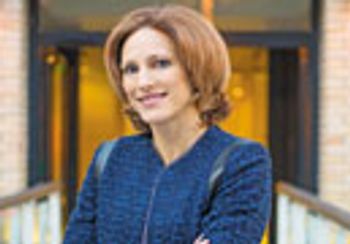
Pharm Exec profiles Sanofi EVP Pascale Witz, tagged with the assignment to move a lumbering biopharma giant closer to the embrace of the patient perspective in healthcare.

Two words define the future of commercialization project management: Faster and Better
Pharmaceutical Executive
Pharm Exec profiles Express Scripts' Chief Medical Officer, Dr. Steve Miller, whose rise to prominence as an articulate critic of drug industry prices symbolizes the growing clout of America's largest pharmacy benefit manager.
Amid a resurgence in drug development for hard-to-treat conditions, the bigger question is whether the times are as good for the industry tasked with rendering basic science into therapeutically effective medicines.
The US is skewing young again, and the "millennials" have the clout to color everything from the nation's cultural landscape to the conduct of business practices like marketing and customer engagement, writes Bill Looney.
Pharmaceutical Executive
Michael Injaychock joined Eli Lilly in 2007 after five years in a Washington-based financial services consulting role and a subsequent MBA from the University of North Carolina.
Pharm Exec's 2014 roster of emerging pharma leaders serves as a window on work in an industry that relies on human capital as the coinage of success, writes William Looney.
After fading to dreary summer stock for the past few years, dealmaking is today back to center stage, but with the major roles reversed- small biotech, yesterday’s understudy, now gets top billing, while big Pharma has to work harder for its close-up.
Pharmaceutical Executive
Today’s vaccines business represents an almost perfect world for big Pharma. There is a vast landscape of unmet medical need; lots of new science.

Pharmaceutical Executive
As the pacing picks up around dealmaking as the alternative to organic growth, Pharm Exec brings together experts from big Pharma and biotech to dissect the road ahead for M&A, licensing, and partnership activity.

Pharmaceutical Executive
A surprising takeaway from the recent BIO Convention, writes William Looney, is the stark contrast between cooperative industry engagement and an unstable geopolitical order.
Pharmaceutical Executive
Is the FDA doing enough to incorporate the patient perspective in the drug review process? This was the key question considered at a panel of regulatory experts held at last month’s annual BIO International Convention in San Diego.
Finding the correct coordinates for big Pharma's endless cycle of re-positioning is just as important as a winning scientific hand, writes William Looney.
Pharmaceutical Executive
Therapeutic specialization, competitive differentiation, and a finely-tailored value proposition are creating a new drug world of bespoke market niches-and infinite future possibilities for the best of this year’s Pharma 50.
Pharmaceutical Executive
Pharm Exec’s Brand of the Year award is itself a brand with staying power - our first recipient was Merck’s Gardasil papillomavirus vaccine.

Pharmaceutical Executive
Diabetes, it can be said, is one of the unpleasant side-effects of being human.

Recent deal making signals that the rehabilitation of big Pharma has entered a new phase aligned around a new strategic thesis, writes Pharm Exec Editor-in-Chief William Looney.

Pharm Exec's Brand of the Year recipients for 2014 are multiple sclerosis treatment Copaxone and KORLYM for diseases driven by excess production of the metabolic hormone, cortisol. We profile the journey of both drugs.
With a new name and a veteran CEO, Deborah Dunsire, at the helm, FORUM Pharmaceuticals's flag is waving high in the increasingly solitary struggle against CNS disease.
Pharmaceutical Executive
Monday’s decision by India’s Supreme Court to deny a patent for the top-selling oncologic drug Glivec took nearly a decade of litigation to resolve – but the implications in and beyond India are both immediate and lasting.
Population health is the foundation for much of what is truly new in US health reform. Pharm Exec talks to Dr. David Nash, Dean of the Jefferson Medical University School of Population Health.
Pharmaceutical Executive
The Myelin Repair Foundation is more than just a policy precedent - it’s also emerging as the stimulus behind a future cure for MS.
Pharmaceutical Executive
To mark its 25th year in recognizing female leadership in the tough competitive ranks of biopharma, the Healthcare Businesswomen’s Association (HBA) is opting for a breakout triple play.

Millennium Takeda's new president, Anna Protopapas, explains the life choices that brought her from Cyprus to Cambridge-and a lead position in the hotly contested search to make cancer a treatable disease.

Pharmaceutical Executive
Pharm Exec begins its 34th year with a feature on Russia's ambitious plans to build a homegrown biopharma business. Back in 1980, the biotech industry did not exst. Drugs were still classified as chemicals, developed from the random screening of many thoughts.
Pharmaceutical Executive
Back in 1980, the biotech industry did not exist.