
David Ricks detailed how the company plans to build on the success of Zepbound and Lilly Direct.
David Ricks detailed how the company plans to build on the success of Zepbound and Lilly Direct.

Michael O'Rourke, CEO of Re-Vana Therapeutics, touches on Re-Vana's transition from an academic spinout to a fully established biotech, marked by team expansion, facility growth, and validation of its sustained-delivery platform.

Bayer’s strategic portfolio refresh, late-stage pipeline progress, and operational efficiency positions the company for long-term growth across cardiovascular, oncology, and women’s health.

CEO Rob Davis details specific funding forecasts for the company beyond Keytruda.

Regeneron CEO Len Schleifer highlighted the company’s science-driven platform approach, strong 2025 commercial performance, and a robust pipeline across multiple therapeutic areas poised for regulatory filings, clinical milestones, and new product launches.

Moderna CEO Stéphane Bancel positions 2026 as a catalyst-rich year driven by new vaccine launches, late-stage oncology data, and continued cost discipline.
The company plans to expand its pipeline and be less reliant on a small number of blockbuster drugs.
Michael O'Rourke, CEO of Re-Vana Therapeutics, frames Re-Vana's early-stage, platform-led model as credible to public-market investors, pointing to clinical validation of sustained biologic delivery and strong collaboration interest.
In today’s Pharmaceutical Executive Daily, Johnson & Johnson reaches an agreement with the Trump administration while continuing its $55 billion U.S. investment plan, Bristol Myers Squibb outlines its long-term strategic focus at JPMorgan 2026, and Pfizer details its pivot from COVID-era products toward pipeline execution.
Pfizer entered the 44th Annual J.P. Morgan Healthcare Conference emphasizing its post-Covid reset, improved cost discipline, and a catalyst-heavy pipeline aimed at navigating the patent cycle and reaccelerating growth into 2026 and beyond.
CEO Christopher Boerner detailed the company’s plan to grow ahead of 2030.
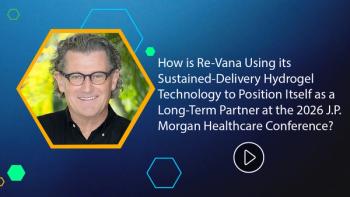
Michael O' Rourke , CEO Re-Vana Therapeutics, discusses positioning Re-Vana as a long-term platform partner by leveraging its sustained-delivery hydrogel technologies to support both internally developed assets and external pharma collaborations.

Financing announcements across the pharma sector reflect the industry’s continued interest in advancing clinical-stage programs across genetic medicine, immunology, and chronic diseases.

Angela Schwab, founder and CEO of Trialynx, discusses the current state of AI in the pharmaceutical industry and why it’s important for companies to demonstrate the true value of their AI-based products.
It’s unclear what direction the company will take based on how events unfolded after its last presentation.

If previous conference presentations are any indication, Merck will likely detail its plans to broaden its pipeline ahead of 2028.
The pharma giant will likely announce its acquisition plans for the coming year at the healthcare conference.

AbbVie has spent previous conferences detailing its work to rebuild its pipeline after losing Humira patent protection.

Pharmaceutical Executive detail’s the company’s history at the healthcare conference.
Ahead of the healthcare conference in January, Pharmaceutical Executive takes a look back at Novartis’ history at the conference.

Sanofi is positioning its late-stage pipeline and R&D discipline as the long-term growth bridge beyond Dupixent, against a backdrop of solid financial performance and mixed investor optimism.
For BMS, 2026 is about confirming progress after two years of recalibration and steady momentum, with a focus on turning proof points into sustained growth.

Revisiting Roche’s performance after the company made it a point to restructure its R&D strategy and internal pipeline at the last JPM conference.
Lilly’s return to the JP Morgan Healthcare Conference comes as the company seeks to shift the narrative from last year’s GLP-1 supply-driven revenue miss toward disciplined execution, manufacturing scale-up, and a broader long-term growth plan.

While the growing oncology pipeline offers tremendous potential, the path from clinical development through to commercial launch and patient administration is complex and lined with challenges that can impact product success and access.

During a high-level US visit, the Department of Health—Abu Dhabi signed strategic agreements with Abbott, Boehringer Ingelheim, and Sanofi to boost pharmaceutical manufacturing, expand vaccine development, and advance digital health and clinical research.

Doug Long, VP, industry relations, IQVIA, discusses how soaring demand for GLP-1 therapies is driving reimbursement challenges, shifting distribution models, and expanding the drugs’ potential into new therapeutic areas.

Will Pih, co-founder, Two Labs, explains how ongoing regulatory uncertainty is slowing clinical trial activity and hiring across the industry, prompting greater reliance on specialty pharmacy services and outsourced support.

Blake Powers, CEO, medigi, explains how digital tools, AI, and automation are streamlining access to biosimilars and cell and gene therapies, signaling a shift toward more tech-enabled, patient-centric care.
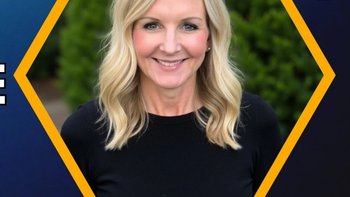
Fran Gregory, VP, emerging therapies, Cardinal Health, emphasizes the need for long-term outcomes tracking and robust health economic modeling to demonstrate the sustained value of advanced therapies and support future payment strategies.