
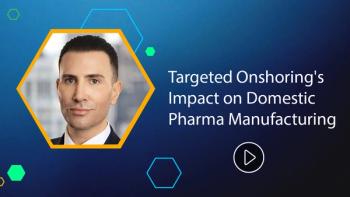
Troutman Pepper Locke senior associate Ryan Last explains how thin margins on certain product will impact the effectiveness of tariffs.
Troutman Pepper Locke senior associate Ryan Last explains how thin margins on certain product will impact the effectiveness of tariffs.
In today's Pharmaceutical Executive Daily, FDA selects seven companies for its new PreCheck Pilot Program, Kirsten Whipple examines how the concept of healthspan is emerging from academic obscurity into a powerful consumer driver reshaping pharma's role in aging, and Pharmaceutical Executive speaks with Jeff Talbot of Roseman University of Health Sciences on how Las Vegas is positioning itself as an emerging life sciences hub beyond its casino-driven reputation.
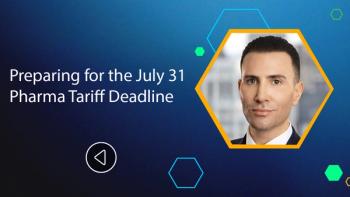
Ryan Last, senior associate at Troutman Pepper Locke, details the key steps that pharma companies must make before the July 31st deadline hits.

A U.S. House committee has launched national security investigations into Merck, AbbVie, Eli Lilly, Pfizer, and Bristol Myers Squibb over their clinical trial operations in China, seeking answers by July 17 on data protection, military hospital ties, and trial sites in Xinjiang.

FDA selected seven companies to participate in its new PreCheck Pilot Program, offering earlier regulatory engagement and expedited facility review to incentivize domestic drug manufacturing.
In today's Pharmaceutical Executive Daily, a pharma M&A roundup covers Ipsen's up to $1.75 billion acquisition of Kartos Therapeutics and Zymeworks' $929 million acquisition of Theravance Biopharma, Krista Pinto of Eversana argues that fully staffed pharma field teams are still missing revenue targets because the traditional deployment model itself needs to evolve, and EMA's CHMP issues a positive opinion recommending approval of Eli Lilly's Jaypirca for chronic lymphocytic leukemia across all lines of therapy in the European Union.

Zymeworks and Ipsen each announced acquisitions this week, with Zymeworks paying roughly $929 million for Theravance Biopharma to gain commercial COPD royalties and tax assets, and Ipsen committing up to $1.75 billion for Kartos Therapeutics to add navtemadlin.

Krista Pinto, EVERSANA’s president of deployment solutions, shares her perspective on why traditional field team models need to evolve to support future commercial success.

The decision was made based on the results of the BRUIN CLL-313 clinical study.

Healthspan is merging from obscure academic jargon as a potent consumer driver, reshaping how people think about aging and redefining pharma’s role in that process.

New data from ADA 2026 reveal that assumptions around age, weight, and gestational history are leaving too many T1D patients misclassified — and the clinical consequences are preventable.
In today's Pharmaceutical Executive Daily, the FDA approves Gilead's Trodelvy for the first-line treatment of metastatic triple-negative breast cancer — as both a monotherapy and in combination with Keytruda — marking the first new backbone therapy option for this aggressive disease in more than two decades, Novartis announces a $105 million collaborative agreement with Antares Therapeutics to jointly discover and develop first-in-class precision medicines in oncology and other serious diseases, with potential milestones totaling $1.8 billion, and Pharmaceutical Executive speaks with Kyle Smith, president and COO of Aprecia Pharmaceuticals, on the real-world benefits and persistent challenges of operating as a fully domestic manufacturer in an era of tariffs and supply chain pressure.

Jeff Talbot of Roseman University of Health Sciences discusses how Las Vegas is positioning itself as a growing life sciences hub by offering cost-effective laboratory space, access to capital, and a flexible environment for biotech startups and emerging companies.

Novartis will fund Antares’ development of first-in-class precision medicines in cancer and other serious diseases.

Once a niche pilot, direct-to-patient drug distribution is now a defining strategic priority, with manufacturers building the right infrastructure standing to capture margin, data, and patient relationships that used to belong to intermediaries.
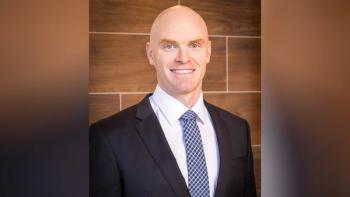
Aprecia’s president and COO discusses the impact 3D printing technology is having on drug development, along with the benefits and challenges of being a company that is 100-percent US-based for its manufacturing.

The FDA has approved Trodelvy (sacituzumab govitecan-hziy) for first-line treatment of metastatic triple-negative breast cancer as both a monotherapy and in combination with pembrolizumab, supported by Phase 3 data from the ASCENT-03 and ASCENT-04 trials.

The FDA has approved Ibrance (palbociclib) in combination with trastuzumab, with or without pertuzumab, and endocrine therapy for the maintenance treatment of adults with HR-positive, HER2-positive locally advanced or metastatic breast cancer following induction treatment.
In today's Pharmaceutical Executive Daily, Eli Lilly and Abbisko Therapeutics announce a new strategic research collaboration in which Abbisko will leverage its early-stage drug discovery platform to advance targets selected by Lilly, building on a prior partnership between the two companies, Pharmaceutical Executive speaks with Kyle Smith, president and COO of Aprecia Pharmaceuticals, on how the company's 3D printing technology enables real-time quality monitoring and rapid iteration to accelerate drug production, and life sciences industry advisor Partha Anbil examines the economics of the 340B Drug Pricing Program — including the forces driving its record $81.4 billion in 2024 purchases, the legal battles over manufacturer restrictions and rebate models, and what it all means strategically for pharmaceutical manufacturers in 2026.
Abbisko will utilize its drug development platform and R&D ecosystem to develop drug targets determined by Lilly.
Aprecia’s president and COO discusses the benefits of using 3D printing technology to quickly produce high quality drug tablet in a variety of dosages.

Examining the drivers of 340B drug program growth, the impact of vertical integration and contract pharmacies, the ongoing legal and regulatory disputes, and the strategic considerations life sciences companies must navigate in this evolving landscape.
In today's Pharmaceutical Executive Daily, the FDA announces Operation TrialBlazer, a pilot program aimed at cutting early-stage clinical trial timelines by six to 12 months as the US looks to reclaim its footing in global clinical research, market access expert Manasi Salgaonkar explains why Class of Trade classification is becoming one of the hardest — and most consequential — problems in pharmaceutical commercial operations, and Pharmaceutical Executive speaks with Kyle Smith, president and COO of Aprecia Pharmaceuticals, on how DARPA's EQUIP-A-Pharma program is using federal investment to incentivize the reshoring of drug manufacturing to the United States.

Consolidation, specialty growth, and integrated networks are multiplying the entities manufacturers must classify, just as the IRA, 340B, and Medicaid rules raise the cost of getting any one of them wrong.
FDA plans a pilot to shorten early-stage drug trial timelines, raising strategic questions for biopharma development and investment.
Kyle Smith, president and COO of Aprecia, explains how the EQUIP-A-Pharma program is promoting the reshoring of pharma and biotech manufacturing.

Clinical Affairs supports responsible promotion through scientific validation, cross-functional collaboration, and oversight of both traditional and digital communications.
In today's Pharmaceutical Executive Daily, AbbVie announces a $10.9 billion agreement to acquire Apogee Therapeutics, adding a suite of clinical-stage immunology assets to its portfolio, Insilico Medicine enters an AI-powered drug discovery collaboration with SK Biopharmaceuticals valued at up to $2.5 billion to advance neuroimmune treatments in the central nervous system, and Pharmaceutical Executive speaks with Kyle Smith, president and COO of Aprecia Pharmaceuticals, on the real-world benefits and persistent challenges of operating as a fully domestic manufacturer in an era of tariffs and supply chain pressure.

Insilico will use its AI platform for the drug development process, while SK handles the late-stage and commercialization processes.

The acquisition will bolster AbbVie’s pipeline, including the addition of monoclonal antibody treatment zumilokibart.