

Feature|Videos|July 24, 2026
Healthcare on the Ballot: The 2026 Midterm Elections
Key Takeaways
- Learn why onshoring of manufacturing and clinical trials has strong bipartisan momentum, and how the FDA user fee reauthorization could serve as its legislative vehicle.
- Understand why connecting business decisions to patient impact, not just corporate rationale, is essential to stakeholder trust.
Leavitt Partners' Julie Tierney and RC Resolve, part of Real Chemistry's Maggie Farley, look at which pharma policies could actually pass — and how companies should talk to stakeholders if pricing or manufacturing becomes a flashpoint heading into the midterms.
Advertisement
Episodes in this series
In this segment of "Fault Lines: Business, Reputation, and the Politics Reshaping Pharma," the conversation turns to the broader policy landscape shaping the run-up to the 2026 midterms. Julie Tierney of Leavitt Partners and Maggie Farley of RC Resolve, part of Real Chemistry, join moderator Leslie Isenegger to discuss which policies are likely to move forward and how companies should prepare to communicate if pricing or manufacturing becomes a flashpoint.
Tierney points to HHS's recent "Operation Trailblazer" bundle of policies aimed at bringing early-phase clinical trials back to the U.S. as evidence of bipartisan momentum behind onshoring, and highlights the FDA user fee reauthorization, due by September 2027, as a legislative vehicle where related supply chain and national security policies could realistically attach, regardless of which party controls Congress. Farley then shifts the conversation to preparedness, explaining that companies need to start with the stakeholder's mindset rather than the business rationale, connecting decisions to what they mean for patients and employees. She walks through how scenario planning should identify which stakeholders will be affected and which channels will resonate, and why anchoring every message in patient value gives companies solid ground to stand on amid political polarization.
Policy, government affairs, and communications teams will come away with a clearer view of which legislative vehicles are most likely to advance, along with practical guidance on preparing stakeholder messaging before a pricing or manufacturing crisis unfolds.
Advertisement
Related to this article

FDA’s conditional approval of Jemperli (dostarlimab-gxly) rests on a single-arm phase 2 trial, with independent-review data still maturing.
Merck KGaA, Darmstadt, Germany, acquires Silence Therapeutics for $1.3 billion, Hansoh Pharma and Roche expand their ADC partnership in a deal worth over $15 billion, and an EMA panel backs Lilly’s Foundayo for obesity and type 2 diabetes in Europe.

Merck KGaA, Darmstadt, Germany, agrees to acquire Silence Therapeutics for roughly $1.3 billion, gaining a siRNA asset, divesiran.

Hansoh Pharma enters a collaboration and license agreement with Roche covering a broad portfolio of antibody-drug conjugate programs.

Foundayo’s EU backing, Enspryng for TED, Gilead’s masked TCE deal, FDA’s rare disease reset, and Bausch + Lomb’s new interim CEO — explained.
Incubate’s John Stanford on why MFN deals are voluntary in name only — and why the leverage looks a lot like the IRA’s 95% excise tax.
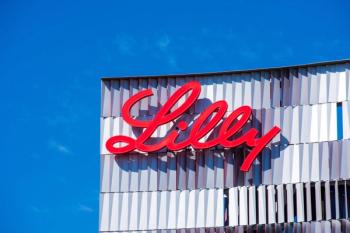
Lilly’s Foundayo receives a positive CHMP opinion for obesity and type 2 diabetes — putting the oral GLP-1 pill on course for EU approval.

The interleukin-6 receptor inhibitor gains a second indication, though one of two phase 3 trials missed its primary endpoint.
Advertisement
Advertisement
Trending on PharmExec
1
The Bubble You Don’t Know You’re In: A Three-Part Series on The Medical Benefit Bubble
2
Is Participation in MFN Voluntary?
3
Merck KGaA, Darmstadt, Germany, Acquires Silence Therapeutics for $1.3 Billion
4
Hansoh Pharma Enters $15 Billion Collaboration and License Agreement with Roche
5