

Feature|Videos|July 24, 2026
MFN and New Rules of Global Launch Sequencing
Key Takeaways
- Learn how MFN reference pricing is prompting companies to delay, skip, or concentrate launches in the U.S. market alone.
- Understand how global launch sequencing decisions interact with FDA exclusivity timelines and Europe's health technology assessment process.
Skadden's Rachel Turow explains how MFN reference-pricing exposure is changing the way companies sequence global drug launches and what's at stake for patients outside the U.S.
Advertisement
Episodes in this series
In this segment, Rachel Turow of Skadden explores how the expanding scope of Most Favored Nation (MFN) policy is reshaping the way pharmaceutical companies sequence global drug launches.
Turow explains that companies traditionally designed clinical programs around simultaneous global launches, but MFN reference-pricing exposure is now prompting some to delay, skip, or concentrate launches in the U.S. alone — an outcome she describes as ultimately harmful to patients outside the U.S. She also discusses how launch-sequencing decisions interact with FDA exclusivity timelines for new chemical entities, and why out-licensing deals for ex-U.S. markets have become less attractive given European antitrust rules that require separating U.S. and European pricing control.
Regulatory affairs, market access, and business development teams will gain insight into how MFN exposure is reshaping global launch strategy and licensing decisions.
Advertisement
Related to this article

FDA’s conditional approval of Jemperli (dostarlimab-gxly) rests on a single-arm phase 2 trial, with independent-review data still maturing.
Merck KGaA, Darmstadt, Germany, acquires Silence Therapeutics for $1.3 billion, Hansoh Pharma and Roche expand their ADC partnership in a deal worth over $15 billion, and an EMA panel backs Lilly’s Foundayo for obesity and type 2 diabetes in Europe.

Merck KGaA, Darmstadt, Germany, agrees to acquire Silence Therapeutics for roughly $1.3 billion, gaining a siRNA asset, divesiran.

Hansoh Pharma enters a collaboration and license agreement with Roche covering a broad portfolio of antibody-drug conjugate programs.

Foundayo’s EU backing, Enspryng for TED, Gilead’s masked TCE deal, FDA’s rare disease reset, and Bausch + Lomb’s new interim CEO — explained.
Incubate’s John Stanford on why MFN deals are voluntary in name only — and why the leverage looks a lot like the IRA’s 95% excise tax.
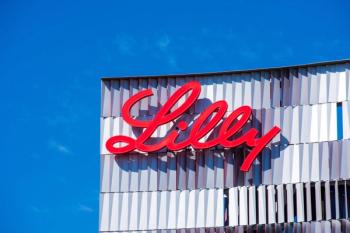
Lilly’s Foundayo receives a positive CHMP opinion for obesity and type 2 diabetes — putting the oral GLP-1 pill on course for EU approval.

The interleukin-6 receptor inhibitor gains a second indication, though one of two phase 3 trials missed its primary endpoint.
Advertisement
Advertisement
Trending on PharmExec
1
The Bubble You Don’t Know You’re In: A Three-Part Series on The Medical Benefit Bubble
2
Is Participation in MFN Voluntary?
3
Merck KGaA, Darmstadt, Germany, Acquires Silence Therapeutics for $1.3 Billion
4
Hansoh Pharma Enters $15 Billion Collaboration and License Agreement with Roche
5