

FDA cites systemic failures in how the company tracked and reported adverse drug events across several of its medicines, including semaglutide.
Nicholas Jacobus is a content associate for Pharmaceutical Executive and can be reached at njacobus@mjhlifesciences.com.
FDA cites systemic failures in how the company tracked and reported adverse drug events across several of its medicines, including semaglutide.
FDA issued draft guidance that would eliminate certain clinical pharmacokinetic studies from the biosimilar development process.
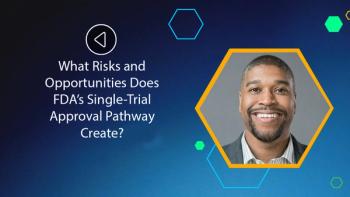
Ron Lanton, Senior Partner & Global Strategist, Lanton, Lanton & Sosa Law PLLC, notes FDA’s single-trial approval pathway may accelerate development, but manufacturers face heightened litigation risk, pricing uncertainty and safeguards.
In today's Pharmaceutical Executive Daily, the FDA approves leucovorin as the first-ever treatment for an ultra-rare genetic condition called cerebral folate transport deficiency, Enhertu receives FDA Priority Review for HER2-positive early breast cancer in the post-neoadjuvant setting, and a new commentary argues that AI has fundamentally changed how healthcare communicators must think about content strategy.

FDA approved GSK's Wellcovorin as the first treatment for cerebral folate deficiency caused by a rare genetic variant.

The application is based on Phase III trial data showing the drug reduced the risk of invasive disease recurrence or death.
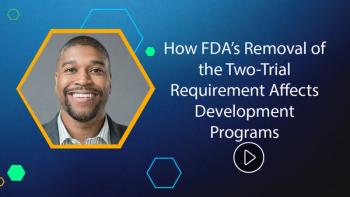
Ron Lanton, Senior Partner & Global Strategist, Lanton, Lanton & Sosa Law PLLC, discusses FDA’s removal of the two-trial requirement marking a significant policy shift and prompting sponsors to consolidate into a single robust pivotal study.
In today’s Pharmaceutical Executive Daily, Vinay Prasad exits the FDA’s Center for Biologics Evaluation and Research for the second time in under a year, major deal activity including a GSK and Alfasigma licensing agreement along with Servier’s $2 billion acquisition of Day One Pharmaceuticals, and Ipsen withdraws Tazverik from the market following emerging clinical trial data.

Ipsen is withdrawing its EZH2 inhibitor Tazverik from all markets after an ongoing clinical trial identified safety concerns involving secondary blood cancers.

The GSK licensing deal is reportedly worth up to $690 million.
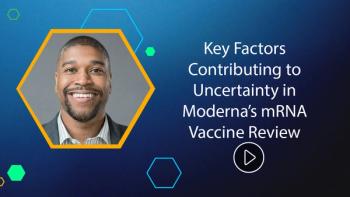
Ron Lanton, Senior Partner & Global Strategist, Lanton, Lanton & Sosa Law PLLC, notes shifting regulatory signals for Moderna’s mRNA flu vaccine review and raises broader questions about the stability of the approval pathway.

FDA informed uniQure it will not accept external control data as the primary basis for approving AMT-130, instead demanding a prospective, randomized, sham surgery-controlled trial before moving forward.
In today’s Pharmaceutical Executive Daily, Cognito Therapeutics and Nexcure secure new financing rounds to advance their pipelines, artificial intelligence and large language models reshape pharmacovigilance and drug safety monitoring, and Eli Lilly launches a new Employer Connect platform to expand obesity treatment coverage options.

Cognito Therapeutics and NexCure have each closed new funding rounds this week, advancing an at-home Alzheimer's stimulation device and a platform to bring CAR-T therapy to community settings

Eli Lilly launches Employer Connect, a new platform linking employers with benefit administrators and a pharmacy network to expand affordable access to its obesity medication Zepbound for U.S. workers.
In today’s Pharmaceutical Executive Daily, Antengene and UCB enter a billion-dollar global licensing agreement for a bispecific T-cell engager, Teva signs a $400 million strategic growth capital agreement with Blackstone Life Sciences, and industry leaders explore the technological renaissance driven by AI integration.

The agreement is focused on advancing ATG-201, a bispecific T-cell engager therapy targeting B cell-driven autoimmune diseases.

Teva Pharmaceuticals has secured $400 million from Blackstone Life Sciences to advance duvakitug, an experimental monoclonal antibody in Phase III trials for ulcerative colitis and Crohn's disease.

As AI rapidly reshapes drug development and clinical operations, industry leaders say transparency, governance, and strong data foundations will determine whether the technology accelerates innovation or stalls under regulatory and operational pressure.
In today’s Pharmaceutical Executive Daily, industry leaders examine how to measure AI’s return on investment across the life sciences value chain, Novo Nordisk commits $506 million to expand its Ireland manufacturing facility, and Bavarian Nordic CEO Paul Chaplin announces plans to step down.

Bavarian Nordic CEO Paul Chaplin will step down by the end of 2026 after overseeing the company’s transformation into a profitable global vaccine player,
Novo Nordisk is investing to expand its Athlone, Ireland facility, aiming to boost global manufacturing capacity for oral GLP-1 treatments.
In today’s Pharmaceutical Executive Daily, the FDA approves an expanded indication for Palynziq in patients aged 12 and older, Sogroya becomes the first and only weekly long-acting growth hormone approved for pediatric use, and experts examine how real-world data strengthens natural history disease research.
FDA approves a supplemental BLA for BioMarin Pharmaceutical Inc.’s Palynziq, expanding its use to adolescents 12 and older with PKU.
FDA expands approval of Novo Nordisk’s once-weekly Sogroya to include three new pediatric growth disorder indications, offering children as young as 2.5 an alternative to daily growth hormone injections backed by Phase III non-inferiority data.
In today’s Pharmaceutical Executive Daily, the FDA approves Hernexeos under a national priority voucher program, industry leaders explore the expansion of direct-to-consumer HIV prevention strategies, and Dupixent gains FDA approval for allergic fungal rhinosinusitis.
FDA grants accelerated approval to Boehringer Ingelheim’s Hernexeos (zongertinib) for treatment-naïve HER2-mutant advanced NSCLC.
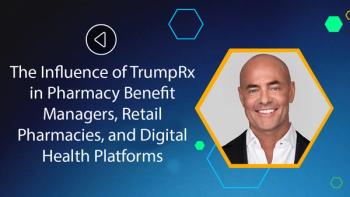
Joseph Kleiman examines how Trump Rx could pressure pharmacy benefit managers and retailers to increase transparency and affordability, while cautioning that its long-term impact will depend on price consistency.
The episode will explore structural implications for supply chains, distribution models, and international strategy—not a political discussion, but a forward-looking planning lens.
In today’s Pharmaceutical Executive Daily, Alkermes outlines its CEO succession plan following Richard Pops’ retirement announcement, leadership changes continue at Sarepta Therapeutics and Rivus Pharmaceuticals, and Boehringer Ingelheim secures an exclusive license for a preclinical small-molecule program.