All News

How Far We've Come

Pharmaceutical Executive

In 1981, pharma was a more innocent industry. It stood on the brink of an AIDS epidemic that science had yet to name or understand. Hazards of generics, product lifecycles, and off-label marketing lay years ahead. There were no embryonic stem cells to fight over--nor euphemisms like "overactive bladder syndrome" and "erectile dysfunction" to ease conversations or kick off ad campaigns. Who knew what awaited us? To remember--and to reflect on what shaped modern pharma--we invite you to page through the most significant events of the past quarter century.


i1-352788-1408682646401.jpg

Pharmaceutical Executive

California has proposed legislation for a pilot program to reinforce access to treatment for mentally ill offenders. This is a step in the right direction, but it should be the subject of national policy, not a localized effort.

The European Medicines Agency (EMEA) has approved the use of Prozac (fluoxetine) and other serotonin selective re-uptake inhibitor (SSRI) medicines to treat children

NICE backs Herceptin

Two weeks after Herceptin was licensed by regulatory authorities for use in early breast cancer, NICE has issued draft guidance recommending the drug for women with early state HER2-positive breast cancer, except where there are concerns about the woman's cardiac function.

Pharm Exec Turns 25

Pharmaceutical Executive

Share your thoughts on the 25th anniversary of Pharm Exec and the evolution of the industry

i4-333312-1408688173975.jpg

Pharmaceutical Executive

Despite Rituxan's initial success, the brand team considered the long-term opportunity for future indications. Equity research studies demonstrate that a significant "halo" exists around the brand, which is bolstered by greater optimism and excitement for all B-cell mediated conditions.

i4-333311-1408688176904.gif

Pharmaceutical Executive

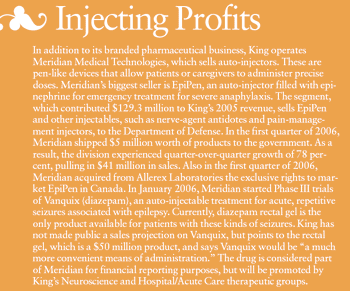
Under King's old strategy, there was no link between business opportunity and R&D. Today, the company only goes after drugs that meet the criteria of its targeted approach to acquisition.

i3-333314-1408688169843.gif

Pharmaceutical Executive

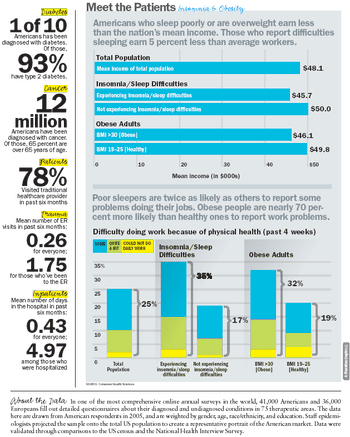
Pharma's ultimate customers are overweight and can't sleep. Ever wonder what they say about that? The National Health and Wellness Survey asked.

i4-333316-1408688164392.jpg

Pharmaceutical Executive

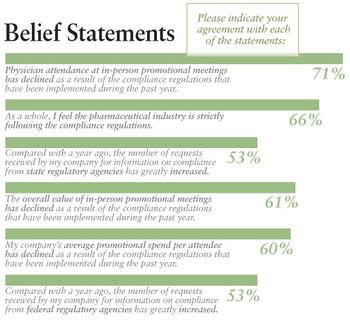
Meeting Spend: Take stock of how much your company can and does spend on promotional meetings. And look carefully at the effects of new compliance regulations on audience recruiting. Among survey respondents, about half work for companies that spent less than $1 million a year on promotional meetings. The other half spent more, sometimes in excess of $5 million a year. About half of the respondents forecast a 15-percent rise in meeting budgets next year. The other half did not expect changes in the budget.

Pharmaceutical Executive

How can FDA track billions of prescription drugs from manufacturer to patient? Paul Chang, leader of IBM?s RFID program, imagines a thin database in the sky.

Words of Action

Pharmaceutical Executive

A senior executive recently told me about a method he uses to distinguish people who have made an impression on him from those who have not. On Friday afternoons, he fans out the pile of business cards he has received since Monday morning and carefully looks at each card. If he can't remember the person and one idea about their meeting, he throws the card away. He scoops up the remaining cards and hands them to his assistant with instructions that those are the people whose phone messages he will return the following week.

Pharmaceutical Executive

Incentives are the icing on the cake companies offer to motivate their employees. Mary Kay Ash was famous for offering her team pink Cadillacs for selling cosmetics; Girl Scouts earn badges for the highest number of cookie boxes sold; and a New York real estate company recently offered its top seller a chauffered Lamborghini for one whole year. Whatever the prize, incentives are an effective and practical motivational tool.