

Pharmaceutical manufacturers must address the question of how exactly does value get created and destroyed inside these organizations and how will AI fundamentally shift that equation?
Pharmaceutical manufacturers must address the question of how exactly does value get created and destroyed inside these organizations and how will AI fundamentally shift that equation?

Amgen’s acquisition of Dark Blue Therapeutics adds a first-in-class leukemia program that aligns with the company’s growing focus on targeted protein degradation.

Nimbus Therapeutics and Eli Lilly expand partnership with a new multi-year research and licensing collaboration aimed at advancing next-generation oral therapies for obesity and metabolic disease.

In the absence of clear regulatory standards, oversight is increasingly being defined through audits, investigations, and enforcement actions by federal regulators and state medical boards rather than prospective guidance.
In today’s Pharmaceutical Executive Daily, the Wegovy Pill becomes the first available oral GLP-1 for weight management, clears a new therapy to prevent motion-induced vomiting, and Sanofi enters a new antibody discovery collaboration targeting autoimmune disease.
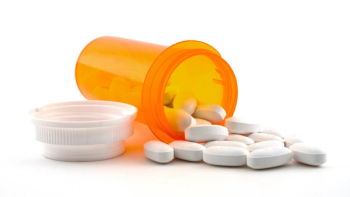
Novo Nordisk’s launch of the first oral GLP-1 for obesity brings Wegovy to U.S. patients in pill form, expanding access to clinically proven weight-loss and cardiovascular risk-reduction therapy with broad affordability options.

Sanofi and Earendil Labs' new collaboration pairs large-scale development capabilities with AI-driven protein discovery to accelerate next-generation bispecific therapies.
FDA approval of Vanda’s Nereus marks a rare and meaningful regulatory milestone, introducing the first new pharmacologic option for motion sickness in decades and underscoring renewed innovation in a long-neglected but widely impactful condition.

Hoth Therapeutics has filed dual provisional patents positioning HT-001 as a potential first-in-class solution for managing treatment-induced skin toxicities across modern oncology therapies.
It’s unclear what direction the company will take based on how events unfolded after its last presentation.

If previous conference presentations are any indication, Merck will likely detail its plans to broaden its pipeline ahead of 2028.
The pharma giant will likely announce its acquisition plans for the coming year at the healthcare conference.

AbbVie has spent previous conferences detailing its work to rebuild its pipeline after losing Humira patent protection.

Pharmaceutical Executive detail’s the company’s history at the healthcare conference.
Ahead of the healthcare conference in January, Pharmaceutical Executive takes a look back at Novartis’ history at the conference.
Sanofi is positioning its late-stage pipeline and R&D discipline as the long-term growth bridge beyond Dupixent, against a backdrop of solid financial performance and mixed investor optimism.
For BMS, 2026 is about confirming progress after two years of recalibration and steady momentum, with a focus on turning proof points into sustained growth.
In today’s Pharmaceutical Executive Daily, the FDA approves Novo Nordisk’s oral Wegovy for chronic weight management, clears Roche’s Lunsumio Velo for adults with relapsed or refractory follicular lymphoma, and Alnylam announces a $250 million investment in a new Massachusetts manufacturing facility.
The approval marks the first agency-cleared oral formulation of a GLP-1 drug for obesity.

AI’s transformative potential in clinical development relies on the industry's ability to rebuild its fractured data infrastructure.

Revisiting Roche’s performance after the company made it a point to restructure its R&D strategy and internal pipeline at the last JPM conference.
In today’s Pharmaceutical Executive Daily, President Trump announces nine additional participants in the TrumpRx program, AstraZeneca reaches a $2 billion licensing agreement with Jacobio Pharma for a pan-KRAS inhibitor, and BioMarin enters a definitive $4.8 billion agreement to acquire Amicus Therapeutics.

Roche’s FDA approval of Lunsumio VELO as a one-minute subcutaneous bispecific therapy for relapsed or refractory follicular lymphoma marks a meaningful advance in reducing treatment burden while preserving strong response rates in later-line disease.

AstraZeneca’s exclusive global licensing deal for Jacobio’s pan-KRAS inhibitor JAB-23E73 underscores a renewed industry push of one of oncology’s most elusive targets.
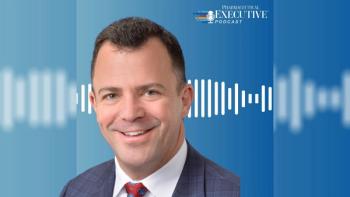
Jim Greffet, head of sustainability at Eli Lilly, on establishing ESG as a core business driver—and key complement to manufacturer long-term growth pursuits.

The investment will allow the facility to meet the growing demand for RNAi therapeutics.
Lilly’s return to the JP Morgan Healthcare Conference comes as the company seeks to shift the narrative from last year’s GLP-1 supply-driven revenue miss toward disciplined execution, manufacturing scale-up, and a broader long-term growth plan.

Nine more companies have joined the DTC government-run website, which is set to launch sometime next year.
In today’s Pharmaceutical Executive Daily, Eli Lilly announces positive topline Phase III data for its oral GLP-1 candidate orforglipron, the U.S. Senate passes the Biosecure Act with implications for biopharma supply chains, and industry experts examine how rebate consultants are shaping biosimilar adoption.