

Waskyra’s FDA approval marks a milestone for rare disease care and for Fondazione Telethon, establishing the first nonprofit-led ex vivo gene therapy to reach market after decades of research.
Waskyra’s FDA approval marks a milestone for rare disease care and for Fondazione Telethon, establishing the first nonprofit-led ex vivo gene therapy to reach market after decades of research.

With prescription care changing, it’s up to benefits providers to reinforce the value of human connection in a complex system.
In today’s Pharmaceutical Executive Daily, the FDA introduces a new superiority standard for future CAR-T approvals, Relation Therapeutics and Novartis form a $1 billion multi-program collaboration targeting atopic diseases, and new insights reveal how payers are shaping expectations for Phase III trial design.
FDA’s approval of Augmentin XR as the first therapy cleared under the new National Priority Voucher Pilot Program signals a decisive push to strengthen domestic antibiotic manufacturing, accelerate critical drug reviews, and stabilize long-strained U.S. antimicrobial supply chains.

How pharma marketers can time brand messages to prescribers when it matters most.
New FDA guidance signals a major shift for CAR-T development, calling for randomized trials with standard-of-care control groups and clear evidence of superiority over existing therapies, while simultaneously easing REMS requirements to reduce logistical burdens for treatment centers and patients.
In today’s Pharmaceutical Executive Daily, new analysis outlines how EMA support programs help lower drug market entry costs, early real-world data show sustained remissions with Carvykti in relapsed or refractory multiple myeloma, and Pfizer signs an exclusive collaboration with Yao Pharma to advance oral small-molecule GLP-1 agonists.

Relation Therapeutics and Novartis launch a multi-program alliance combining Relation’s AI-powered, patient-derived discovery engine with Novartis’s immuno-dermatology capabilities.

Pfizer’s exclusive partnership with Yao Pharma secures global rights to the oral GLP-1 agonist YP05002, advancing its cardiometabolic pipeline.
In today’s Pharmaceutical Executive Daily, the FDA greenlights an expanded use of Breyanzi, Eli Lilly reports Jaypirca met its primary endpoint in a head-to-head Phase III trial against Imbruvica for CLL/SLL, and new analyses highlight how health systems are strengthening partnerships to support cell and gene therapy commercialization.

The European pharmaceutical market, representing 20% of the global pharmaceutical market, is not a fortress to be feared but an opportunity to be seized.

Carvykti’s emerging Phase III data shows that a single early-line infusion can deliver durable, treatment-free remissions lasting beyond 30 months for patients with relapsed or refractory multiple myeloma.

Evaluating standard clinical focus through the growing financial lens.

Jaypirca matched response rates for Imbruvica with potentially improved survival in the treatment of chronic lymphocytic leukemia and small lymphocytic lymphoma.

Welcome to Pharm Exec's new guest column on navigating the geopolitical risks challenging core company strategies in today's shifting global landscape for healthcare.
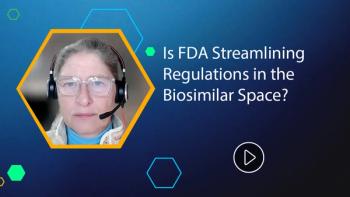
Gillian Woollett, VP and head of regulatory strategy at Samsung Bioepis, discusses how the current regulatory climate is the result of years of work.

The entrepreneur urges the Trump administration to eliminate costly FDA generic drug fees, part of a broader push to scale domestic production, address shortages, and challenge PBM-driven pricing models.
FDA’s approval of Bristol Myers Squibb’s Breyanzi as the first CAR T therapy for relapsed or refractory marginal zone lymphoma underscores the therapy’s expanding leadership in B-cell malignancies, backed by compelling Phase II data
Twelve former FDA leaders have publicly challenged the agency’s proposed overhaul of vaccine approvals, sparked by an internal memo linking child deaths to COVID-19 vaccination, arguing the changes threaten evidence-based standards, weaken immunobridging practices, and risk eroding public trust.
In today’s Pharmaceutical Executive Daily, the FDA appoints Tracy Beth Høeg as acting CDER director, health systems explore new commercialization partnerships for cell and gene therapies, and Aidoc submits a breakthrough-designated multi-triage AI device for FDA approval.
The agency based its approval off results collected from the Bruin CLL-321 trial.
The agency also named a new head of its Office of Nonprescription Drugs.

A successful transition from clinical development to commercial launch in cell and gene therapy requires early, structured collaboration with health systems to address operational, financial, and workflow challenges that shape real-world patient access and therapy adoption.
In today’s Pharmaceutical Executive Daily, Regeneron launches a $150 million gene editing collaboration with Tessera Therapeutics, the FDA begins agency-wide deployment of new agentic AI tools, and a new report suggests Richard Pazdur is stepping down as director of CDER.

The claim is based on recent survey results from Nationwide.

The Lifescience Dynamics analyst discusses how GLP-1s appear to provide kidney protection in a specific, well-defined population.
The former FDA oncology chief is set to resign by the end of the month.

As patient-centric evidence continues to shape the future of drug development, challenges around increased complexity and regulatory scrutiny must be addressed.
In today’s Pharmaceutical Executive Daily, Eli Lilly reduces the price of Zepbound single-dose vials for self-pay patients, a new report claims the FDA is planning changes to its vaccine approval process following assertions of COVID vaccine–related deaths, and Korea and Australia reorient their pharma launch strategies toward broader regional market opportunities.