
Pharma's chain of custody model is migrating into food and consumer goods — and becoming a cross-industry differentiator.
Pharma's chain of custody model is migrating into food and consumer goods — and becoming a cross-industry differentiator.
Pharma logistics are overqualified by design — and how agentic AI can now optimize across thousands of lanes in days, not months.
Pharma AI adoption fails not because of the technology — but because organizations deploy tools before they're ready to use them.

CORXEL’s Dr. Bo Liang on why GLP-1 therapies are a broader chronic disease platform — not just obesity drugs — with benefits across cardiovascular, renal, and metabolic disease.
Why GLP-1s achieving bariatric surgery-level efficacy is the field's most surprising advancement of the past decade.
CORXEL’s Dr. Bo Liang on why small molecule oral therapies will be the long-term winners in a GLP-1 market driven by consumer preference.
CORXEL’s Dr. Bo Liang on why efficacy is no longer obesity medicine's biggest gap — and the four unmet needs that define what comes next.

Numerof's Michael Abrams on why directing employees to the most effective, economical clinicians is digital health's most valuable offering.
Numerof's Michael Abrams on why digital health's cost-savings claims often don't hold up to scrutiny — and why the evidence gap matters.

Numerof's Michael Abrams on why digital health's point-solution era is ending — and why consolidation into broader platforms is the next step.
Numerof's Michael Abrams on why healthcare consolidation is the primary driver of rising employer costs — and why there's no end in sight.
Inovalon's Jen Lamppa on why AI's ability to extract insights from unstructured clinical data is foundational to making RWD usable in trials.
Inovalon's Jen Lamppa on why FDA's acceptance of RWD downstream is a call to action for sponsors to start using it upstream in trial design.
Inovalon's Jen Lamppa on how real-time clinical data feeds validate patient eligibility at enrollment — reducing burden while improving accuracy.
Former U.S. Representative Joe Cunningham (D-SC), spokesperson, Pharmaceutical Reform Alliance. dismisses the pharmaceutical industry's innovation argument against MFN pricing.
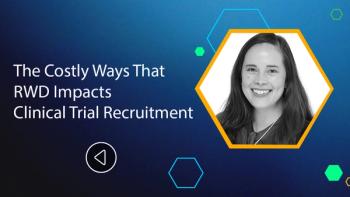
Inovalon's Jen Lamppa on why inaccurate self-reported data is clinical trial enrollment's costliest problem — and how RWD fixes it.
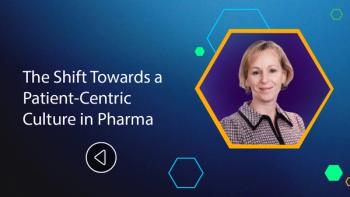
Inizio's Elaine Ferguson on why enabling purpose-driven employees to make a meaningful difference is as important as any formal talent strategy.
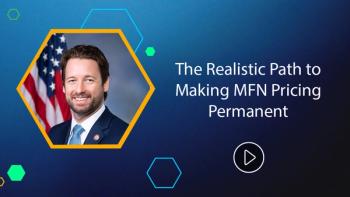
Former U.S. Representative Joe Cunningham (D-SC), spokesperson, Pharmaceutical Reform Alliance, touches on what he sees as the most realistic path to making MFN pricing permanent.
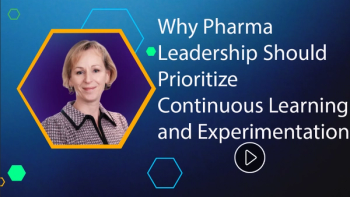
Inizio's Elaine Ferguson on how cross-functional leadership pods tackling real business challenges are turning talent development into operational innovation.

Joe Cunningham argues that the most-favored-nation drug pricing agreements carry no legislative weight and discusses what the program actually locks in.
Inizio's Elaine Ferguson on why AI value requires deconstructing workflows task by task — aligning each to the right combination of talent and technology.
Inizio's Elaine Ferguson on why connecting talent across 10,500 employees and four business units is fundamental to delivering client value.

Dr. Elena Christofides on why patients who don't respond to diabetes medications deserve a diagnostic workup — not a non-adherence label.

Dr. Elena Christofides on why treatment failure in diabetes should trigger a cortisol screen — not an assumption of non-adherence.

Dr. Elena Christofides on why the overnight dexamethasone suppression test is the only cortisol screen that actually identifies HPA dysfunction.
Dr. Elena Christofides on why cortisol dysregulation may explain why so many patients fail to respond to GLP-1 and incretin therapies.
Back Bay’s director discusses why IBD remains underserved — JAK inhibitor constraints, emerging oral mechanisms, and the durability gap.
Christian Thienel on the oral IBD mechanisms generating the most excitement — SIK2, oral IL-23, TYK2 — and why multiple could succeed.
Christian Tinel on why Rinvoq succeeds in IBD despite safety concerns — and what a cleaner oral alternative would mean for the market.
Carelon Research's Mark Cziraky on why trusted research environments don't change how analysis is done — just how fast and richly it can begin.