





Pharmaceutical Executive
Azar and Gottlieb out front in revising rebates, restructuring Medicare, and promoting competition.
Pharmaceutical Executive
Azar and Gottlieb out front in revising rebates, restructuring Medicare, and promoting competition.
Pharmaceutical Executive
There is no magic bullet that will dramatically impact drug pricing to everybody’s liking. But a stepwise approach involving a series of reforms, including taking advantage of the next midterm elections, could point the path toward a solution.

Pharmaceutical Executive
Pharm Exec’s 18th annual listing of the top biopharma players shows that most of the familiar placeholders are holding their ground as they weigh a changing business climate with new opportunities for growth in a potentially resurgent marketplace.

Known as the city that never sleeps, attracting and keeping the scientific breakthroughs in-state is something that’s keeping New York economic and academic developers up at night.
Pharmaceutical Executive
Pharm Exec interviews the FDA commissioner, who is building support by combating opioid abuse and advancing innovation.

To coincide with World Immunization Week, IFPMA's Thomas Cueni, chair of the AMR Industry Alliance, outlines the critical importance of vaccines in the fight against AMR and infectious diseases.

With less than 50% of patients with long-term conditions remaining adherent to their recommended treatment, we need to look to behavioral science to deconstruct the barriers that make people act in ways that can seem self-defeating, writes Jim O'Donaghue.

Jo Pisani and Cynthia Chan outline the key legal considerations for post-deal integration.

Pharmaceutical Executive
Drawing from implementation lessons and successes in other industries, possible strategy shifts to pharma’s pricing playbook are explored.
Pharmaceutical Executive
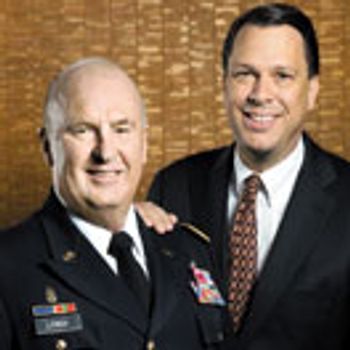
Pharm Exec chronicles the military-industry effort to instill the principles of adaptive leadership into today’s pharma leader-a C-suite must in reviving the industry’s beleaguered reputation.
2017 was a year of swings and momentum for the pharma and biotech markets. Is more stable footing ahead?

Pharmaceutical Executive
In our annual temperature check on the life sciences sector and its outlook for the months ahead, we explore eight trends that will shape the biopharma industry landscape in 2018.
Pharmaceutical Executive
States will continue to press for price controls, while FDA will tackle opioids and promote innovation.

Pharm Exec details the latest approaches to combating disease and health crises on a global scale-including industry perspectives from those involved on the front lines.
Pharmaceutical Executive

Figuring out the right formula to address global health-for the better.
Pharmaceutical Executive
New action plan urges tighter alignment of public health policy with the development of targeted therapies.
Bagrat Lalayan presents an overview of osteoporosis treatment market and offers vision for future business strategies.

Mark Bouch, Stephen Bungay, and David Roblin outline how the technique of "mission command", a military approach to setting direction and executing strategy in the pharmaceutical industry, has developed over the last ten years.

With our latest review indicating declines in shareholder value and shareholder value to sales, those companies that score well in critical profit management metrics such as return on invested capital are best positioned to maintain that crucial edge in performance execution.
Pharmaceutical Executive
Our latest review reveals that those companies scoring well on profit management metrics are best positioned to maintain that crucial edge in performance execution.
Maiko Midena discusses the key fundamentals to success when it comes to forecasting with large multinational pharmaceutical organizations.

Pharm Exec's 17th annual listing of the top biopharma players paints a stable picture of performance for the usual placeholders, but change and disruption to current business models could upend positioning in the years ahead.
Intellectual property analysis of one recently approved drug shows how Valiant might have missed out on at least one vital acquisition opportunity. Duncan Clark reports.
Bob Swindell explains how Greater Fort Lauderdale has spent the past few years quietly assembling one of the most dynamic pharmaceutical clusters in the country.