
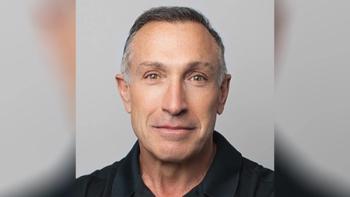
James LaValle, chair of the International Peptide Society, notes how the advisory committee's favorable vote on peptides for the 503A Bulks List was a meaningful step without constituting approval.
Nicholas Jacobus is a content associate for Pharmaceutical Executive and can be reached at njacobus@mjhlifesciences.com.
James LaValle, chair of the International Peptide Society, notes how the advisory committee's favorable vote on peptides for the 503A Bulks List was a meaningful step without constituting approval.
Amplitude Therapeutics and Chai Discovery ink AI and RNA collaborations with Eli Lilly and Bristol Myers Squibb, Norstella's Dan Chancellor makes the case for dealmaking as a survival skill, and this week's rare disease approvals and a $322 million biosimilar deal reveal where pharma strategy is heading.
Amplitude Therapeutics enters a collaboration with Eli Lilly to develop trans-amplifying RNA vaccines, while Chai Discovery partners with Bristol Myers Squibb to deploy its AI molecular folding and design models across BMS's antibody discovery portfolio.
A partnership roundup covers deals from IntraGel Therapeutics/UroGen Pharma and Lupin/Tenpoint Therapeutics, FDA approves Regeneron's Pasatru for fibrodysplasia ossificans progressiva, and RELEX's Rohit Tripathi discusses reshoring pharma manufacturing.

UroGen Pharma has invested in IntraGel Therapeutics and secured an exclusive option to license Tumocure, and Lupin's subsidiary has licensed European commercialization rights to Tenpoint's Yuvezzi.

FDA has approved Regeneron's Pasatru ,the first treatment for fibrodysplasia ossificans progressiva in adults.

Rohit Tripathi, VP of Industry Strategy at RELEX, talks with Pharmaceutical Executive about the impact new phased tariffs will have on reshoring pharma manufacturing.
President Trump moves to nominate Heidi Overton as FDA commissioner, Ron Lanton weighs in on drug pricing's collision with trade policy, and Mohd Haque looks at how pharma leaders are scaling AI across the drug lifecycle.
President Trump has reportedly selected White House Domestic Policy Council deputy director Heidi Overton as his nominee for FDA commissioner.

Rohit Tripathi, VP of Industry Strategy at RELEX, lays out the five signals that he believes can measure if the tariff policy is producing structural change.
LEO Pharma, BioMarin, OmniAb, and Chugai post a busy week of pharma dealmaking, RELEX's Rohit Tripathi weighs in on who ultimately pays for tariff-driven input costs, and Spherix Global Insights' Sybil Mead unpacks IRA-driven formulary pressure spreading across payer portfolios.

LEO Pharma agrees to acquire dersimelagon, OmniAb signs a ion channel discovery collaboration with Eli Lilly, Chugai grants GSK an exclusive worldwide license to AID351, and BioMarin acquires Alesta Therapeutics to gain ALE1.
Rohit Tripathi, VP of Industry Strategy at RELEX, talks about who will actually pay for the phased tariff-driven cost increases.
Henlius and Sandoz ink a biosimilars collaboration, ADVI's Tyler Seville makes the case for 340B reform, and RELEX's Rohit Tripathi weighs in on what real pharma reshoring requires.

Henlius Biotech has granted Sandoz exclusive ex-China commercialization rights to up to 10 monoclonal antibody and ADC biosimilars for up to $322 million.

Rohit Tripathi, VP of Industry Strategy at RELEX, discusses how pharmaceutical reshoring demands end-to-end capability not just domestic final assembly.
Pharmaceutical Executive releases its 2026 Top 50 company rankings, FDA grants Bristol Myers Squibb's Zenbexus accelerated approval for multiple myeloma, and PwC's Glenn Hunzinger talks the shifting economics of pharma dealmaking.

FDA has granted accelerated approval to Zenbexus plus daratumumab and Hyaluronidase-fihj and dexamethasone for multiple myeloma after at least one prior line of therapy.
A funding roundup covers new IPO and Series A raises across Silence Therapeutics, AbCellera, Beyang Therapeutics, and Remepy, Tyler Seville of ADVI examines the policy concerns building around the 340B Drug Pricing Program, and Pharmaceutical Executive names its 2026 Emerging Pharma Leaders.

Silence Therapeutics and AbCellera launched respective common share public offerings, and Beyang Therapeutics and Remepy closed $30+ million oversubscribed Series A rounds.
Mereo BioPharma licenses its lung disease treatment alvelestat to Sentynl Therapeutics, Krieger Scientific's Joseph Morwald examines what's driving a surge in FDA warning letters, and IQVIA's Christopher Wooden and Tom Woods make the case for persona-based HCP engagement.

Mereo BioPharma has granted Sentynl Therapeutics an exclusive option to commercialize alvelestat in the U.S. for Alpha-1 Antitrypsin Deficiency-Associated Lung Disease.
In today's Pharmaceutical Executive Daily, a new report finds U.S. rare disease biotech investment rebounding after FDA's Priority Review Voucher program renewal, President Trump signs an executive order narrowing the recommended childhood vaccine schedule, and BeOne Medicines and Revolution Medicines announce a multi-part oncology collaboration.

Renewal of FDA's Priority Review Voucher program is driving a rebound in U.S. rare disease biotech investment, while the UK continues to lag.

President Trump signs an executive order shrinking the recommended childhood vaccine schedule from 18 diseases to 11, and calls for the MMR shot to be split into three separate injections.
BeOne Medicines and Revolution Medicines enter a two-part deal pairing BeOne's PRMT5 inhibitor and EGFR×MET trispecific antibody with Revolution's four clinical RAS(ON) inhibitors.
In today's Pharmaceutical Executive Daily, Jazz Pharmaceuticals agrees to acquire Actio Biosciences, Novo Nordisk, Innate Pharma, and Innovent Biologics strike a trio of new partnerships, and a Veeva executive discusses how agentic AI is surfacing HCP insights that traditional field reporting has historically missed.

Jazz Pharmaceuticals agrees to acquire Actio Biosciences for $820 million upfront plus up to $500 million in milestones for ABS-1230.

Novo Nordisk selects AWS as its preferred AI partner for drug discovery, Innate Pharma partners with Sobi, and Innovent Biologics secures exclusive commercialization rights for Vanflyta in China.
In today's Pharmaceutical Executive Daily, Amazon Pharmacy launches a GLP-1 delivery service for eligible Medicare patients, Tarsus Pharmaceuticals agrees to acquire Alkeus Pharmaceuticals for $450 million to advance a Stargardt disease therapy, and FDA grants accelerated approval to Replimune's Tudriqev in combination with nivolumab for advanced melanoma.