
Amazon Pharmacy is now delivering GLP-1 weight management medications to eligible Medicare patients.
Nicholas Jacobus is a content associate for Pharmaceutical Executive and can be reached at njacobus@mjhlifesciences.com.
Amazon Pharmacy is now delivering GLP-1 weight management medications to eligible Medicare patients.

Tarsus Pharmaceuticals has agreed to acquire Alkeus Pharmaceuticals for $450 million, centering the deal on gildeuretinol.
FDA has granted accelerated approval to Replimune's Tudriqev plus nivolumab for anti-PD-1-refractory unresectable advanced cutaneous melanoma.

In today's Pharmaceutical Executive Daily, an antitrust attorney weighs the legal risks of a hypothetical AstraZeneca-Bristol Myers Squibb merger, Eli Lilly beats Wall Street estimates on soaring Mounjaro and Zepbound sales and raises its full-year guidance, and the FDA approves Moderna's first mRNA-based flu vaccine for adults 50 and older.

Ron Lanton, senior partner at Lanton, Lanton & Sosa Law, discusses the legal risks associated with a hypothetical AstraZeneca–Bristol Myers Squibb merger.

FDA has approved Takeda's Orzeyful as the first oral orexin receptor 2 agonist for narcolepsy type 1 in adults.
Eli Lilly posted $23 billion in second-quarter revenue driven by Mounjaro's sales surge to $9.94 billion and Zepbound's $4.93 billion.
In today's Pharmaceutical Executive Daily, a senior source denies reports of merger talks between AstraZeneca and Bristol Myers Squibb, CSPC Pharmaceutical and AstraZeneca form a joint venture for biologics manufacturing in China, and a feature examines how U.S. Patent and Trademark Office policy changes are slowing patent challenges for generic and biosimilar drugmakers.

A senior source claims there are no discussions underway between AstraZeneca and Bristol Myers Squibb over a potential combination.

CSPC Pharmaceutical and AstraZeneca have formed a 51:49 joint venture to build a biologics manufacturing facility in Shijiazhuang.
In today's Pharmaceutical Executive Daily, Pathos AI signs licensing deals with Alphamab Oncology and AstraZeneca while Curium agrees to acquire Lantheus for up to $8 billion, Sandoz agrees to a $450 million settlement with 43 U.S. states over generic drug antitrust claims, and a new analysis argues real-time data analytics are essential to managing the growing data burden in clinical trials.

Pathos AI secured a $125 million upfront license to Alphamab's JSKN016 and a co-exclusive agreement with AstraZeneca to advance AZD4241, while Curium announced a deal to acquire Lantheus for up to $8 billion.
In today's Pharmaceutical Executive Daily, FDA's advisory committee votes in favor of Replimune's RP1 efficacy data in advanced melanoma, three clinical-stage biopharmaceutical companies file for IPOs spanning cardiovascular, immune, and metabolic disease, and a new analysis examines why two-thirds of pharmaceutical product launches fail to meet expectations.
FDA's advisory committee voted 10 to 3 that efficacy data from the Ignyte study is evaluable and clinically meaningful.

Braveheart Bio, Attovia, and Vogenx have all announced Initial public offerings, focusing on a cardiovascular drug, an immune-disease biologics platform, and a metabolic disease program.
In today's Pharmaceutical Executive Daily, Johnson & Johnson, Processa Pharmaceuticals, and Relation strike new deals spanning cell therapy, BTK inhibition, and AI-driven target discovery, Inizio Engage launches Connected Insights to turn medical information interactions into strategic intelligence, and a commentary argues pharma companies need to manage direct-to-patient sales as a core commercial channel rather than a side program.

Inizio Engage is expanding its Global Medical Information platform with Connected Insights to convert the more than one million scientific interactions its teams handle annually into actionable intelligence.
Johnson & Johnson moves to acquire Sail Biomedicines, Processa acquires Vidya Therapeutics, and Relation partners with GSK on AI-driven target discovery collaboration.
In today's Pharmaceutical Executive Daily, a commentary examines why fragmented software tooling causes scientific judgment to get lost across the biologics R&D pipeline, Replimune shares crash nearly 32 percent after FDA reviewers raise concerns about its melanoma therapy, and FDA approves Viatris's Gwyn Lo as a new once-weekly contraceptive patch.
An FDA advisory panel voted to recommend six of seven unapproved peptides for compounding access, raising concerns about its newly appointed members.
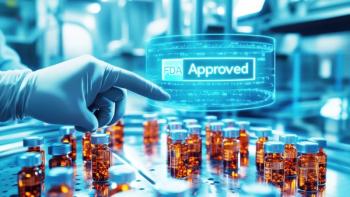
FDA has approved Viatris' Gwyn Lo as a once-weekly low-dose estrogen contraceptive patch, offering women with a BMI below 30 a non-invasive hormonal contraception option.

Replimune shares fell nearly 32% after FDA staff reviewers raised concerns that its lead melanoma therapy RP1 lacks clear evidence of systemic efficacy.
In this episode, Ron Lanton argues that healthcare's next constraint isn't capital or technology but rather people.
In today's Pharmaceutical Executive Daily, BioMarin and n-Lorem Foundation partner on the first disease-targeted therapy for the recently identified ReNU syndrome, a trio of biotech financings advance rare disease, sleep apnea, and oncology pipelines, and a Wharton professor offers career advice for MBA graduates navigating an AI-reshaped job market.
BioMarin and n-Lorem Foundation have partnered to develop the first ASO therapy targeting ReNU syndrome.

Oak Hill Bio secures $175 million through a SPAC combination with RA Capital, Apnimed set terms for a $150 million IPO, and CORE Biomedicine closes a $21 million Series A.
In today's Pharmaceutical Executive Daily, FDA approves Otsuka's Simtriyo as the first NDSRI treatment for ADHD, argenx agrees to acquire Forte Biosciences for approximately $2.2 billion, and an AbbVie neuroscience researcher discusses the shift from symptom management to disease modification in Parkinson's research.

FDA has approved Otsuka's Simtriyo as the first norepinephrine, dopamine, and serotonin reuptake inhibitor for ADHD.

Argenx has agreed to acquire Forte Biosciences for approximately $2.2 billion, adding a first-in-class anti-CD122 antibody with clinical proof-of-concept in vitiligo and celiac disease.
In today's Pharmaceutical Executive Daily, an FDA advisory panel narrowly votes to recommend easing restrictions on four unapproved peptides, a supply chain expert discusses how China's export controls are exposing vulnerabilities in the U.S. pharmaceutical supply chain, and a pharmacy benefits executive lays out a business case for more targeted employer-based GLP-1 coverage.