

Ultragenyx shares plunge more than 40% after apazunersen fails to meet both endpoints in a Phase III trial for Angelman syndrome.
Nicholas Jacobus is a content associate for Pharmaceutical Executive and can be reached at njacobus@mjhlifesciences.com.
Ultragenyx shares plunge more than 40% after apazunersen fails to meet both endpoints in a Phase III trial for Angelman syndrome.
Melanie Whittington, managing director and head of the Leerink Center for Pharmacoeconomics, joins Ron Lanton to argue that biopharmaceutical policy only makes sense when traced back to its purpose.
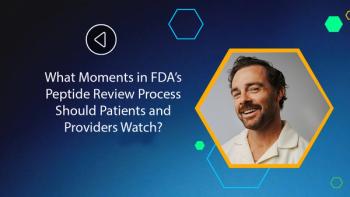
Nate Hill, co-founder & CEO, Strive, notes the key milestone to watch for during the remaining step in FDA's formal Category one announcement for peptides.
Novartis and Bristol Myers Squibb pause autoimmune CAR-T trials over safety concerns, a dealmaking roundup covers Alteogen's licensing deal with Novartis, NewBiologix's gene therapy partnership with Synastra, and RedHill's acquisition of Rebyota and Clenpiq from Ferring, and Lexi Cogswell and Tom Rotolo make the case for real-world insights in obesity medical strategy.

Novartis suspends eight autoimmune trials of its CAR-T therapy Rap-cel after three cases of fatal outcomes, while Bristol Myers Squibb voluntarily pauses enrollment in its Zola-cel autoimmune studies over transient inflammatory events.

Alteogen grants Novartis options to develop subcutaneous formulations using its ALT-B4 hyaluronidase platform, NewBiologix and Synastra partner to develop a stable producer cell line, and RedHill acquires global commercialization rights to Ferring's Rebyota and Clenpiq.
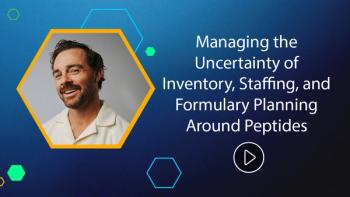
Nate Hill, co-founder & CEO, Strive, explains how Strive is managing peptide uncertainty by pre-sourcing API, running stability and testing, and working with legal counsel to calibrate risk.
The Trump administration adds nine drugmakers to its Most Favored Nation pricing program, GSK advances its dual-antigen mRNA flu vaccine into Phase III, and Simcere Zaiming licenses its tri-specific antibody Sim0660 to Roche for up to $1.53 billion.

Simcere Zaiming has licensed its first-in-class tri-specific CD79a/CD19/CD3 T-cell engager Sim0660 to Roche for up to $1.53 billion, including a $75 million upfront payment.

GSK is advancing its mRNA seasonal influenza vaccine candidate FLUm3HA.b-3NA into a Phase III efficacy trial starting in September.

Nate Hill, co-founder & CEO of Strive Pharmacy, argues that a Category one designation for peptides would give physicians a trusted, regulated channel they currently lack.

The Trump administration adds nine midsize pharmaceutical companies, including Teva, UCB, Astellas, and BeOne Medicines to its Most-Favored-Nation drug pricing program.
Eli Lilly agrees to acquire Merida Biosciences for up to $2.875 billion, BioNTech halts a Phase II trial of its cancer immunotherapy Cevumeran, and Parth Khanna argues that more competitive data doesn't mean better intelligence in pharma.

Eli Lilly has agreed to acquire Merida Biosciences for up to $2.875 billion to gain a precision autoantibody degradation platform led by MER511.

BioNTech and Genentech elect to end their Phase II trial of autogene Cevumeran after DSMB identified a numerical overall survival imbalance and recommended to terminate.

Nate Hill, co-founder & CEO of Strive Pharmacy, warns that restricting peptides without establishing a clear regulated pathway would push demand deeper into the gray market.
FDA approves three new therapies spanning autoimmune disease, HIV, and cardiovascular risk, DualityBio and Teva strike major biopharma deals, and Israel Ortiz makes the case for preventive maintenance in manufacturing.

FDA approved Priovant's Lisraya (brepocitinib) as the first targeted therapy for dermatomyositis, Gilead's Bixlenvo as the first once-daily single tablet regimen for virologically suppressed HIV patients, and expanded Mounjaro's label to include cardiovascular risk reduction in high-risk type 2 diabetes patients.

DualityBio has licensed its Dupac next-generation ADC payload platform to Genentech, and Teva has entered a stalking horse bid to acquire BioXcel's Igalmi.
Osivax and GC Biopharma team up on a next-generation flu vaccine, K2 Therapeutics' Ying Huang talks through why so few drugs make it to market, and the Trump administration opens a new round of Medicaid drug pricing deals.

Osivax and GC Biopharma agree to co-develop an influenza vaccine combining Osivax's OVX836 with GC Biopharma's GC FLU.

The Trump administration is expected to announce a new round of voluntary MFN drug-pricing agreements with midsize biotech companies as soon as August 31.
A new Eli Lilly study links Zepbound to lower healthcare costs in older adults with obesity, Biohaven and Haisco strike major licensing deals with SK Biopharmaceuticals and Sentivera, and Raviv Pryluk makes the case for rethinking clinical trial sample sizing.

A recent study of more than 15,000 adults over 55 with obesity found that sustained Zepbound use was associated with up to 38% lower monthly healthcare costs at 12 months compared with untreated matched controls.

Biohaven grants SK Biopharmaceuticals an exclusive worldwide license to its Kv7 ion channel platform, while Haisco licenses a preclinical type 2 inflammatory disease asset to newly formed Sentivera.
FDA approves Imaavy as the first treatment for warm autoimmune hemolytic anemia, McKesson agrees to acquire Precision Medicine Group as Lundbeck partners with Eversana on AI-driven commercialization, and Adam Bartley examines how integrated GMP operating models are reshaping outsourced manufacturing.
McKesson has agreed to acquire Precision Medicine Group for $2.25 billion, while Lundbeck has expanded its partnership with Eversana to scale AI-driven workflows.

FDA approved Imaavy (nipocalimab-aahu) as the first-ever treatment specifically indicated for warm autoimmune hemolytic anemia in patients ages 12 and up.
Hanmi Pharm licenses its obesity drug candidate HM17321 to Genentech, James LaValle weighs in after FDA advisors back most nominated peptides for the compounding bulks list, and Ivo Carre examines how tau- and microglia-targeted therapies are reshaping the Alzheimer's pipeline beyond amyloid.

Hanmi Pharm has licensed HM17321 to Genentech for up to $2.3 billion, including a $190 million upfront payment.