FDA’s decision to withhold approval of Hetlioz for jet lag disorder underscores the agency’s continued insistence on real-world relevance in clinical evidence.
Nicholas Jacobus is a content associate for Pharmaceutical Executive and can be reached at njacobus@mjhlifesciences.com.

FDA’s decision to withhold approval of Hetlioz for jet lag disorder underscores the agency’s continued insistence on real-world relevance in clinical evidence.

Lilly’s acquisition of Ventyx deepens its inflammation-focused pipeline with a strategic push to secure differentiated oral therapies aimed at chronic, immune-mediated diseases with significant unmet need.

In today’s Pharmaceutical Executive Daily, Amgen announces an $840 million acquisition of Dark Blue Therapeutics, GSK enters a multi-year precision medicine collaboration with Helix, and industry leaders examine how workable operating models are reshaping cell and gene therapy commercialization.

FDA’s decision to limit regulations of non-medical grade wearables marks a notable shift toward regulatory restraint in digital health.

GSK’s multi-year collaboration with Helix signals a push to embed genomics and real-world data into drug development, positioning precision medicine as a core engine for target discovery, clinical design, and long-term portfolio differentiation.

In today’s Pharmaceutical Executive Daily, Eli Lilly and Nimbus Therapeutics announce a major licensing deal for oral obesity treatments, Hoth Therapeutics expands its intellectual property portfolio with new provisional patents, and Alnylam commits $250 million to expand manufacturing capabilities in Massachusetts.

Amgen’s acquisition of Dark Blue Therapeutics adds a first-in-class leukemia program that aligns with the company’s growing focus on targeted protein degradation.

Nimbus Therapeutics and Eli Lilly expand partnership with a new multi-year research and licensing collaboration aimed at advancing next-generation oral therapies for obesity and metabolic disease.

In today’s Pharmaceutical Executive Daily, the Wegovy Pill becomes the first available oral GLP-1 for weight management, clears a new therapy to prevent motion-induced vomiting, and Sanofi enters a new antibody discovery collaboration targeting autoimmune disease.

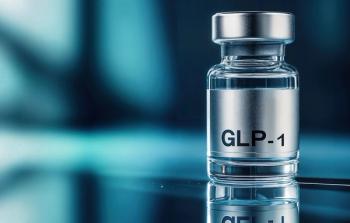
Novo Nordisk’s launch of the first oral GLP-1 for obesity brings Wegovy to U.S. patients in pill form, expanding access to clinically proven weight-loss and cardiovascular risk-reduction therapy with broad affordability options.

Sanofi and Earendil Labs' new collaboration pairs large-scale development capabilities with AI-driven protein discovery to accelerate next-generation bispecific therapies.

FDA approval of Vanda’s Nereus marks a rare and meaningful regulatory milestone, introducing the first new pharmacologic option for motion sickness in decades and underscoring renewed innovation in a long-neglected but widely impactful condition.

Hoth Therapeutics has filed dual provisional patents positioning HT-001 as a potential first-in-class solution for managing treatment-induced skin toxicities across modern oncology therapies.

Sanofi is positioning its late-stage pipeline and R&D discipline as the long-term growth bridge beyond Dupixent, against a backdrop of solid financial performance and mixed investor optimism.

For BMS, 2026 is about confirming progress after two years of recalibration and steady momentum, with a focus on turning proof points into sustained growth.

In today’s Pharmaceutical Executive Daily, the FDA approves Novo Nordisk’s oral Wegovy for chronic weight management, clears Roche’s Lunsumio Velo for adults with relapsed or refractory follicular lymphoma, and Alnylam announces a $250 million investment in a new Massachusetts manufacturing facility.

The approval marks the first agency-cleared oral formulation of a GLP-1 drug for obesity.

Revisiting Roche’s performance after the company made it a point to restructure its R&D strategy and internal pipeline at the last JPM conference.

In today’s Pharmaceutical Executive Daily, President Trump announces nine additional participants in the TrumpRx program, AstraZeneca reaches a $2 billion licensing agreement with Jacobio Pharma for a pan-KRAS inhibitor, and BioMarin enters a definitive $4.8 billion agreement to acquire Amicus Therapeutics.

Roche’s FDA approval of Lunsumio VELO as a one-minute subcutaneous bispecific therapy for relapsed or refractory follicular lymphoma marks a meaningful advance in reducing treatment burden while preserving strong response rates in later-line disease.

AstraZeneca’s exclusive global licensing deal for Jacobio’s pan-KRAS inhibitor JAB-23E73 underscores a renewed industry push of one of oncology’s most elusive targets.

Lilly’s return to the JP Morgan Healthcare Conference comes as the company seeks to shift the narrative from last year’s GLP-1 supply-driven revenue miss toward disciplined execution, manufacturing scale-up, and a broader long-term growth plan.

In today’s Pharmaceutical Executive Daily, Eli Lilly announces positive topline Phase III data for its oral GLP-1 candidate orforglipron, the U.S. Senate passes the Biosecure Act with implications for biopharma supply chains, and industry experts examine how rebate consultants are shaping biosimilar adoption.

BioMarin’s $4.8 billion all-cash acquisition of Amicus Therapeutics significantly expands its rare disease portfolio with established Fabry and Pompe franchises, adds late-stage pipeline upside, and is expected to immediately accelerate revenue growth while strengthening long-term financial performance.

Atavistik Bio’s $120 million Series B financing bolsters its push to advance first-in-class, allosteric small-molecule therapies for HHT and MPNs, leveraging its AMPS platform to selectively target disease-driving mutations with the aim of delivering more precise and durable treatments.

In today’s Pharmaceutical Executive Daily, Pfizer discloses its 2026 revenue expectations, a bipartisan group of House Republicans moves to force a vote on extending ACA tax credits, and new collaboration and merger activity highlights continued dealmaking momentum across biopharma.

Lilly’s Attain-Maintain Phase III results show that the oral GLP-1 orforglipron can effectively preserve weight loss after injectable therapy, positioning it as a potential long-term maintenance option in the chronic management of obesity.

Novo Nordisk’s NDA filing for CagriSema positions the first fixed-dose amylin–GLP-1 combination as a potential next-generation obesity therapy, backed by Phase III data showing more than 20% weight loss and signaling the company’s intent to extend its leadership beyond single-mechanism incretins.

In today’s Pharmaceutical Executive Daily, the FDA approves a new LDL-lowering therapy, Sanofi announces two strategic deals spanning Alzheimer’s disease and B-cell depletion, and the agency issues a national priority voucher tied to Tecvayli in multiple myeloma.

A pair of deal announcements underscore continued strategic reshuffling in biopharma, with Harbour BioMed striking a potentially billion-dollar collaboration with Bristol Myers Squibb to advance next-generation multispecific antibodies, while VYNE Therapeutics agreed to merge with Yarrow Bioscience to create a well-capitalized company focused on developing a first-in-class TSHR antibody for Graves’ disease and thyroid eye disease.