
Silvia Taylor of Novavax discusses the role that regulatory agencies play in vaccine usage, who can receive vaccines, how they’re administered, and under what conditions.
Silvia Taylor of Novavax discusses the role that regulatory agencies play in vaccine usage, who can receive vaccines, how they’re administered, and under what conditions.
Brian Hilberdink, president of U.S. Human Pharma, Boehringer Ingelheim, argues the field must evolve beyond the scale, measuring success not just in pounds lost, but in visceral fat reduction, liver health, and preserved muscle mass.
Polaryx’ chief medical officer Lisa Bollinger explains the struggles finding ways to reduce patient costs for gene therapies for rare diseases.

With clinical trial data exploding to nearly 6 million datapoints, eClinical Solutions' CEO and Co-founder, Raj Indupuri makes the case for price transparency and a measurable ROI in clinical data technology.

In today's Pharmaceutical Executive Daily, Kardigan sets terms for a $350 million IPO that would value the cardiovascular biotech at approximately $1.3 billion, Pharmaceutical Executive speaks with Rick Winningham on building the next generation of leaders behind the pipeline, and Jazz Pharmaceuticals reports that the Phase III Lagoon trial of Zepzelca failed to meet its primary endpoint of overall survival in second-line small cell lung cancer.

Jazz Pharmaceuticals' Zepzelca failed to improve overall survival in the Phase III Lagoon confirmatory trial for second-line small cell lung cancer, putting its accelerated approval in that setting at risk.

Fresh off the HBA's Honorable Mentor award, Rick Winningham, CEO of Theravance Biopharma, reflects on a career defined by cultivating the cultures driving the science.

Kardigan has filed to raise approximately $350 million in an IPO that would value the cardiovascular biotech at roughly $1.3 billion, expecting that its three late-stage programs can attract investors in a market still riding a biotech IPO wave.
Lisa Bollinger, chief medical officer at Polaryx, explains how treatments for lysosomal disorders struggle due to the fact that these diseases each have a unique mutation.
Silvia Taylor of Novavax discusses how new vaccine technologies are reducing side effects, lowering costs, and enhancing immune response.
In today's Pharmaceutical Executive Daily, Bruce Liu examines China's latest policy guidance establishing premium pricing and priority reimbursement access for truly innovative drugs, Parabilis Medicines surges more than 45 percent on its first day of trading on Nasdaq, and Pharmaceutical Executive speaks with Eli Lilly's Sarah O'Keeffe, Group Vice President of Product Research and Development, on how the company's $4.5 billion Medicine Foundry is designed to transform the discovery-to-production handoff and accelerate speed to patient.
The driving force behind Lilly’s Medicine Foundry on transforming the discovery-to-production handoff.

Parabilis Medicines surged 58% on its first trading day, pushing its market cap to roughly $3.7 billion and cementing its $670 million raise as the largest biotech IPO on record.
China’s latest policy guidance sets new expectations for the pricing and reimbursement of novel drugs, and highlights the growing role of real-world evidence.
Polaryx’s chief medical officer Lisa Bollinger explains how basket-trials are uniquely beneficial to rare disease therapy development.
In today's Pharmaceutical Executive Daily, Parabilis Medicines prices a record-breaking $670 million IPO, Swedish biotech AlzeCure Pharma enters a collaboration and out-licensing agreement with Eli Lilly for its Alzheimer's candidate, and FDA approves an every-eight-week maintenance dosing regimen for Eli Lilly's Ebglyss.
How emerging investment models are rewiring biotech funding structures for efforts in rare disease.

Eli Lilly and Company notes that the approval of an every-8-week maintenance dose of lebrikizumab offers sustained atopic dermatitis control with fewer annual injections.

Special Guest Op-Ed: The time is now to elevate manufacturing and supply to a defining pillar of life sciences innovation.

AlzeCure Pharma has licensed Alzheimer's candidate ACD680 to Eli Lilly in a deal worth potentially more than $1 billion, adding an oral gamma-secretase modulator that targets amyloid production upstream to Lilly's Alzheimer's portfolio.
Parabilis Medicines raises $670 million in an above-range IPO, plus $75 million in a concurrent Regeneron private placement, to advance its Helicon peptide platform targeting proteins.
Lisa Bollinger, chief medical officer at Polaryx, discusses signs that regulatory agencies are taking the issues related to rare disease therapy development seriously.
In this episode, Ron Lanton draws on insights from the JP Morgan Healthcare Conference to explain how healthcare investment is shifting from backing novel ideas to funding organizations that can scale, survive regulatory and reimbursement pressure, and embed technology into the operational infrastructure of care delivery.

Over the past decade, PRCCI has helped bring more than 300 clinical trial opportunities to Puerto Rico, supported over 90 clinical research contracts, and collaborated with more than 116 physicians and investigators across the Island.

AI-powered data analytics has evolved from a supporting function into the backbone of modern brand strategy and decision-making.

The framework’s key considerations for pharma brand managers.
In today's Pharmaceutical Executive Daily, a pharma funding roundup covers two RNA-focused biotechs that secured fresh capital, GSK announces a $10.6 billion agreement to acquire Nuvalent in its largest deal in over a decade, , and Pharmaceutical Executive speaks with David Coman, CEO of BGBx, on why the firm's rebranding from BGB reflects a broader shift in how biopharma commercialization now demands integrated consulting, communications, and scientific frameworks.
City Therapeutics closed a $99.5 million Series B to push two RNAi programs into the clinic this year while Eloxx Pharmaceuticals raised $66 million alongside a Nasdaq uplisting to advance its nonsense mutation readthrough platform.

GSK has agreed to acquire Nuvalent in a deal that secures two next-generation NSCLC inhibitors under active FDA review with potential year-end launches.
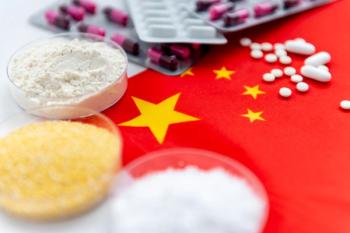
With more than $43 billion committed in five months, the pharma industry isn't just licensing from China, it's restructuring where global drug discovery begins.