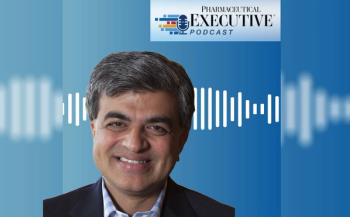
Fran Pollaro talks with Faruk Capan is the CEO, EVERSANA INTOUCH & Chief Innovation Officer, EVERSANA about the arrival of Chat GPT and generative AI in the public consciousness. This is just the beginning.

Fran Pollaro talks with Faruk Capan is the CEO, EVERSANA INTOUCH & Chief Innovation Officer, EVERSANA about the arrival of Chat GPT and generative AI in the public consciousness. This is just the beginning.

Piper Trelstad, PhD, head of CMC, Bill & Melinda Gates Medical Research Institute, shares her experience being a woman in pharma, particularly at the C-suite level, as well as how to have more diversity in the industry.

Fran Pollaro talks with Amanda Powers-Han, chief marketing officer at Greater Than One, a full-experience marketing agency dedicated to healthcare, about what’s trending in early 2023 for pharma media mixes.

In episode 125, Chris Fox, president of Novartis Gene Therapies, shares insights into her work with gene therapies, commercialization challenges, her role at Novartis, and what the team are most excited about in 2023.

Pratap Khedkar, CEO of ZS, a management consulting and technology firm focused on transforming global healthcare, shares his perspective on what 2023 holds for the sales and marketing vertical.

Experts from Karuna Therapeutics discuss current research into schizophrenia as well as psychosis in Alzheimer's disease—including the (lack) of treatment options available for these disorders.

In episode 122, Marcella Milliet Sciorra, Chief Marketing Officer at DeepIntent, discusses Connected TV, or CTV, how it differs from over the top, and how CTV fits into the future of pharmaceutical marketing.

Learn about the evolving cyber-threat landscape affecting the pharmaceutical industry and the recommended approach to addressing those threats.

In episode 121, Nathalie Dompé, co-CEO of Dompé Pharmaceuticals, shares a glimpse into her journey in the pharma industry, her leadership style, the differences in working in leadership in the United States vs. Europe (Italy, specifically), and technologies in the biopharma industry.

Today’s labs are not sufficient to handle tomorrow’s challenges. What will labs in 2030 or 2040 look like? Mikael Hagstroem, CEO at LabVantage Solutions and expert in harnessing data and analytics, discusses the three phases of digital transformation needed to reimagine business models, achieve better performance, and create long-term sustainable advantage. It starts with changing our labs – the technologies, processes, ways of working, and data solutions.

In episode 120, Nico Saraceno, editor of Pharmaceutical Commerce and host of the Pharmaceutical Commerce Podcast, and Andy Studna, associate editor and cohost of the Applied Clinical Trials Podcast, discuss what their respective podcasts offer to listeners, best guests, and more.

Curia is proud to partner with pharma and biotech companies to make new medicines that save lives. In order to be able to do that, Curia needs to be constantly innovating. In this podcast, you will learn from Curia’s VP of Portfolio and Sourcing, James Grabowski, about Curia’s small and large molecules most recent technologies, and capabilities.

Real world data (RWD) and artificial intelligence (AI) offer an unprecedented opportunity for Medical Affairs professionals to gather and share deeper insights about patients, including insights regarding disease progression, outcomes, and treatment response, as well as additional insights about patients’ journeys prior to diagnosis and after treatment initiation. Cindy Weber, of IQVIA’s Artificial Intelligent Solutions team explains how embracing RWD and technology, and the opportunities they provide, is helping to transform Medical Affairs and is enabling professionals to create better, more meaningful, connections with healthcare professionals; thereby helping to improve patient care.

In the past, patient-level insights were achieved through time-consuming methods requiring substantial manual effort to produce static reports. With the help of technology and machine learning, that’s no longer the case. Join Andy Burch and Brian Smith, two thought leaders with a breadth of experience in AI-ML solutions, as they dive into the benefits of bringing automated data in to dynamic visualization products and how they can help you achieve instant insights.

In episode 119, Doina Ionescu, Managing Director, UK & ROI, at Merck, discusses her career journey, gender discrimination in the workplace, her role in the ABPI, and lessons she's taken from Queen Elizabeth II.

In episode 117, Helen Sabzevari, CEO of Precigen, discusses her drive to study science as a Persian-born woman, the opportunities she’s had to research immunology, and how she’s now developing next-generation CAR-T treatments for cancer, in addition to other therapies.

In episode 116, Dr. Greg Rippon, vice president and chief medical partner at Genentech, discusses his work in Alzheimer’s and his outlook for the future of the therapeutic space.

In episode 114, Tiago Reis Marques, MD, PhD, CEO of Pasithea Therapeutics, discusses why it’s important to manage high levels of workplace stress, and how companies can help employees in need.

In episode 113, Indranil Bagchi, senior vice president and worldwide head, value and access at Novartis, and member of Pharmaceutical Executive Editorial Advisory Board, discusses the challenges of reaching patients and what he believes can help improve the situation.

In episode 112, Nima Farzan, CEO of Kinnate, who was one of Pharmaceutical Executive’s Emerging Pharma Leaders in 2013, discusses how he’s successfully navigated his career path, from building a foundation in pharma to growing his expertise in biotech.

Ken Winell, chief technology officer of Greater Than One, talks about the metaverse and the potential it has to serve the pharma industry.

Myrto Kontaxi, a partner in the Biopharma Sustainability Roundtable, and lead author on its updated Biopharma Investor ESG Communications Guidance; and Victoria Emerick, global head of sustainability strategy and operations at Bristol Myers Squibb, a Biopharma Sustainability Roundtable participant, and a key contributor to the Guidance development process, discuss the growing demand for better communication about ESG strategy and performance, and how the updated ESG Guidance can help both biopharma companies and investors respond.

In this podcast, co-founder and CTO of Emulate, Inc, discusses why now is the time for researchers to accelerate their transition from animal models to human relevant-science with Organ-on-chip technology. There is no doubt that animal models have contributed to major advances in medicine, however, a growing body of evidence suggests that animal models are seriously lacking in both sensitivity and specificity when it comes to predicting drug toxicity in humans. In a recent study published to bioRxiv, researchers found the human Liver-Chip to have an 87% sensitivity and 100% specificity when differentiating hepatotoxic from non-hepatotoxic small molecules. Importantly, all 22 hepatotoxic drugs included in the study had previously been classified as safe due to a lack of toxicity in animal models. Collectively, these compounds resulted in 208 patient fatalities and 10 liver transplants. Had the human Liver-Chip been used during preclinical screening of these compounds, it’s likely that many of these fatalities could have been avoided. By adopting organ-on-a-chip, you can help make the drug development process safer, more efficient and more humane.

In episode 107, Camille Hertzka, VP, head of oncology US medical at AstraZeneca, talks about her experience as a leader in oncology over the years and to expect from the space moving into the future.

In episode 104, Susanne Schaffert, president of Novartis Oncology, discusses her career journey, which has combined both a passion for the arts and science, and how she believes the two can work together in pharma.

In episode 103, Robert Clarke, CEO and co-founder of Kinaset Therapeutics, talks about developing inhaled therapies to fight asthma and COPD, which is especially relevant as COVID-19 poses significant problems for sufferers.

In episode 102, Mike Devoy, chief medical officer of Bayer, also executive vice president of medical affairs and pharmacovigilance for Bayer’s Pharmaceuticals Division, discusses how innovation, including the digitalization of healthcare delivery, and breakthrough technologies can help people make the most out of the longer lives they’re living today.

As pricing transparency regulations and COVID-19 accelerate market disruption and changes in consumer behavior demand new engagement models, how can your organization prepare for the powerful shift toward more consumer-centric pricing transparency?

Our milestone 100th episode includes Lisa Henderson, group editorial director; Julian Upton, European and online editor; Fran Pollaro, senior editor; and Andy Studna, associate editor, discussing industry trends in areas such as Chinese biotech, corporate branding, psychedelic medicines, and market access barriers.

Bill Sibold, executive vice president and head of Sanofi Genzyme, talks about his work in specialty care over the past 10 years and what makes it unique.