




The Federal Trade Commission and Department of Health and Human Services are examining the practices of group purchasing organizations and drug wholesalers and the role they may play in triggering shortages of generic medications.
The Federal Trade Commission and Department of Health and Human Services are examining the practices of group purchasing organizations and drug wholesalers and the role they may play in triggering shortages of generic medications.

In this video interview with Pharm Exec Associate Editor Miranda Schmalfuhs, Dr. Jo Varshney, CEO & Founder of VeriSIMLife, discusses how artificial intelligence and machine learning can assist in the drug shortage problem.

Beyfortus (nirsevimab-alip), a monoclonal antibody that protects against respiratory syncytial virus-associated lower respiratory tract disease, experienced higher than anticipated demand that led to shortages during the 2023-2024 season.

Roots Analysis report suggests increase can be attributed to the growing demand for advanced therapies and biologics.

Lack of trust in pharma-provided content proves to be a key barrier to successful engagement, highlighting issues like promotional spin, information availability, and more.
Law aims to mitigate ongoing global drug shortages.

Researchers highlight steps to be taken in the European Union to manage the challenge of ongoing drug shortages.
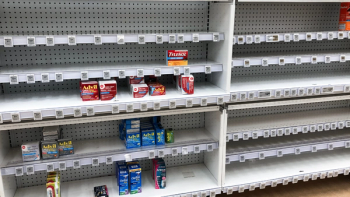
IQVIA report explores why these shortages are increasing, and how they can be mitigated.
House Committee on Oversight and Accountability request documents on agency’s drug shortage mitigation strategies.

Due to a higher than anticipated demand, Sanofi is carefully managing distribution of 50 mg doses of Beyfortus in the private market to fulfill existing orders and provide equitable access to remaining doses for the vaccine that protects infants against respiratory syncytial virus.

Mangal discusses the causes of the shortage and how pharma companies can find solutions.

Due to a global demand, treatments such as Adderall and Ritalin have been in short supply for the management of attention-deficit hyperactivity disorder.

Increase in new treatments also brings increase in logistical challenges for pharma.

As borders shut down during the pandemic, pharma learned some lessons about sourcing.

The 2013 Drug Supply Chain Security Act (DSCSA) established a framework for exchanging data when products are transacted throughout the US pharma supply chain. Its goal, by November 2023, is to enable unit-level traceability in a secure, interoperable manner. HDA’s Chip Davis talks about how pharma manufacturers must prepare for this implementation deadline.

Rafael Teixeira on building an end-to-end cold chain strategy to support global storage and distribution efforts.

Additional assistance necessary for patients prescribed specialty therapies.
The Biden administration has rolled out a broad initiative to promote domestic production of critical materials, including medicines and their ingredients.

Hannah Schofield and Lavan Thasarathakumar discuss what blockchain is, how it could help improve pharmaceutical supply chains, and the COVID-19 vaccine supply chain in particular, and touches on where we are already seeing blockchain technology being used in this area.
If telehealth is here to stay, how is the industry adjusting?
Mitigating the risks of development, authorization, and marketing for new therapies following "new normal" created by COVID-related violations.
Ferdi Steinmann outlines a few supply chain lessons that all pharma companies can learn from the COVID-19 pandemic.
Pharmaceutical Executive
Taking stock of evolving practices in protecting the supply chain amid the pandemic, including partnering and planning for what’s next.
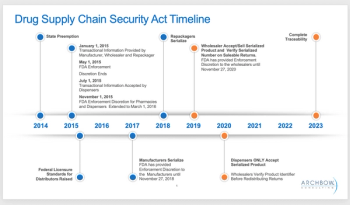
It is vital to begin asking questions about your company’s DSCSA readiness and compliance, as well as that of your strategic partners, writes Rob Besse.

MilliporeSigma's Robert McGuirk speaks with Pharma Exec about the role of supply chain robustness in helping to mitigate the risk of drug shortages