

Supply Chain
Latest News
Advertisement
Latest Videos





Shorts
Advertisement
More News

Rohit Tripathi, VP of Industry Strategy at RELEX, talks with Pharmaceutical Executive about the impact new phased tariffs will have on reshoring pharma manufacturing.

Why pricing pressure, policy volatility and supply-chain risk are pushing drugmakers toward greater cost and portfolio discipline, without losing sight of investment in innovation.

Gerren McHam, vice president of Government and External Affairs, API Innovation Center, discusses what is compounding U.S. pharmaceutical supply chain vulnerabilities.

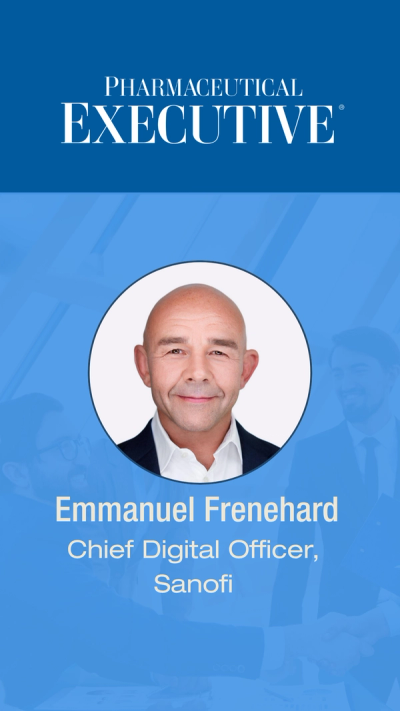
Sanofi Chief Digital Officer Emmanuel Frenehard on scaling AI across a Big Pharma global enterprise and why a strategy of concentrated AI bets — not scattered pilots — can better drive real transformation without losing sight of governance, culture or patients.

As advanced therapies scale, manufacturers are rethinking how they bring products to market and who they rely on to get there.

Special Guest Op-Ed: The time is now to elevate manufacturing and supply to a defining pillar of life sciences innovation.

The looming patent cliff exposes a deeper industry challenge, as biopharma companies face up to $400 billion in at-risk revenue while struggling to translate abundant data into actionable insight needed to compete in increasingly crowded markets.

Jeff Golfman, founder and president of Send 123, in a conversation with Pharmaceutical Executive, discusses how rising geopolitical tensions around Iran and broader global disruptions are reshaping pharmaceutical and medical supply chains.

The ongoing volatility in the Middle East and disruption risks tied to the Strait of Hormuz are exposing a broader but often underappreciated vulnerability in global pharmaceuticals.
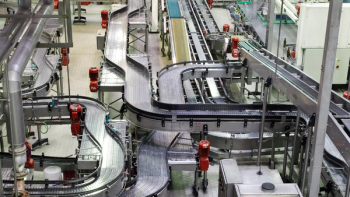
AbbVie has announced a $1.4 billion investment to build a new pharmaceutical manufacturing campus in North Carolina, expanding its U.S. footprint with a focus on advanced sterile injectable production.

Supply chain chokepoints are converging to expose deep structural vulnerabilities in the U.S. drug supply, with new data showing that even medicines not currently in shortage may be one disruption away from crisis.

Recent breakthroughs in artificial intelligence allow specialized language models to automatically extract critical information from thousands of complex drug labels in minutes instead of days.

Dan Bell, chief strategy officer at Marken, discusses how biopharma companies and logistics teams are responding to the dual disruptors to global supply chain operations.

Disruptions from the U.S.and Iran conflict moves across key transit routes and threatens the flow of active ingredients, price spikes, and heightened risk of drug shortages worldwide.

Conflict in the Middle East is forcing pharmaceutical companies to reroute temperature-sensitive medicines through alternative corridors.
In this video episode, Pratap Khedkar, PhD, CEO of ZS, joins the Pharm Exec Podcast to discuss three distinct industry trends and strategy shifts converging at the moment amid the backdrop of US-driven global policy change.
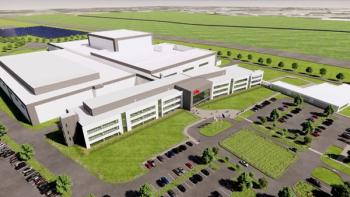
The facility builds on Eli Lilly's $50 Billion investment strategy to strengthen the company's domestic manufacturing capabilities.

Taking a more strategic, data-driven approach to tail spend can transform procurement from a fragmented cost center into a source of compliance strength, operational efficiency, and greater supply chain confidence.

Persistent blood shortages compounded by widespread laboratory staffing burnout and vacancies are straining transfusion medicine, making investment in lab workforces critical to safeguarding patient access to lifesaving blood supplies.
Johnson & Johnson reinforces its long-term domestic investment strategy with a new $2 billion biologics facility in Wilson, North Carolina, further elevating the state’s role as a global life sciences hub.

The entrepreneur urges the Trump administration to eliminate costly FDA generic drug fees, part of a broader push to scale domestic production, address shortages, and challenge PBM-driven pricing models.

The agreement includes exemptions for UK-produced drugs and medical devices from Section 232 tariffs, but mandates a significant change to the UK's NICE value appraisal framework.
As part of its multi-billion-dollar investment, the company will be creating a unified, end-to-end manufacturing campus spanning biologics, gene therapy, solid dosage, and packaging operations.
Moderna invests $140 million in its Norwood facility, creating hundreds of bio jobs while also enhancing manufacturing presence in the U.S.
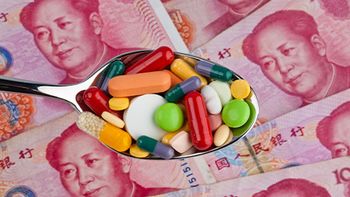
A US-China Economic and Security Review Commission report highlights China’s tightening grip on APIs, biomanufacturing, and R&D services, raising alarms about supply chain vulnerabilities, data transparency gaps, and the urgent need for US policy action.
Advertisement
Advertisement
Trending on PharmExec
1
Roundup: Teva Acquires BXCL501 for $57.5 Million Upfront, Rumi Therapeutics Enters Option Agreement for Fragile X PDE2 Inhibitor From Enthorin
2
The Next Biopharma Revolution: Quantum Computing
3
How Medications like XOCOVA Prevent Illness After Exposure to COVID-19
4
Bristol Myers Squibb Discloses Patient Death in CAR-T Multiple Sclerosis Trial
5