

Vincent Hennemand discusses using these types of therapies to develop treatments for autoimmune conditions.
Vincent Hennemand discusses using these types of therapies to develop treatments for autoimmune conditions.
In today's Pharmaceutical Executive Daily, the FDA issues new draft guidance aimed at reducing the cost and complexity of biosimilar development, Novo Nordisk responds to an FDA warning letter stemming from a 2025 inspection of its U.S. headquarters, and Pharmaceutical Executive's latest analysis examines the state of the biopharma industry as it navigates a period of cautious momentum.

Fresh off 2025, where the sectors delivered strong stock gains and selective financing momentum despite volatile markets, companies navigate policy headwinds, patent cliffs, and shifting global innovation dynamics, factors that favor strategically driven growth pursuits ahead.

FDA cites systemic failures in how the company tracked and reported adverse drug events across several of its medicines, including semaglutide.

Leaning into a future downward pricing environment in pharma.
FDA issued draft guidance that would eliminate certain clinical pharmacokinetic studies from the biosimilar development process.

ICON Biotech surveyed 163 biotech leaders in North America, EMEA and APAC to see how they are responding to the headwinds.
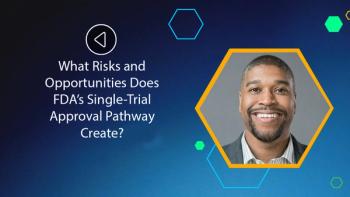
Ron Lanton, Senior Partner & Global Strategist, Lanton, Lanton & Sosa Law PLLC, notes FDA’s single-trial approval pathway may accelerate development, but manufacturers face heightened litigation risk, pricing uncertainty and safeguards.

Europe’s Joint Clinical Assessment promises harmonization, but it introduces a new layer of strategic complexity that manufacturers must navigate at both EU and national levels.

Ron Wyden led 7 Democrats demanding details from Pfizer, AstraZeneca, Novo Nordisk, and Eli Lilly.
In today's Pharmaceutical Executive Daily, the FDA approves leucovorin as the first-ever treatment for an ultra-rare genetic condition called cerebral folate transport deficiency, Enhertu receives FDA Priority Review for HER2-positive early breast cancer in the post-neoadjuvant setting, and a new commentary argues that AI has fundamentally changed how healthcare communicators must think about content strategy.

FDA approved GSK's Wellcovorin as the first treatment for cerebral folate deficiency caused by a rare genetic variant.

The application is based on Phase III trial data showing the drug reduced the risk of invasive disease recurrence or death.
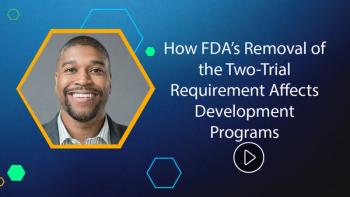
Ron Lanton, Senior Partner & Global Strategist, Lanton, Lanton & Sosa Law PLLC, discusses FDA’s removal of the two-trial requirement marking a significant policy shift and prompting sponsors to consolidate into a single robust pivotal study.

Conversational AI is pushing engagers to prioritize clear, explainable guidance as patients and clinicians delegate understanding to chatbots.
In today’s Pharmaceutical Executive Daily, Vinay Prasad exits the FDA’s Center for Biologics Evaluation and Research for the second time in under a year, major deal activity including a GSK and Alfasigma licensing agreement along with Servier’s $2 billion acquisition of Day One Pharmaceuticals, and Ipsen withdraws Tazverik from the market following emerging clinical trial data.

The deal comes after Novo took legal action against Hims to prevent the company from offering compounded GLP-1 medications.

Ipsen is withdrawing its EZH2 inhibitor Tazverik from all markets after an ongoing clinical trial identified safety concerns involving secondary blood cancers.

The vaccine chief briefly left the role last summer before almost immediately returning to it.

The GSK licensing deal is reportedly worth up to $690 million.

Ron Lanton, Senior Partner & Global Strategist, Lanton, Lanton & Sosa Law PLLC, notes shifting regulatory signals for Moderna’s mRNA flu vaccine review and raises broader questions about the stability of the approval pathway.

Pharma companies choosing between Salesforce and Veeva’s CRM has larger implications than many expect.
The drug is part of the Commissioner’s National Priority Review Voucher program.

FDA informed uniQure it will not accept external control data as the primary basis for approving AMT-130, instead demanding a prospective, randomized, sham surgery-controlled trial before moving forward.

Market access strategies are evolving as more biopharma companies commercialize their own therapies, requiring closer alignment with payer requirements, provider education, specialty pharmacy networks, and patient support services to ensure appropriate coverage, prescribing, and long-term adherence.
In the second part of his conversation with Pharmaceutical Executive, Ajna Biosciences CEO Joel Stanley explains the complexities of getting a botanical drug approved.

From data risk to relationship equity, the need to rethink consent in life sciences marketing.

The business and market models drugmakers must continually adapt to stay competitive as 2026 progresses.
In today’s Pharmaceutical Executive Daily, Cognito Therapeutics and Nexcure secure new financing rounds to advance their pipelines, artificial intelligence and large language models reshape pharmacovigilance and drug safety monitoring, and Eli Lilly launches a new Employer Connect platform to expand obesity treatment coverage options.

Cognito Therapeutics and NexCure have each closed new funding rounds this week, advancing an at-home Alzheimer's stimulation device and a platform to bring CAR-T therapy to community settings