
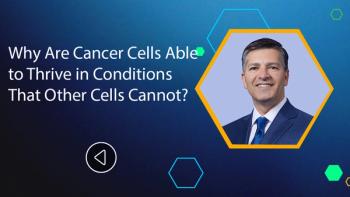
Yerem Yeghiazarians, MD, discusses the importance of understanding why certain cells (like cancer cells) can survive in situations that would kill other healthy cells.
Yerem Yeghiazarians, MD, discusses the importance of understanding why certain cells (like cancer cells) can survive in situations that would kill other healthy cells.
In today's Pharmaceutical Executive Daily, the Trump administration misses a statutory deadline to nominate a permanent CDC director, leaving the agency in continued leadership limbo, the FDA grants accelerated approval to Denali Therapeutics' Avlayah as the first therapy designed to cross the blood-brain barrier and treat the neurological manifestations of Hunter syndrome, and a new commentary breaks down what CMS's updated ASP reporting requirements mean for Part B drug manufacturers ahead of a key April deadline.

The White House postponed naming a permanent CDC director as the Trump administration navigates competing political pressures ahead of midterm elections.

FDA has granted accelerated approval to Avlayah, the first therapy engineered to cross the blood-brain barrier and treat the neurological manifestations of Hunter syndrome.
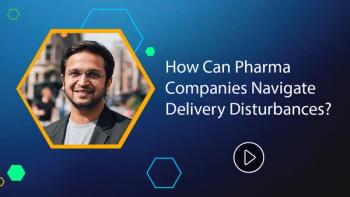
For pharma products, ensuring proper delivery requires the majority of work to occur before the product hits the road.
In today's Pharmaceutical Executive Daily, the FDA issues a warning letter to ImmunityBio over misleading promotional claims about its bladder cancer therapy Anktiva, Merck agrees to acquire Terns Pharmaceuticals in a $6.7 billion deal while Shionogi moves to take full ownership of the Shionogi-Apnimed Sleep Science joint venture, and a new commentary examines the structural pricing problem sitting at the center of the GLP-1 access debate.

eHealth’s vice president of consumer enablement discusses pricing and cost issues with GLP-1s.

The warning letter is directed at promotional claims about Anktiva’s efficacy and use.

Merck is acquiring Terns Pharmaceuticals for $6.7 billion to bolster its oncology pipeline, while Shionogi is set to purchase 50% of Apnimed's ownership of SASS.
While the space has traditionally been dominated by smaller biotechs, that may be changing.
In today's Pharmaceutical Executive Daily, Bayer shares briefly dip after activist investor Inclusive Capital offloads its remaining stake at a loss, Quotient Therapeutics enters a multi-year research collaboration with Merck to discover novel drug targets in inflammatory bowel disease, and Gilead Sciences agrees to acquire privately held Ouro Medicines in a deal valued at up to $2.18 billion.

Inclusive Capital Partners sold a stake worth about 0.9 % of the company.

Merck agrees to multi-year research collaboration with Quotient Therapeutics in a deal worth up to $2.2 billion to use somatic genomics and AI-driven analytics to identify new drug targets for inflammatory bowel disease.

The deal adds OM336, a BCMAxCD3 bispecific T cell engager showing early efficacy in rare antibody-mediated autoimmune diseases, to Gilead's pipeline.

Making changes in the pharma industry in operations is a slightly more expensive process because of larger compliances and regulatory pieces involved.

CMS’s 2026 requirement for manufacturers to submit “reasonable assumptions” alongside ASP data formalizes the role of estimation in drug pricing, increasing scrutiny on how ASP is constructed and shifting reporting toward greater transparency and accountability.
In today's Pharmaceutical Executive Daily, Pfizer warns shareholders to reject an unsolicited mini-tender offer from Tutanota LLC seeking to purchase up to one million shares at a potentially below-market price, the FDA grants expanded approval to Rhythm Pharmaceuticals' Imcivree as the first approved treatment for acquired hypothalamic obesity, and a new commentary makes the case that AI-powered roleplay data is an untapped source of commercial intelligence for pharma field teams.
Pfizer urges shareholders to reject an unsolicited mini-tender offer from Tutanota LLC, who is seeking to purchase up to 1 million Pfizer shares at $32.00-per-share.
This is the agency's first approved treatment for acquired hypothalamic obesity.
Charles DeYoung,Director of Patient Support Operations, Caretria, discusses how CareTria is reshaping patient support in a complex healthcare environment.
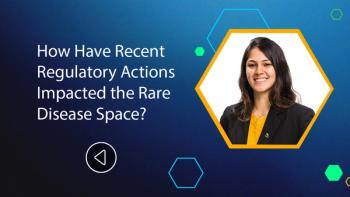
FDA has provided opportunities for R&D in rare disease, although recent developments have caused significant setbacks to occur.
In today's Pharmaceutical Executive Daily, Novartis agrees to acquire a pan-mutant-selective inhibitor from Synnovation Therapeutics in a deal worth up to $3 billion while Collegium moves to acquire Azstarys from Corium Therapeutics, the FDA grants accelerated approval to Wegovy HD, a higher-dose version of Novo Nordisk's semaglutide injection, supported by Phase III data showing roughly 21% mean weight loss, and an analysis on agentic AI and what it means for commercial operations in life sciences.
By correlating behavior data with performance outcomes, it becomes possible to predict what actually drives results.

Novartis agreed to acquire SNV4818 in a deal worth up to $3 billion, while Collegium Pharmaceutical is set to acquire Azstarys for up to $785 million.
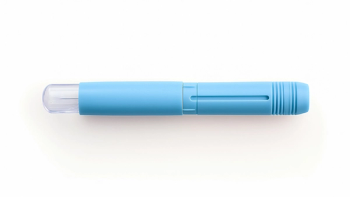
FDA has approved Wegovy HD, a higher-dose 7.2 mg injectable semaglutide, based on Phase III data showing a mean weight loss of 20.7% in adults with obesity.
The episode explores how regulatory signals across drug approvals, trade policy, AI governance, and drug pricing shape business strategy and investor decisions before formal rules are ever finalized.
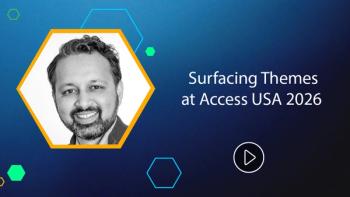
Ankit Jain, CEO, Co-Founder, Infinitus, notes the the emerging themes at Access USA 2026, including regulatory shifts, the collapse of the traditional hub model, and the proliferation of fragmented AI point solutions.
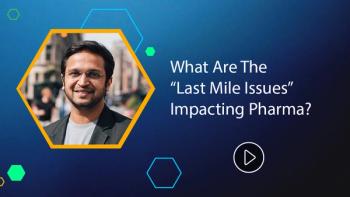
Pharma products face unique issues related to chain-of-custody and cold chain.
In today's Pharmaceutical Executive Daily, a new analysis finds that TrumpRx is listing prices for roughly a third of its featured drugs higher than what patients in the United Kingdom pay, two biotech companies focused on next-generation T-cell engager therapies close significant funding rounds, and Pharmaceutical Executive sits down with Jeanne Marrazzo of the Infectious Diseases Society of America on the worsening U.S. measles outbreak and what it means for the future of vaccine confidence.
A comparison of TrumpRx.gov prices against UK National Health Service pharmacy payouts found that drugs from several major manufacturers remain significantly cheaper under the British system.