

Precigen's president and CEO discusses the recent launch of Papzimeos.
Precigen's president and CEO discusses the recent launch of Papzimeos.
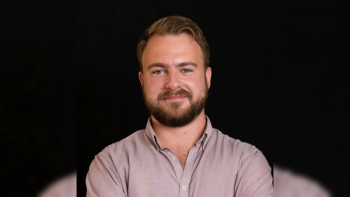
Ethan Smith, therapy area director Oncology, Norstella, explores how antibody–drug conjugates are reshaping oncology, highlighting emerging challenges around treatment sequencing, safety management through real-world evidence, and differentiation as ADC pipelines become increasingly crowded.
In today’s Pharmaceutical Executive Daily, Roche reports positive Phase II results for a dual GLP-1/GIP receptor agonist, procurement leaders reassess compliance risks tied to unmanaged tail spend, and Boehringer Ingelheim enters a $1 billion collaboration with Simcere to advance bispecific antibody research.
Roche reported positive Phase II topline data showing that its once-weekly dual glucagon-like peptide-1 and glucose-dependent insulinotropic polypeptide receptor agonist CT-388 achieved substantial, sustained, and dose-dependent weight loss through 48 weeks

Taking a more strategic, data-driven approach to tail spend can transform procurement from a fragmented cost center into a source of compliance strength, operational efficiency, and greater supply chain confidence.

The collaboration agreement strengthens Boehringer's inflammatory disease pipeline with a potential, first-in-class, pre-clinical asset.

Clay Siegall, president and CEO of Immunome, discusses what he saw investors getting excited for at the annual healthcare conference.
In todays pharmaceutical executive daily, Mirum Pharmaceuticals strengthens its rare disease portfolio through a $268 million acquisition, industry experts examine why data visualization remains a weak point in biotech decision-making, and pediatricians weigh in on evolving vaccine guidance amid ongoing debate.
Both the AAP and CDC released their respective childhood vaccine guidance’s, including different vaccine administration recommendations, age limits, and combined vaccines.

Poor visualization techniques can oversimplify reality and make data less potent.

Mirum Pharmaceuticals’ acquisition of Bluejay Therapeutics adds brelovitug to its pipeline, positioning the company for a potential first approved treatment for chronic hepatitis delta virus while reinforcing its focus on late-stage rare liver disease development.
In today’s Pharmaceutical Executive Daily, tariff uncertainty triggers a short-term surge in pharmaceutical manufacturing activity, workforce burnout threatens the stability of the blood supply, and industry leaders assess whether artificial intelligence in pharma is reaching a critical inflection point.
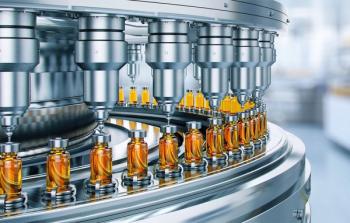
Global pharmaceutical production surged in 2025 due to tariff-driven front-loading but is expected to slow as trade uncertainty, patent expirations, pricing pressure, and shifting industrial policy reshape the industry’s growth, investment, and supply chain strategies.
Persistent blood shortages compounded by widespread laboratory staffing burnout and vacancies are straining transfusion medicine, making investment in lab workforces critical to safeguarding patient access to lifesaving blood supplies.
In today’s Pharmaceutical Executive Daily, the World Health Organization finalizes the United States’ withdrawal from the global health body, Bristol Myers Squibb enters an $850 million collaboration with Janux Therapeutics to advance tumor-activated cancer therapies, and industry leaders examine how real-world data is increasingly shaping patient access decisions.
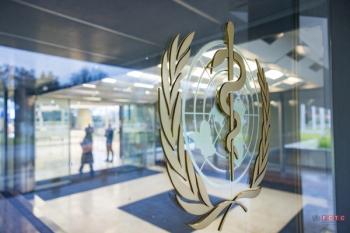
The decision is based on President Trump’s executive order issued last year.
In the final part of his conversation with Pharmaceutical Executive, Ken Keller discusses what his expectations are following the healthcare conference.

Janux Therapeutics has partnered with Bristol Myers Squibb in a global licensing and collaboration deal to advance a tumor-activated therapy for solid tumors, combining Janux’s early-stage platform innovation with Bristol Myers Squibb’s clinical and commercial scale.
In today’s Pharmaceutical Executive Daily, a new study reignites debate over a potential link between Tylenol use and autism risk, TopGum signs a $12 million letter of intent to acquire US manufacturing operations, and industry leaders weigh whether to build or buy AI capabilities amid accelerating digital transformation.

Novavax and Pfizer announce a non-exclusive licensing deal giving Pfizer access to Novavax’s Matrix-M adjuvant technology, a move that underscores Novavax’s shift toward partnership-driven growth.

The acquisition includes several gummy products that are expected to begin launching in 2026.
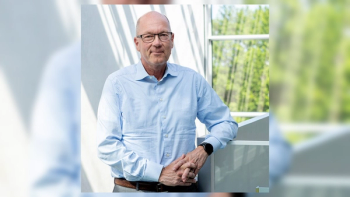
Anders Romare, Advisory Board Member, causaLens, and former Novo Nordisk CDIO, outlines why artificial intelligence represents a structural turning point for the pharmaceutical industry.

Regulatory approval is no longer simply representative of the finish line—but instead can serve as a key launching point to evidence-driven insights that create more timely and broader product access.
In today’s Pharmaceutical Executive Daily, GSK moves to strengthen its immunology pipeline with a $2 billion acquisition of RAPT Therapeutics, Atkins launches a new partnership to better understand consumer mindsets around GLP-1 use, and Shionogi agrees to acquire Pfizer’s remaining stake in ViiV Healthcare.
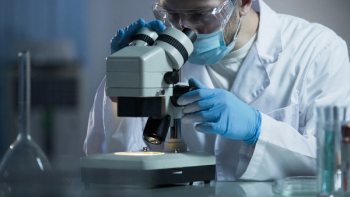
When researchers excluded studies that did not use proper methods to collect data, the results showed no connection between the medication and genetic disorder.
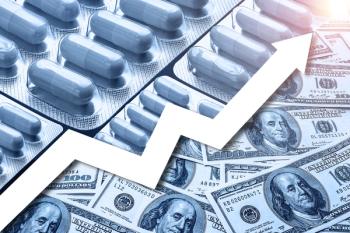
Shionogi and GSK are streamlining ViiV Healthcare’s ownership by buying out Pfizer’s 11.7% stake, leaving the HIV specialist jointly owned by its two long-time partners.

The AI dilemma facing biopharma—and what’s at risk.

A comparison of 2024 and 2025 bio/pharma employment survey results indicates that industry professionals face eroding security, polarized satisfaction, and rising attrition risk.

GSK is strengthening its allergy and immunology pipeline with a $2.2 billion acquisition of RAPT Therapeutics which includes ozureprubart, a long-acting, potentially best-in-class anti-IgE antibody.
In today’s Pharmaceutical Executive Daily, Henlius enters a global exclusive licensing agreement with UMAb Biopharma for a potential best-in-class anti-IL-1RAP antibody, a new report highlights drugmakers raising list prices amid pricing agreements with the Trump administration, and Novartis urges governments to address mounting global trade policy challenges impacting the biopharmaceutical industry.