





Eli Lilly and Company notes that the approval of an every-8-week maintenance dose of lebrikizumab offers sustained atopic dermatitis control with fewer annual injections.
Eli Lilly and Company notes that the approval of an every-8-week maintenance dose of lebrikizumab offers sustained atopic dermatitis control with fewer annual injections.

FDA has accepted Roche's NDA for giredestrant under Priority Review, moving the investigational oral SERD closer to potential approval .

FDA has issued a Complete Response Letter to Cingulate’s ADHD candidate CTx-1301 over manufacturing-related deficiencies, delaying approval of the once-daily therapy while leaving its clinical safety and efficacy profile unchallenged.

FDA approves Shionogi’s Xocova as First Oral Post-Exposure Covid-19 Prevention Therapy, marking a major milestone for Covid-19 prevention treatments.

In today’s Pharmaceutical Executive Daily, Harpreet Singh discusses the evolving regulatory landscape for biopharma, the World Health Organization identifies three priority treatment candidates for the Bundibugyo strain of Ebola virus disease, and this week’s pharma roundup highlights new findings on Mounjaro and long COVID-related immune system changes.

FDA advisors are set to meet this week to determine whether Covid-19 vaccines should be updated to target the emerging XFG variant, a decision that could shape the composition of the 2026–2027 immunization season amid ongoing viral evolution.

Harpreet Singh, former FDA Oncology Division Director and current chief medical officer at Precision for Medicine notes how evolving FDA review standards, expedited approval programs, and emerging AI tools are reshaping the regulatory landscape for biopharma companies.

Harpreet Singh, MD, notes that FDA’s internal AI system could improve efficiency in drug review by helping reviewers aggregate and synthesize complex data.
In today’s Pharmaceutical Executive Daily, Eli Lilly announces three acquisitions totaling roughly $3 billion, the FDA approves Hepcludex as the first treatment for chronic hepatitis delta virus infection in the United States, and biotech finance leaders reflect on the lessons learned from navigating two decades of volatile markets.
FDA approves Gilead’s Hepcludex as the first treatment for chronic hepatitis delta virus in the U.S., marking a major milestone for a severe liver disease with limited therapeutic options.

FDA approves AstraZeneca and Daiichi Sankyo’s Datroway for first-line metastatic triple-negative breast cancer, expanding treatment options for patients ineligible for PD-1/PD-L1 inhibitor therapy.
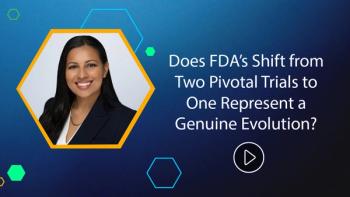
Harpreet Singh, MD, notes that the FDA’s broader shift toward accepting single pivotal trials reflects an evolution in regulatory thinking, while noting the agency still weighs disease severity, unmet need, trial design, and long-term safety
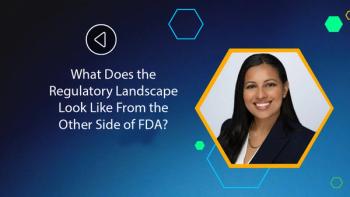
Harpreet Singh, MD, says understanding regulatory precedent, division-level dynamics, and the agency’s data-driven culture is critical for biopharma sponsors navigating today’s oncology approval landscape.

FDA undergoes leadership upheaval, leaving key drug and biologics divisions under interim control and raising concerns over regulatory continuity amid turnover at the agency’s highest levels.

FDA approved Baxfendy for adults with uncontrolled hypertension, introducing a new drug class in a large and competitive market.

FDA expanded Enhertu (trastuzumab deruxtecan) use in early HER2-positive breast cancer based on phase 3 neoadjuvant and adjuvant trial data.

FDA places full clinical hold on Aardvark’s ARD-101 in Prader-Willi syndrome after heart-related adverse events, pausing late-stage studies and raising new questions around safety in appetite-regulation therapies
FDA approved AstraZeneca’s Fasenra for hypereosinophilic syndrome in patients aged 12 and older, expanding the IL-5 receptor-targeting therapy into a third eosinophil-driven disease with limited treatment options.
In today's Pharmaceutical Executive Daily, the FDA grants accelerated approval to BeOne Medicines' Beqalzi as the first and only BCL2 inhibitor for relapsed or refractory mantle cell lymphoma, while also approving Taiho Oncology's Inqovi in combination with venetoclax for newly diagnosed acute myeloid leukemia, Pharmaceutical Executive reports on the Doceree Makers Summit, and Dean Erhardt argues that AI-enabled workflow automation offers a practical path to fixing the prior authorization system's chronic failures.
FDA has approved BeOne Medicines’ Beqalzi for relapsed or refractory mantle cell lymphoma and Taiho Oncology’s Inqovi plus venetoclax for newly diagnosed acute myeloid leukemia, expanding treatment options for patients with difficult-to-treat blood cancers.
FDA has approved Partner Therapeutics’ Bizengri for NRG1 fusion-positive cholangiocarcinoma, expanding precision oncology options for a rare subset of gastrointestinal cancer patients with limited targeted treatment alternatives.

President Trump is reportedly planning to dismiss FDA Commissioner Marty Makary, adding further leadership uncertainty across U.S. health agencies.
In today’s Pharmaceutical Executive Daily, the FDA extends its priority review of a subcutaneous formulation of Leqembi, industry analysts examine how upcoming GLP-1 patent expirations could reshape the drug delivery device market, and experts discuss the key forces driving renewed growth in radiopharmaceuticals.
FDA extended its review of Leqembi’s once-weekly subcutaneous starting dose for early Alzheimer’s disease by three months after requesting additional information from Eisai and Biogen.

FDA clears Cellenkos’ IND for CK0802, enabling a mid-stage trial in steroid-refractory GVHD.