




FDA
Latest News
Advertisement
Latest Videos








Shorts


Advertisement
More News

Nate Hill, co-founder & CEO, Strive Pharmacy, breaks down looming questions around the completed FDA PCAC hearing on peptides.
FDA approves three new therapies spanning autoimmune disease, HIV, and cardiovascular risk, DualityBio and Teva strike major biopharma deals, and Israel Ortiz makes the case for preventive maintenance in manufacturing.

FDA approved Priovant's Lisraya (brepocitinib) as the first targeted therapy for dermatomyositis, Gilead's Bixlenvo as the first once-daily single tablet regimen for virologically suppressed HIV patients, and expanded Mounjaro's label to include cardiovascular risk reduction in high-risk type 2 diabetes patients.

The FDA has approved Revolution Medicines' daraxonrasib, the first RAS-directed therapy for previously treated metastatic pancreatic adenocarcinoma, based on a phase 3 trial showing a survival benefit over chemotherapy.
FDA approves Imaavy as the first treatment for warm autoimmune hemolytic anemia, McKesson agrees to acquire Precision Medicine Group as Lundbeck partners with Eversana on AI-driven commercialization, and Adam Bartley examines how integrated GMP operating models are reshaping outsourced manufacturing.

FDA approved Imaavy (nipocalimab-aahu) as the first-ever treatment specifically indicated for warm autoimmune hemolytic anemia in patients ages 12 and up.
James LaValle, chair of the International Peptide Society, notes how the advisory committee's favorable vote on peptides for the 503A Bulks List was a meaningful step without constituting approval.
FDA has approved Regeneron's Pasatru ,the first treatment for fibrodysplasia ossificans progressiva in adults.
President Trump moves to nominate Heidi Overton as FDA commissioner, Ron Lanton weighs in on drug pricing's collision with trade policy, and Mohd Haque looks at how pharma leaders are scaling AI across the drug lifecycle.
President Trump has reportedly selected White House Domestic Policy Council deputy director Heidi Overton as his nominee for FDA commissioner.
FDA has granted accelerated approval to Zenbexus plus daratumumab and Hyaluronidase-fihj and dexamethasone for multiple myeloma after at least one prior line of therapy.

President Trump signs an executive order shrinking the recommended childhood vaccine schedule from 18 diseases to 11, and calls for the MMR shot to be split into three separate injections.

Tarsus Pharmaceuticals has agreed to acquire Alkeus Pharmaceuticals for $450 million, centering the deal on gildeuretinol.
FDA has granted accelerated approval to Replimune's Tudriqev plus nivolumab for anti-PD-1-refractory unresectable advanced cutaneous melanoma.
In today's Pharmaceutical Executive Daily, an antitrust attorney weighs the legal risks of a hypothetical AstraZeneca-Bristol Myers Squibb merger, Eli Lilly beats Wall Street estimates on soaring Mounjaro and Zepbound sales and raises its full-year guidance, and the FDA approves Moderna's first mRNA-based flu vaccine for adults 50 and older.

FDA has approved Takeda's Orzeyful as the first oral orexin receptor 2 agonist for narcolepsy type 1 in adults.
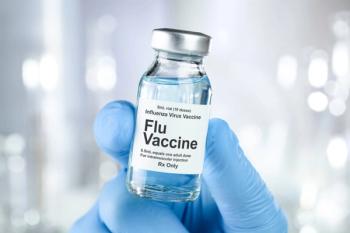
The FDA has approved mFLUSIVA (mRNA-1010), Moderna's mRNA-based influenza vaccine, for use in adults 50 and older.
In today's Pharmaceutical Executive Daily, FDA's advisory committee votes in favor of Replimune's RP1 efficacy data in advanced melanoma, three clinical-stage biopharmaceutical companies file for IPOs spanning cardiovascular, immune, and metabolic disease, and a new analysis examines why two-thirds of pharmaceutical product launches fail to meet expectations.
FDA's advisory committee voted 10 to 3 that efficacy data from the Ignyte study is evaluable and clinically meaningful.
In today's Pharmaceutical Executive Daily, a commentary examines why fragmented software tooling causes scientific judgment to get lost across the biologics R&D pipeline, Replimune shares crash nearly 32 percent after FDA reviewers raise concerns about its melanoma therapy, and FDA approves Viatris's Gwyn Lo as a new once-weekly contraceptive patch.

An FDA advisory panel voted to recommend six of seven unapproved peptides for compounding access, raising concerns about its newly appointed members.
FDA has approved Viatris' Gwyn Lo as a once-weekly low-dose estrogen contraceptive patch, offering women with a BMI below 30 a non-invasive hormonal contraception option.

Replimune shares fell nearly 32% after FDA staff reviewers raised concerns that its lead melanoma therapy RP1 lacks clear evidence of systemic efficacy.
In today's Pharmaceutical Executive Daily, FDA approves Otsuka's Simtriyo as the first NDSRI treatment for ADHD, argenx agrees to acquire Forte Biosciences for approximately $2.2 billion, and an AbbVie neuroscience researcher discusses the shift from symptom management to disease modification in Parkinson's research.

FDA has approved Otsuka's Simtriyo as the first norepinephrine, dopamine, and serotonin reuptake inhibitor for ADHD.
Advertisement
Advertisement
Trending on PharmExec
1
FDA Approves Fayuvi for Pediatric Patients with Sanfilippo Syndrome Type A
2
The Battle to Own the GLP-1 Patient Journey
3
M&A Roundup: Lisata Therapeutics Acquires Marea Therapeutics, mAbxience Enters Collaboration with Sandoz
4
Understanding the Latest with MFN Pricing and What It Means to Pharma
5