
Pharmaceutical Executive
Rejection is tough to take, but leaders have the drive and ability to bounce back from a setback with boundless energy
Pharmaceutical Executive
Rejection is tough to take, but leaders have the drive and ability to bounce back from a setback with boundless energy

Pharmaceutical Executive
It's not that I disagree with the Obama and McCain healthcare proposals. It's that there's nothing actually there to disagree with

Pharmaceutical Executive
Rare disease treatments are riding high as patient adcovates, pharma companies, and government officials celebrate the ODA's 25th anniversary

Pharmaceutical Executive
Genentech had previously been number one by a very wide margin. This year, that margin started to narrow. Novartis is now a much closer second

Pharmaceutical Executive
No, it's not as glamorous as its double-helixed offspring. But recent revelations about RNA turn even cold-eyed scientists into lyrical romantics
A new European Federation of Industries and Associations report expresses industry fears after Neelie Kroes's January raids.
Pharmaceutical Executive
Merck bolsters vaccine making division with the addition of 400 new employees to fill its new manufacturing plant.
Pharmaceutical Executive
On Monday, a handful of Big Pharma companies told Congress that they would put a six-month moratorium on drug ads for recently approved medication. Pfizer, Merck, Schering-Plough, and Johnson & Johnson also agreed to closely follow the American Medical Association's guidelines when using actors playing physicians in advertisements.
Pharmaceutical Executive
French drugmaker to cut 800 jobs, joining the long list of companies restructuring to make ends meet.
Pharmaceutical Executive
Swiss pharma giant Roche was abuzz at ADA, announcing that its new diabetes treatment is set for Phase III trials and commenting on future plans for failed CETP inhibitor dalcetrapib.

Prix Galien USA - The Galen Prize - Gala Awards Ceremony
Badly wounded by mounting fears of its safety profile and plunging prescriptions, Pfizer?s novel smoking-cessation drug that promised blockbuster sales is now fighting for its life?with a no-holds-barred ad and PR campaign.
MedTrust Online is pitching customized Web sites linking primary-care physicians to one another, oncology specialists, and a trove of medical content has grabbed a lot of press. Can it fly?
Pharmaceutical Executive
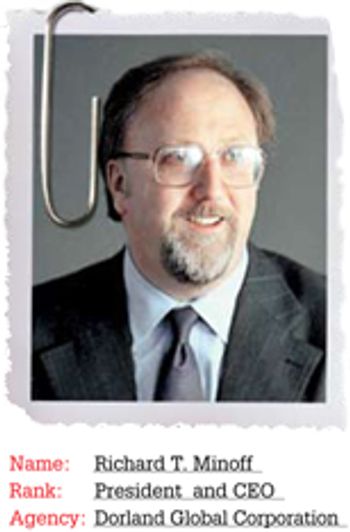
"We continue to see growing interest in performance-based compensation systems. The bottom line is that clients are seeking a shared risk/reward to make sure agencies have "skin in the game", or to put it another way?are guaranteed to focus on the engagement given the stakes. As an agency, we have been quite happy to participate in these arrangements provided the "game rules" are fair and equitable, and ensure an appropriate level of mutual control.

Pharmaceutical Executive
Pharma and ad agencies have enjoyed a long and profitable relationship, but now their worlds are changing. Can this marriage survive?

We don't want to be the folks traveling to North Carolina to sell cigarettes better. Most of us who work in healthcare advertising are in it to promote pharmaceutical products responsibly and effectively. That means you find the essence of what is attractive about the brand to the clinician, and personify that essence into a brand identity that can reinforce the quality of the sales call over and over and over again ... especially in nonpersonal settings.

When you hang out a shingle as a full-service healthcare communications company, you must be prepared to offer fully integrated marketing and communications products and services. That translates into some fairly block-and-tackle kinds of offerings, including an ability to provide online and traditional off-line promotional solutions that work synergistically to meet an objective. Also, the agency must be compliance-ready, armed with an up-to-the-minute understanding of FDA promotional guidelines.
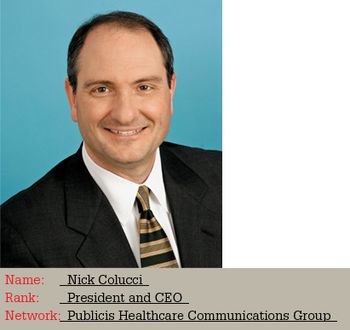
In our line of work, three things matter: patients, speed, and transparency. Ultimately, everything we do is about patient care. Whatever the medical condition, our work encompasses mobilizing health professionals for the good of society. Our level of responsibility to that patient care mission must never be compromised. At the same time, we live in a make-it-easy world, dominated by information overload, and our charge is to deliver the important health imperatives in a timely and accessible manner.

Marketing biologics is smaller, leaner, and more data-driven than traditional pharma. With the focus often on specialist physicians and on patient populations in the tens of thousands-or even thousands-direct and digital media are the primary outreach channels over advertising and print. In our experience with biologics, advertising is a low priority compared to the Web, medical meetings, and alternative media. Sometimes there's no advertising at all.

Relationship marketing can be a platform for doing lots of different things. It can be your platform for messaging to multiple constituents. So you can have a relationship with physicians, with the allied healthcare professionals in the office, with the consumers, even with managed care. And if you're smart, you can weave those together into a more cohesive plan. You can do integrated marketing communications via relationship marketing because it has so many abilities and different touch points. You can do online, off-line, call center, direct selling, whatever. So you can really have a more holistic view of your customer and your communication strategy. It's a springboard for the whole promise of Web 2.0 and the communities and advocates. Relationship marketing is perfectly suited to trying to build that kind of stuff-consumer-directed content.
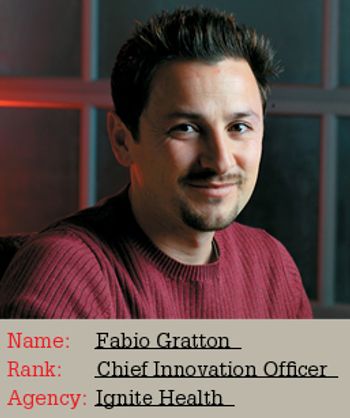
Everyone wants to be a market leader and innovator, but no one wants to take a risk that could cost them their job. While there is a tremendous interest in strategies that leverage Web 2.0, we have yet to see the kind of traction one might expect given the surrounding media frenzy and accompanying client demand. Most of it is very safe, and does not fully take advantage of what Web 2.0 is all about-collaboration, community, and consumer-generated content.
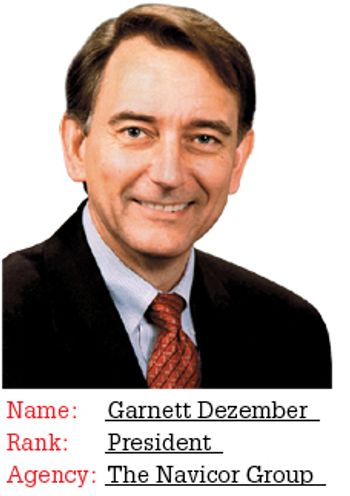
The expectations I had of agencies when I was a client and those of our clients today are very similar. The agency was expected to be a partner in determining the best overall strategies and positioning, which drove the creative executions. However, many agencies today seem to be searching for a growing range of services to offer their clients. As long as the services are communications-focused, they will be seen as complementary and will be appreciated. If they are not communications-focused, then the challenge for the agency will be to demonstrate value and avoid diluting the core capabilities upon which it was founded.
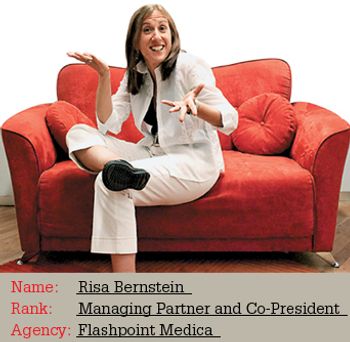
Trust is one of the great intangibles in the agency–client relationship. It probably affects the choice of an agency in the first place. With trust comes loyalty, and with loyalty comes a willingness to take the kinds of risks that lead to truly breakthrough ideas, without fear of penalty and failure.
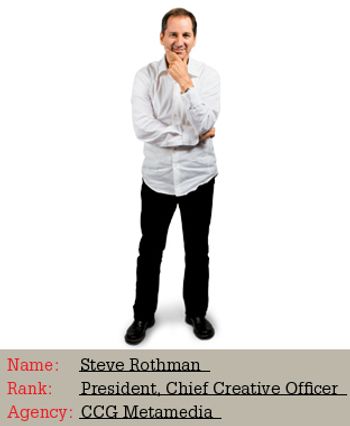
To paraphrase a candidate from a long-ago political season: It's the science, stupid. Yes, access to good (hopefully great) creative is still a baseline expectation of clients. But it's just the beginning, and the distillation of insights into effective creative can carry agencies and brands only so far these days. In this environment, there is an enormous burden of proof that must be met to build belief and sustain confidence in new and existing products. That burden can be met only with a broad-based, intensive focus on science and medicine. That places a premium on the work that has traditionally been the domain of strategic science and medical education agencies. The difference for agencies today is that they must embrace new creative approaches and multichannel technologies to deliver solid science programs in a digital world. The product visual aid isn't dead, but it is diminished and simply can't shoulder the weight it has in the past.
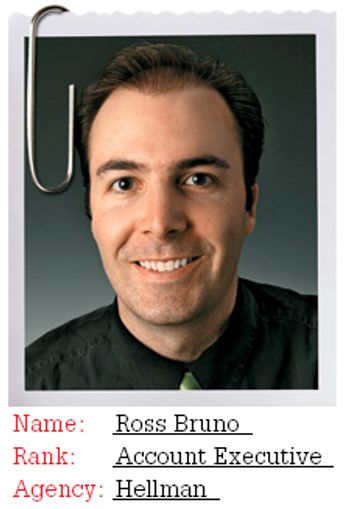
When was the last time you met with an ad agency that was asked to participate on boards for biotech and in assisting commercialization initiatives? When was the last time you sat down to have a drink with your agency, and they told you about the next generation of bone morphogenic protein clinicals and the marketing opportunities it will provide tomorrow? An agency will never hold the industry knowledge that those in the industry personally hold. But the agency to invest in should likewise be investing in you ... working to understand your complex industry, not just the audience.

Imagine a wheel with the patient at the hub: Surrounding and connecting the patient is the drug itself, wellness information, the physician, and the patient community. Promoting a brand effectively and responsibly means weaving a product into the community so that it plays a role in the patient's life beyond the drug. This sense of responsibility to the ultimate well-being of patients creates long-lasting trust.
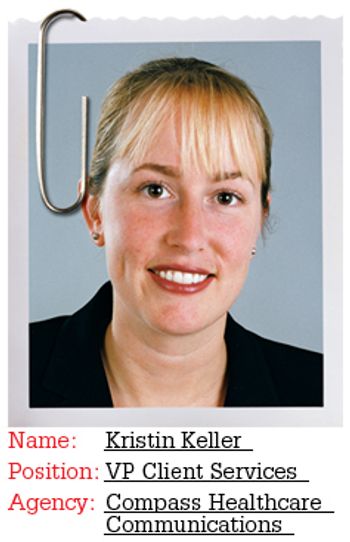
How do you convince a brand manager to try a new or unproven approach? Who will be the guinea pig and invest in Web 2.0, or any of the other programs like online sampling and virtual speaker programs? New programs may get a lot of buzz, but implementing them takes a client willing to assume some risk. When a client really needs to focus their resources, we advise them to first do what is tried and true. There is a time for innovation, but there is also a time for doing what you know works.
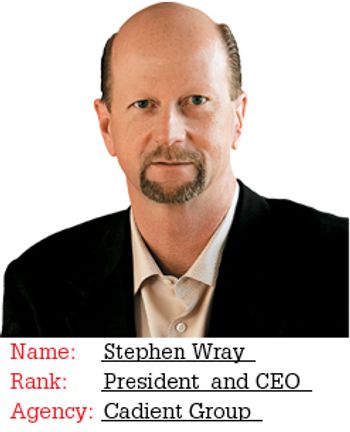
Pharmaceutical and healthcare marketers must relinquish greater control to the user; this is a seismic shift in thinking. As an industry, pharma must regain credibility by allowing users to guide their experiences with branded and unbranded content. By using digital communications as a tool to increase transparency and stimulate patient advocacy, healthcare marketers are able to be increasingly innovative in their approach to community interaction and information delivery.
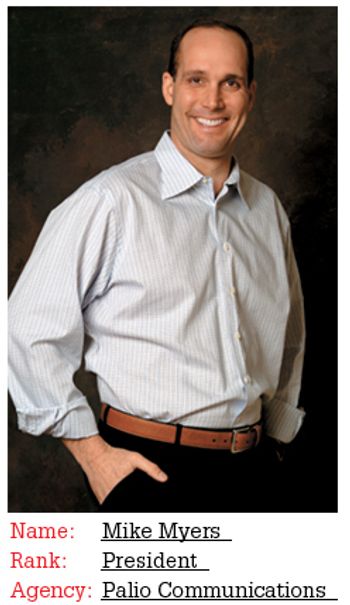
There are some pretty basic tenets for a successful agency–client relationship: Underpromise and overdeliver with your customers (physicians, managed care organizations, etc.); Take the time to do your homework before rushing to production; Don't compare your results to the most recent market-maker; Be realistic yet aggressive in your expectations for your brand.
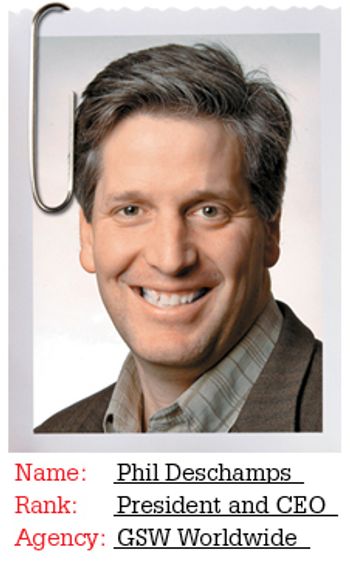
The healthcare advertising industry has been slow to respond to the evolution in the needs of pharmaceutical companies. In many ways, we still have a one-size-fits-all approach to contracting with our clients. This has made it easy for the procurement departments to standardize scopes of service, compare one company to the next, and cut off the outliers, thus resulting in lower fees.