Pharmaceutical Executive
Protecting Sensitive Information in Life Sciences Organizations: Top Three Misconceptions that Put Companies at Risk-Brainloop Whitepaper
Pharmaceutical Executive
Protecting Sensitive Information in Life Sciences Organizations: Top Three Misconceptions that Put Companies at Risk-Brainloop Whitepaper

Pharmaceutical Executive
In addition to overhauling healthcare, Congress is weighing proposals for updating FDA policies and expanding access to drugs.
Pharmaceutical Executive
Now that Vyvanse, Shire's innovative ADD drug, has been approved for adults, the company needs help to quickly roll out a complex message to neurologists. Its solution: a partnership that takes advantage of GSK's CNS muscle.
Pharmaceutical Executive
Compliance woes and stingy insurance providers are walloping the pharmaceutical industry. But now another nuisance is rearing its ugly head, as a high number of patients are ignoring their doctor's orders and dropping their prescriptions on purpose.
Reflector ponders recent events in the battle against counterfeit drugs.

Pharmaceutical Executive
After repeated requests for additional study information, the wait has paid off: Lilly was approved to sell its bipolar drug Symbyax for treatment-resistant depression.
Pharmaceutical Executive
With the economy in turmoil, pharmaceutical manufacturers are reassessing where and how they spend their advertising dollars.
Pharmaceutical Executive
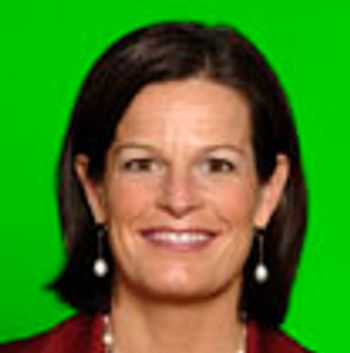
Pharm Exec sits down with Kathryn Metcalfe, Pfizer's new vice president of corporate reputation and policy communications to discuss the new position, the perception of pharma among laypeople, and what needs to be done to boost public opinion of the drug industry.
Podcast:Women of the Year-professor to president. Anhal Purohit
The morning's other big M&A news comes out of the Bay Area biotech industry, where Gilead Sciences announced that will purchase CV Therapeutics for $1.4 billion.
Lawyers from Duane Morris LLP offer their take on the Supreme Court's groundshaking preemption decision


After months and months of back and forth over the true value of Genentech, Roche finally got the good news it's been looking for: Genentech's board of directors, this morning, approved Roche's latest offer of $46.8 billion ($95 per share) to acquire all shares of the biotech giant.
WOTY-How the Award has changed the face of the industry.
Pharmaceutical Executive
The Merck acquisition of Schering-Plough may have surprised few, the approach has raised some eyebrows. Rather than buy the company outright, Merck going through a convoluted reverse merger deal to keep Schering's licensing deals secure. Was it the right move?
Pharmaceutical Executive
Manhattan Research singled out type 2 diabetes sufferers and their online search patterns; it turns out diabetes patients are less likely to confront doctors about branded drugs they?ve seen in DTC ads, yet more apt to take Lipitor.
Pharmaceutical Executive
All signs point to Genentech acquisition.
Pharmaceutical Executive
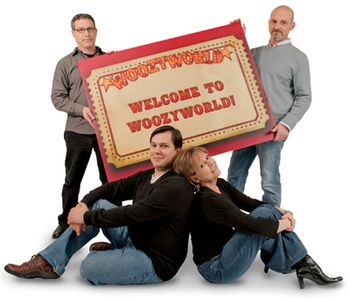
To educate anesthesiologists that post-operative nausea and vomiting (PONV) is "no fun for anyone," GSW Worldwide created WoozyWorld.com, a "non-amusement" that highlights the need for MGI Pharma's 72-hour antiemetic Aloxi.
Pharmaceutical Executive
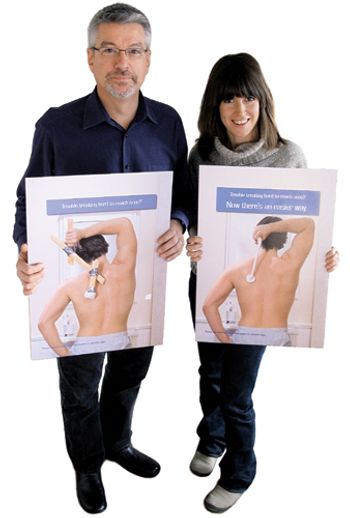
ClindaReach, from Dusa Pharmaceuticals, offers a simple and practical solution for patients with acne in hard-to-reach places: ClindaReach, an application wand.

Pharmaceutical Executive
Ambien CR, the sleep medication that "helps you fall asleep fast and stay asleep" caught the eyes (and ears!) of consumers with, well, a rooster.

Pharmaceutical Executive
It's not unusual for creative teams to ask actors to work up on-screen tears. But when you go from crying actors to crying babies, it makes all the difference.
Pharmaceutical Executive
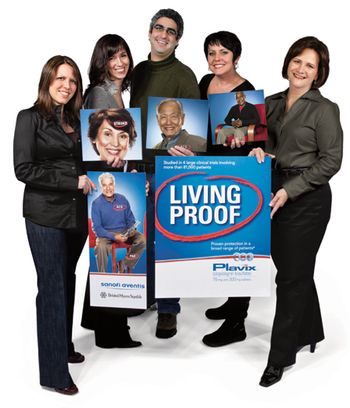
How do you generate excitement for 5,000 sales reps who promote a product in a changing marketplace? You give them VIP tickets to the Plavix Plan of Action Premiere and reenact a blockbuster Hollywood movie debut! Of course it helps to build anticipation, which is exactly what Torre Lazur McCann did with its six-week direct mail campaign to get Bristol-Myers Squibb and Sanofi-Aventis' sales reps ready for the big event.