

Eli Lilly's Retatrutide met primary endpoints in two Phase III trials, delivering up to 22.6% body weight loss in adults with severe obesity and cardiovascular disease.
Eli Lilly's Retatrutide met primary endpoints in two Phase III trials, delivering up to 22.6% body weight loss in adults with severe obesity and cardiovascular disease.
LucyRx’s chief commercial officer Susan Thomas discusses the impact that only looking at immediate cost impact has on certain indications.
Gerren McHam, vice president of Government and External Affairs, API Innovation Center,argues that closing the gap between federal reshoring policy and manufacturer investment requires more than incentives.
In today's Pharmaceutical Executive Daily, Novo Nordisk sues Eli Lilly over GLP-1 advertising it calls misleading, President Trump announces a phased tariff plan for imported generic drugs, and a new commentary argues pharma's AI investment is missing the areas of drug discovery where it matters most.

President Trump announces a zero tariff on imported generic drugs through August 2026 before a phased escalation to 200% by 2029.
Dr. Richard Graham from TruTechnologies details the likelihood that Project Trialblazer reduces trial times by 6-to-12 months.
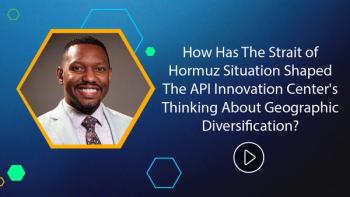
Gerren McHam, vice president of Government and External Affairs, API Innovation Center, explains how geopolitical disruptions like the Strait of Hormuz situation have accelerated the organization's push to develop a national fragility index.
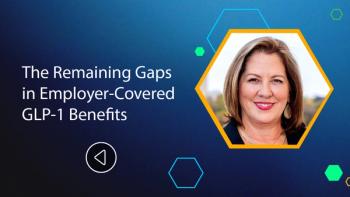
Susan Thomas, chief commercial officer at LucyRx, explains the areas where GLP-1 coverage still lacks.
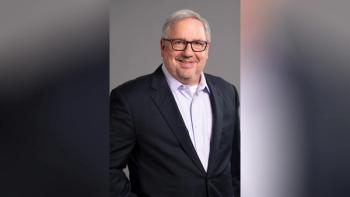
AI adoption in pharma drops sharply in the domains that matter most for discovery.
Novo's lawsuit claims that Eli Lilly's marketing campaigns for Mounjaro and Zepbound misrepresented the efficacy of Wegovy in comparison.
In today's Pharmaceutical Executive Daily, FDA grants emergency use authorization for Seegene's multiplex PCR assay, a Pfizer medical lead makes the case for continued antiviral use among Covid-19 high-risk patients, and Nuvation Bio's CEO discusses the company's oncology pipeline and philosophy of developing better drugs rather than more of them.

FDA has granted Emergency Use Authorization to Seegene USA's Allplex multiplex PCR assay, making it the first U.S.-authorized test to simultaneously detect and differentiate HSV-1, HSV-2, VZV, and monkeypox virus in a single reaction.
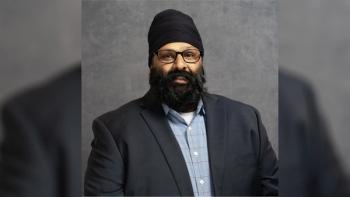
Dr. Gurinder S. Sidhu, senior medical director and U.S. Antiviral Medical Lead, Pfizer, discusses how Covid-19 remains a serious threat to the roughly 75% of American adults who qualify as high-risk, and pushes back against clinician complacency.
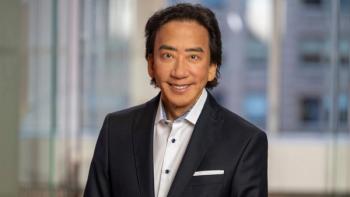
Nuvation Bio’s president, CEO, and founder discusses the company’s mission, approach to developing a global strategy, and how it manages its increasing pipeline.
The catalyst for this renewed interest is the USPTO Appeals Review Panel's Ex parte Chamberlain decision and the Federal Circuit decision on appeal.
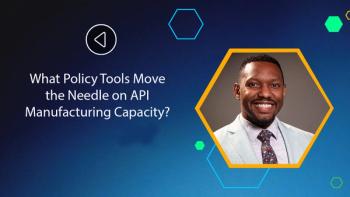
Gerren McHam, vice president of Government and External Affairs, API Innovation Center, outlines why reshoring API manufacturing requires more than investment incentives.
In today's Pharmaceutical Executive Daily, Invivyd's chief scientific officer discusses a platform designed to predict future viral variants ahead of time, Bristol Myers Squibb expands its AI compute infrastructure with Nvidia to build what it calls the most powerful AI factory in life sciences, and FDA clears Consano Bio's IND for a non-opioid biologic targeting chronic sciatica.

FDA has cleared Consano Bio's IND for C-1101, a platelet-derived biologic delivered via single epidural injection, enabling U.S. expansion of a Phase I trial targeting chronic sciatica.

Bristol Myers Squibb is deploying Nvidia's DGX SuperPOD with Vera Rubin NVL72 systems to build what it claims is the most powerful AI computing infrastructure in life sciences.

Robert Allen, Ph.D., Chief Scientific Officer, outlines how the company's Invymab platform uses viral surveillance and predictive modeling to design monoclonal antibodies against likely future variants rather than current strains.
Gerren McHam, vice president of Government and External Affairs, API Innovation Center, breaks down how China's new export control regulations expose drugmakers to operational risks that have yet to draw significant industry attention.

Nuvation CEO David Hung discusses his leadership style, success stories for building camaraderie, and his inspiration for joining the pharma and biotech industry.
In today's Pharmaceutical Executive Daily, FDA converts Fabhalta's accelerated approval to full approval for IgA nephropathy, a Pharmaceutical Executive commentary argues AI-driven patient support still can't replace human connection, and Jasper Therapeutics closes its acquisition of Kira Pharmaceuticals in a deal combining a three-asset immunology pipeline.

FDA has converted Fabhalta's accelerated approval to a traditional approval for IgA nephropathy after confirmatory Phase III data showed the oral complement inhibitor slowed annual kidney function decline.

Jasper Therapeutics has closed its all-stock acquisition of Kira Pharmaceuticals and raised $132 million in concurrent financing, combining a three-asset immunology pipeline.

AI can generate words that sound like empathy, but it cannot offer the understanding that a real person can.
David Hung, CEO of Nuvation Bio, details the company’s ongoing trials for new drugs and new indications for existing molecules.
In today's Pharmaceutical Executive Daily, FDA approves Merck's Lipfendra as the first oral PCSK9 inhibitor for high cholesterol, Eli Lilly agrees to acquire AtaiBeckley for up to $3.8 billion, and a Pharmaceutical Executive podcast explores how better questions, not just more data, define strong biopharma leadership.

FDA has approved Merck's Lipfendra as the first oral PCSK9 inhibitor, giving patients with high LDL cholesterol a once-daily pill alternative to injectable therapies.
Ken Banta and Craig Tooman on why the best leaders win by asking better questions — not just chasing more data — and what that means for drug development, funding and AI in the years ahead.