

Johnson & Johnson moves to acquire Sail Biomedicines, Processa acquires Vidya Therapeutics, and Relation partners with GSK on AI-driven target discovery collaboration.
Johnson & Johnson moves to acquire Sail Biomedicines, Processa acquires Vidya Therapeutics, and Relation partners with GSK on AI-driven target discovery collaboration.

Two-thirds of pharmaceutical product launches fail to meet first-year commercial expectations, and the gap between launch strategy and field execution is almost always why, according to this examination of how to identify, diagnose, and correct launch drift before it becomes irreversible.

Incubate’s executive director John Stanford defines the three buckets of the US-China pharma challenge: API manufacturing, clinical trial competitiveness, and the complex ethics of licensing Chinese innovation.
In today's Pharmaceutical Executive Daily, a commentary examines why fragmented software tooling causes scientific judgment to get lost across the biologics R&D pipeline, Replimune shares crash nearly 32 percent after FDA reviewers raise concerns about its melanoma therapy, and FDA approves Viatris's Gwyn Lo as a new once-weekly contraceptive patch.

An FDA advisory panel voted to recommend six of seven unapproved peptides for compounding access, raising concerns about its newly appointed members.

FDA has approved Viatris' Gwyn Lo as a once-weekly low-dose estrogen contraceptive patch, offering women with a BMI below 30 a non-invasive hormonal contraception option.

Replimune shares fell nearly 32% after FDA staff reviewers raised concerns that its lead melanoma therapy RP1 lacks clear evidence of systemic efficacy.
The shift from looking at lots of possibilities to focusing on specific ones in a drug discovery pipeline is why traditional pipelines don’t work well.

LucyRx’s chief commercial officer explains why the traditional two-bucket approach to GLP-1 coverage, which focuses on diabetes and weight loss, leaves high-risk populations without access.
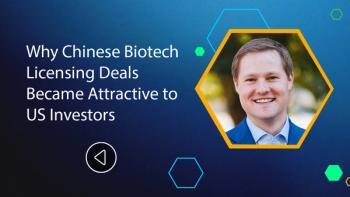
John Stanford, executive director at Incubate, discusses how China's two decades of biotech investment are paying off.
In this episode, Ron Lanton argues that healthcare's next constraint isn't capital or technology but rather people.
In today's Pharmaceutical Executive Daily, BioMarin and n-Lorem Foundation partner on the first disease-targeted therapy for the recently identified ReNU syndrome, a trio of biotech financings advance rare disease, sleep apnea, and oncology pipelines, and a Wharton professor offers career advice for MBA graduates navigating an AI-reshaped job market.

BioMarin and n-Lorem Foundation have partnered to develop the first ASO therapy targeting ReNU syndrome.

Oak Hill Bio secures $175 million through a SPAC combination with RA Capital, Apnimed set terms for a $150 million IPO, and CORE Biomedicine closes a $21 million Series A.

A career Q&A with Professor Patrick T. Harker, B.S., M.S., Ph.D., of the Wharton School of the University of Pennsylvania.

TruTechnologies chairman and co-founder argues that while Operation TrialBlazer is directionally correct in targeting regulatory friction, it misses the larger problem.
In today's Pharmaceutical Executive Daily, FDA approves Otsuka's Simtriyo as the first NDSRI treatment for ADHD, argenx agrees to acquire Forte Biosciences for approximately $2.2 billion, and an AbbVie neuroscience researcher discusses the shift from symptom management to disease modification in Parkinson's research.

FDA has approved Otsuka's Simtriyo as the first norepinephrine, dopamine, and serotonin reuptake inhibitor for ADHD.

Argenx has agreed to acquire Forte Biosciences for approximately $2.2 billion, adding a first-in-class anti-CD122 antibody with clinical proof-of-concept in vitiligo and celiac disease.
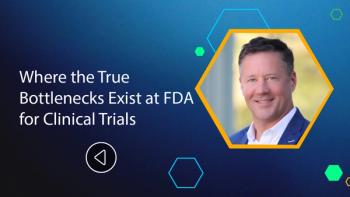
TruTechnologies’ Dr. Richard Graham explains where he sees the actual issues that need to be addressed at FDA.

Susan Thomas, chief commercial officer at LucyRx, discusses how women in a certain age range are disproportionately impacted by cardiovascular risk.

Dr. Stoehr, neuroscience researcher at AbbVie discusses how biomarkers are opening a new window into Parkinson’s disease.
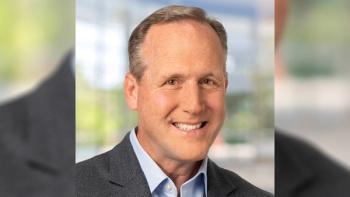
Mike Faddoul, Partner, Audit & Assurance, Crowe, makes the case that gross-to-net accounting deserves the same pre-launch rigor as commercial strategy.
In today's Pharmaceutical Executive Daily, an FDA advisory panel narrowly votes to recommend easing restrictions on four unapproved peptides, a supply chain expert discusses how China's export controls are exposing vulnerabilities in the U.S. pharmaceutical supply chain, and a pharmacy benefits executive lays out a business case for more targeted employer-based GLP-1 coverage.

An FDA advisory panel voted narrowly to recommend four unapproved peptides, BPC-157, KPV, TB-500, and MOTS-c.

Chief commercial officer Susan Thomas from LucyRx explains why coverage isn’t a one-size-fits all problem.

Gerren McHam, vice president of Government and External Affairs, API Innovation Center, discusses what is compounding U.S. pharmaceutical supply chain vulnerabilities.
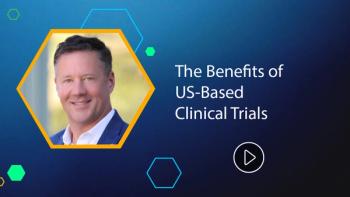
Dr. Richard Graham, chairman and co-founder of TruTechnologies, discusses the importance of global clinical trials while also being a center for these trials.
In today's Pharmaceutical Executive Daily, Eli Lilly's Retatrutide delivers up to 22.6% weight loss in two new Phase III trials, a clinical trial expert discusses why the U.S. is losing trial volume to Australia and China, and a pharmacy benefits executive weighs in on why short-term cost thinking is complicating GLP-1 coverage decisions.
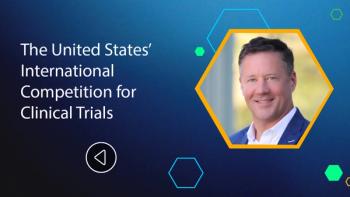
TruTechnologies’ chairman and co-founder Dr. Richard Graham explains why Australia and China are the main competitors for clinical trials.