
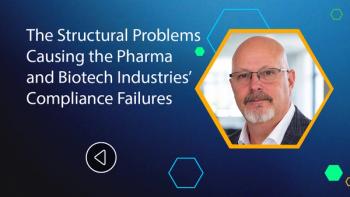
Krieger Scientific's Joseph Morwald explains how siloed departments, disconnected systems, and a lack of cross-functional accountability are creating the structural compliance gaps that FDA warning letters keep exposing.
Krieger Scientific's Joseph Morwald explains how siloed departments, disconnected systems, and a lack of cross-functional accountability are creating the structural compliance gaps that FDA warning letters keep exposing.

The AstraZeneca-BMS rumors have reframed how the industry thinks about scale, capability, and competitive advantage.
From Lilly's blockbuster earnings to a first-of-its-kind narcolepsy approval, a new mRNA flu vaccine, and a potential mega-merger that would reshape the industry — here's what you need to know.
In today's Pharmaceutical Executive Daily, an antitrust attorney weighs the legal risks of a hypothetical AstraZeneca-Bristol Myers Squibb merger, Eli Lilly beats Wall Street estimates on soaring Mounjaro and Zepbound sales and raises its full-year guidance, and the FDA approves Moderna's first mRNA-based flu vaccine for adults 50 and older.
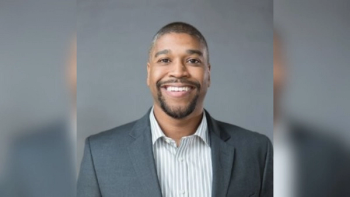
Ron Lanton, senior partner at Lanton, Lanton & Sosa Law, discusses the legal risks associated with a hypothetical AstraZeneca–Bristol Myers Squibb merger.

FDA has approved Takeda's Orzeyful as the first oral orexin receptor 2 agonist for narcolepsy type 1 in adults.
Eli Lilly posted $23 billion in second-quarter revenue driven by Mounjaro's sales surge to $9.94 billion and Zepbound's $4.93 billion.
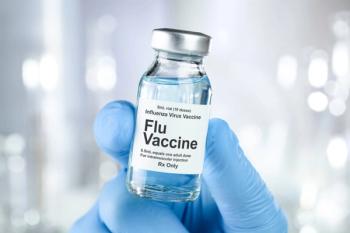
The FDA has approved mFLUSIVA (mRNA-1010), Moderna's mRNA-based influenza vaccine, for use in adults 50 and older.

Financials explain BMS' interest, but not why AstraZeneca would accept the risks and scrutiny of the rumored mega-merger discussions.
Krieger Scientific's Joseph Morwald on why over-reliance on AI and under-reliance on human expertise is driving the surge in FDA warning letters.
In today's Pharmaceutical Executive Daily, a senior source denies reports of merger talks between AstraZeneca and Bristol Myers Squibb, CSPC Pharmaceutical and AstraZeneca form a joint venture for biologics manufacturing in China, and a feature examines how U.S. Patent and Trademark Office policy changes are slowing patent challenges for generic and biosimilar drugmakers.

The rumors of reported AstraZeneca–Bristol Myers merger discussions provide an opportunity to examine how multiple emerging capabilities may reshape corporate strategy, mergers and acquisitions, and long-term competitive advantage.

A senior source claims there are no discussions underway between AstraZeneca and Bristol Myers Squibb over a potential combination.

CSPC Pharmaceutical and AstraZeneca have formed a 51:49 joint venture to build a biologics manufacturing facility in Shijiazhuang.
In today's Pharmaceutical Executive Daily, Pathos AI signs licensing deals with Alphamab Oncology and AstraZeneca while Curium agrees to acquire Lantheus for up to $8 billion, Sandoz agrees to a $450 million settlement with 43 U.S. states over generic drug antitrust claims, and a new analysis argues real-time data analytics are essential to managing the growing data burden in clinical trials.

Recent changes at the U.S. Patent and Trademark Office are making it harder to challenge pharmaceutical patents, raising concerns that slower generic and biosimilar competition could undermine efforts to lower drug costs while strengthening protections for brand-name innovators.

Pathos AI secured a $125 million upfront license to Alphamab's JSKN016 and a co-exclusive agreement with AstraZeneca to advance AZD4241, while Curium announced a deal to acquire Lantheus for up to $8 billion.
Incubate’s executive director discusses China’s rise in biotech and why the US’ best response may be to focus on its own issues.
AstraZeneca and BMS held merger talks, Incubate's John Stanford on fixing the US pharma ecosystem, and why real-time clinical trial data matters.

As multispecific antibodies and antibody drug conjugates outgrow legacy LIMS and ELN platforms, drug developers face a problem more costly than fragmented workflows: scientific reasoning evaporates at every handoff, forcing the next team to start from scratch.

The Swiss generic drugmaker says the agreement carries no admission of wrongdoing and will not affect its 2026 guidance or mid-term outlook.
A potential combination would create the world's largest pharmaceutical company by revenue.
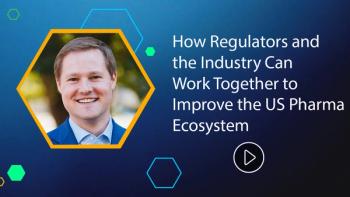
Incubate’s executive director discusses China’s rise in biotech and why the US’ best response may be to focus on its own issues.

Clinical trials now generate 5.9 million datapoints per Phase III protocol — and most sponsors are still managing them manually.
In today's Pharmaceutical Executive Daily, FDA's advisory committee votes in favor of Replimune's RP1 efficacy data in advanced melanoma, three clinical-stage biopharmaceutical companies file for IPOs spanning cardiovascular, immune, and metabolic disease, and a new analysis examines why two-thirds of pharmaceutical product launches fail to meet expectations.
FDA's advisory committee voted 10 to 3 that efficacy data from the Ignyte study is evaluable and clinically meaningful.

Braveheart Bio, Attovia, and Vogenx have all announced Initial public offerings, focusing on a cardiovascular drug, an immune-disease biologics platform, and a metabolic disease program.
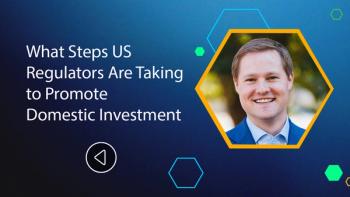
John Stanford, executive director at Incubate, explains the COINS Act debate: should Treasury restrict US biotech investment in China, and what happens to American leadership if it does.
In today's Pharmaceutical Executive Daily, Johnson & Johnson, Processa Pharmaceuticals, and Relation strike new deals spanning cell therapy, BTK inhibition, and AI-driven target discovery, Inizio Engage launches Connected Insights to turn medical information interactions into strategic intelligence, and a commentary argues pharma companies need to manage direct-to-patient sales as a core commercial channel rather than a side program.

Inizio Engage is expanding its Global Medical Information platform with Connected Insights to convert the more than one million scientific interactions its teams handle annually into actionable intelligence.