

What North American and APAC sponsors need to know about EU Joint Clinical Assessment — and why EMA approval doesn't guarantee reimbursement.
What North American and APAC sponsors need to know about EU Joint Clinical Assessment — and why EMA approval doesn't guarantee reimbursement.

CORXEL’s chief medical value discusses how GLP-1s are becoming a chronic disease platform.
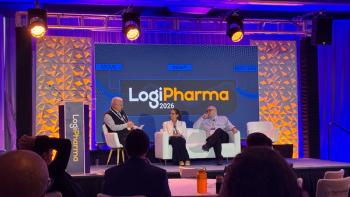
Pfizer and J&J supply chain experts on why health authorities now ask not just whether your quality systems work — but how fast you can adapt.

As Japan prices take on greater global significance, disciplined launch strategy can help pharma companies capture the full value of innovation.

Shionogi, Gate Bioscience, and Alector post a trio of new deals, Rajul Jain makes the case for social listening as a medical affairs strategic tool, and Doceree's Vijay Adapala argues that HCP engagement is a systems-design problem, not a communications one.

Social listening can help medical affairs and medical information teams identify knowledge gaps, strengthen scientific exchange and respond to changing stakeholder needs faster and at greater scale.

Trialbee CEO Matt Walz explores the current impact of AI in delivering practical gains in clinical development and reflects on its future potential, where enrollment predictability may be the biggest prize of all.

Shionogi is acquiring IntraBio for $2 billion, Gate Bioscience expands its collaboration with Eli Lilly, and Alector licenses Al050 to Genentech.

The future of engagement won’t be defined by how much information reaches health care professionals, but by how precisely it supports the decision at hand.

Why effective RWD linkage starts with a specific research objective — and how tokenization, clean rooms, and AI make it possible.
CORXEL’s Dr. Bo Liang on why GLP-1 therapies are a broader chronic disease platform — not just obesity drugs — with benefits across cardiovascular, renal, and metabolic disease.
Jewel Jones warns that pharma catches patient disengagement too late, CSL and Alentis Therapeutics join Jiangsu Nhwa and Somnivera in a day of new licensing deals, and Corxel's Bo Liang calls GLP-1's leap to bariatric-surgery-level efficacy the biggest surprise in obesity medicine.

CSL partners with Alentis Therapeutics to co-develop lixudebart, while Jiangsu Nhwa licenses a clinical-stage sleep disorder candidate to Somnivera.
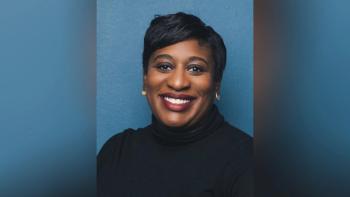
How earlier signals of misconnection may help pharma identify trust breakdowns before they show up as lagging measures in adherence, initiation, engagement, and outcomes.
Why GLP-1s achieving bariatric surgery-level efficacy is the field's most surprising advancement of the past decade.
Foghorn Therapeutics and Eli Lilly discontinue their SMARCA2 degrader program, Novartis licenses Abogen's autoimmune mRNA therapy while AstraZeneca, Daiichi Sankyo, and Summit Therapeutics team up on a breast cancer combination trial, and Corxel's Bo Liang makes the case for oral GLP-1 therapies.

Foghorn Therapeutics and Eli Lilly are discontinuing their SMARCA2 degrader Fhd-909 after Phase I data fell short on efficacy.

Novartis licenses Abogen's mRNA-encoded CD19xCD3 T-cell engager, while AstraZeneca and Daiichi Sankyo partner with Summit Therapeutics.
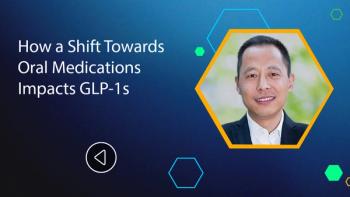
CORXEL’s Dr. Bo Liang on why small molecule oral therapies will be the long-term winners in a GLP-1 market driven by consumer preference.
Regeneron and Sanofi expand their antibody alliance with four new drug candidates, FDA approves Camzyos for adolescents with obstructive hypertrophic cardiomyopathy, and Michael Abrams questions digital health's savings claims to employers.

FDA has expanded Camzyos's approval to treat symptomatic obstructive hypertrophic cardiomyopathy in pediatric patients as young as 12.

Regeneron and Sanofi are expanding their two-decade antibody alliance to co-develop four new long-acting immunology antibodies in a deal worth up to $8 billion.

Digital health's point-solution era is giving way to broader platforms, and the cost-savings claims those platforms make to employers often don't hold up to methodological scrutiny.
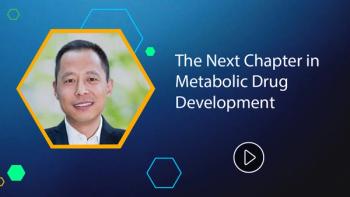
CORXEL’s Dr. Bo Liang on why efficacy is no longer obesity medicine's biggest gap — and the four unmet needs that define what comes next.

MRD testing is transforming oncology trials — compressing timelines, enriching populations, and generating earlier answers.
Novo Nordisk data show real-world weight loss after switching to its oral semaglutide pill, FDA's peptide rulemaking stalls while its enforcement arm targets compounded peptide sellers, and Avi Pardo flags a compliance blind spot in field teams' text messages with doctors.
Dr. Jeremy Levin joins Ken Banta to share why he believes biotech's future demands a new level of leadership and stakeholder education — and why "mission without method" is a wasted effort.

Real-world data from Novo's Octane study show patients who switched from injectable GLP-1 therapy to oral semaglutide lost an average of 4.1% of their body weight within three months.
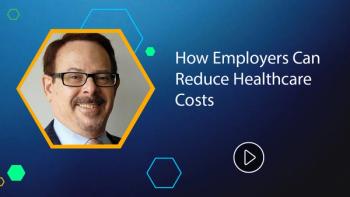
Numerof's Michael Abrams on why directing employees to the most effective, economical clinicians is digital health's most valuable offering.
Life sciences spends billions on compliance — but WhatsApp, iMessage, and SMS conversations between field teams and HCPs remain invisible to oversight.