

Medicines considered critically important for patients to remain available.
Medicines considered critically important for patients to remain available.
The House Energy and Commerce Committee gave unanimous approval to the landmark 21st Century Cures Act reform bill on May 21, 2015.
May 20, 2015.
Pharm Exec talks to Matt Wallach, President of Veeva Systems, an upstart start-up whose mix of cutting-edge technology and strong customer orientation has brought it to the top rank in providing cloud-based data management services to the industry.
The company picked up the Pharm Exec Brand of the Year award last week at the iPharma event in New York.
Raplixa fibrin sealant, the first approved spray-dried biologic, is a hemostatic agent that helps control bleeding from small blood vessels during surgery.
AstraZeneca announces that it will invest $285 million in a new manufacturing facility in Sweden.
Juno Therapeutics announces that it will expand its cellular therapies pipeline with the acquisition of Stage Cell Therapeutics for €52.5 million.
Eli Lilly announces that it will establish a drug delivery and device center in Cambridge, Massachusetts.
Loreen M. Brown discusses how technology has influenced how healthcare teams function, from leveraging and delivering care to interacting with patients throughout the patient journey.
The agency publishes draft guidance answering industry questions about the Biologics Price Competition and Innovation Act.
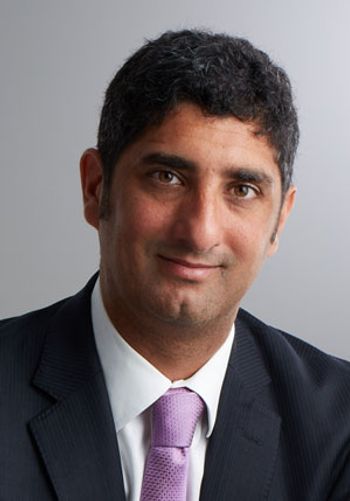
A range of packages is available for industry partners to implement charity giving.
Novartis announces that its lung cancer drug, Zykadia, gained European Union approval.
Research from MediciGlobal shows that patients who actively sought clinical trial involvement through its online recruitment model had a 38% lower relative risk of drop out across four studies compared to those who were recruited by sites, with divergence across visits.
May 7, 2015.
May 5, 2015.
Dave Campbell offers some tactics that pharma leaders can implement to stem the continued global threat of counterfeit drugs.
Perrigo rejected Mylan’s second proposal for an acquisition valued at more than $34 billion, saying that the offer was too low to consider.