

FDA has approved Ionis Pharmaceuticals' Zanvastro (zilganersen) as the first disease-modifying treatment for Alexander disease.
FDA has approved Ionis Pharmaceuticals' Zanvastro (zilganersen) as the first disease-modifying treatment for Alexander disease.

CAR-T safety halts, a rare disease trial failure, a China licensing deal, an mRNA flu vaccine advance, and nine new MFN agreements.
Christian Tinel on why Rinvoq succeeds in IBD despite safety concerns — and what a cleaner oral alternative would mean for the market.

Nate Hill, co-founder & CEO, Strive Pharmacy, breaks down looming questions around the completed FDA PCAC hearing on peptides.

Ultragenyx shares plunge after apazunersen fails its Phase III trial in Angelman syndrome, Mark Cziraky of Carelon Research talks through the mechanics of analyzing linked real-world data sets, and Melanie Whittington joins The Ron Lanton Report to argue biopharma policy needs to stay tethered to patients, not abstractions.

Ultragenyx shares plunge more than 40% after apazunersen fails to meet both endpoints in a Phase III trial for Angelman syndrome.
Melanie Whittington, managing director and head of the Leerink Center for Pharmacoeconomics, joins Ron Lanton to argue that biopharmaceutical policy only makes sense when traced back to its purpose.
Carelon Research's Mark Cziraky on why trusted research environments don't change how analysis is done — just how fast and richly it can begin.
Christian Thienel on why IBD's unmet need comes down to one thing: an oral therapy with biologic-like efficacy and better safety.
Nate Hill, co-founder & CEO, Strive, notes the key milestone to watch for during the remaining step in FDA's formal Category one announcement for peptides.
Novartis and Bristol Myers Squibb pause autoimmune CAR-T trials over safety concerns, a dealmaking roundup covers Alteogen's licensing deal with Novartis, NewBiologix's gene therapy partnership with Synastra, and RedHill's acquisition of Rebyota and Clenpiq from Ferring, and Lexi Cogswell and Tom Rotolo make the case for real-world insights in obesity medical strategy.

Novartis suspends eight autoimmune trials of its CAR-T therapy Rap-cel after three cases of fatal outcomes, while Bristol Myers Squibb voluntarily pauses enrollment in its Zola-cel autoimmune studies over transient inflammatory events.

Alteogen grants Novartis options to develop subcutaneous formulations using its ALT-B4 hyaluronidase platform, NewBiologix and Synastra partner to develop a stable producer cell line, and RedHill acquires global commercialization rights to Ferring's Rebyota and Clenpiq.

Real-world evidence tells you what happened. Real-World iNSIGHTS tell you why — and what to do next. A new framework for medical affairs.
Nate Hill, co-founder & CEO, Strive, explains how Strive is managing peptide uncertainty by pre-sourcing API, running stability and testing, and working with legal counsel to calibrate risk.
Carelon Research's Mark Cziraky on why bringing compute to data — not moving data — reduces risk and accelerates real-world evidence generation.
The Trump administration adds nine drugmakers to its Most Favored Nation pricing program, GSK advances its dual-antigen mRNA flu vaccine into Phase III, and Simcere Zaiming licenses its tri-specific antibody Sim0660 to Roche for up to $1.53 billion.
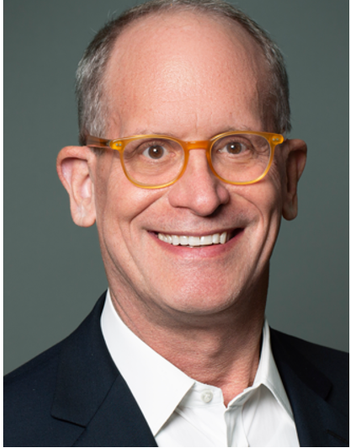
A Harvard Business School Healthcare Alumni Association Q&A with Stuart B. Gleichenhaus, senior managing director at FTI Consulting, who has also served as an interim CEO/CFO of five healthcare companies.

Simcere Zaiming has licensed its first-in-class tri-specific CD79a/CD19/CD3 T-cell engager Sim0660 to Roche for up to $1.53 billion, including a $75 million upfront payment.

GSK is advancing its mRNA seasonal influenza vaccine candidate FLUm3HA.b-3NA into a Phase III efficacy trial starting in September.

RBQM implementations fail not because the software is wrong — but because the human environment surrounding it was never engineered.
Nate Hill, co-founder & CEO of Strive Pharmacy, argues that a Category one designation for peptides would give physicians a trusted, regulated channel they currently lack.

ACTO’s CEO on AI trust, the future of the sales rep, and why human intelligence plus empathetic agents is the winning formula.

Carelon Research's Mark Cziraky on why the industry's need for deeper, linked data is driving a shift toward trusted research environments.

The Trump administration adds nine midsize pharmaceutical companies, including Teva, UCB, Astellas, and BeOne Medicines to its Most-Favored-Nation drug pricing program.
Eli Lilly agrees to acquire Merida Biosciences for up to $2.875 billion, BioNTech halts a Phase II trial of its cancer immunotherapy Cevumeran, and Parth Khanna argues that more competitive data doesn't mean better intelligence in pharma.

Eli Lilly has agreed to acquire Merida Biosciences for up to $2.875 billion to gain a precision autoantibody degradation platform led by MER511.

BioNTech and Genentech elect to end their Phase II trial of autogene Cevumeran after DSMB identified a numerical overall survival imbalance and recommended to terminate.

ACTO's Parth Khanna on how AI agents will evolve the sales rep role — freeing reps to go deeper with physicians and do more.

Pharma has more competitive data than ever — and is still getting surprised. Lifescience Dynamics on why intelligence requires human judgment.