




Operations
Latest News
Advertisement
Latest Videos

Advertisement
More News
Silence Therapeutics and AbCellera launched respective common share public offerings, and Beyang Therapeutics and Remepy closed $30+ million oversubscribed Series A rounds.

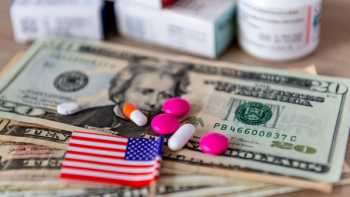
Why pricing pressure, policy volatility and supply-chain risk are pushing drugmakers toward greater cost and portfolio discipline, without losing sight of investment in innovation.

Mereo BioPharma has granted Sentynl Therapeutics an exclusive option to commercialize alvelestat in the U.S. for Alpha-1 Antitrypsin Deficiency-Associated Lung Disease.
Renewal of FDA's Priority Review Voucher program is driving a rebound in U.S. rare disease biotech investment, while the UK continues to lag.

Why the industry must abandon its traditional top-down communications model and instead build trust through credible individuals, audience information habits and faster engagement in the peer-driven networks where health conversations now unfold.

BeOne Medicines and Revolution Medicines enter a two-part deal pairing BeOne's PRMT5 inhibitor and EGFR×MET trispecific antibody with Revolution's four clinical RAS(ON) inhibitors.

Such enterprises will be defined not only by breakthrough therapies but also by agile leadership, AI-enabled transformation and patient-centered operating models that accelerate innovation into real-world impact.

Jazz Pharmaceuticals agrees to acquire Actio Biosciences for $820 million upfront plus up to $500 million in milestones for ABS-1230.

Novo Nordisk selects AWS as its preferred AI partner for drug discovery, Innate Pharma partners with Sobi, and Innovent Biologics secures exclusive commercialization rights for Vanflyta in China.
Amazon Pharmacy is now delivering GLP-1 weight management medications to eligible Medicare patients.

Tarsus Pharmaceuticals has agreed to acquire Alkeus Pharmaceuticals for $450 million, centering the deal on gildeuretinol.
Eli Lilly posted $23 billion in second-quarter revenue driven by Mounjaro's sales surge to $9.94 billion and Zepbound's $4.93 billion.

A senior source claims there are no discussions underway between AstraZeneca and Bristol Myers Squibb over a potential combination.

CSPC Pharmaceutical and AstraZeneca have formed a 51:49 joint venture to build a biologics manufacturing facility in Shijiazhuang.
Pathos AI secured a $125 million upfront license to Alphamab's JSKN016 and a co-exclusive agreement with AstraZeneca to advance AZD4241, while Curium announced a deal to acquire Lantheus for up to $8 billion.

Braveheart Bio, Attovia, and Vogenx have all announced Initial public offerings, focusing on a cardiovascular drug, an immune-disease biologics platform, and a metabolic disease program.
Johnson & Johnson moves to acquire Sail Biomedicines, Processa acquires Vidya Therapeutics, and Relation partners with GSK on AI-driven target discovery collaboration.
In this episode, Ron Lanton argues that healthcare's next constraint isn't capital or technology but rather people.
BioMarin and n-Lorem Foundation have partnered to develop the first ASO therapy targeting ReNU syndrome.
Argenx has agreed to acquire Forte Biosciences for approximately $2.2 billion, adding a first-in-class anti-CD122 antibody with clinical proof-of-concept in vitiligo and celiac disease.
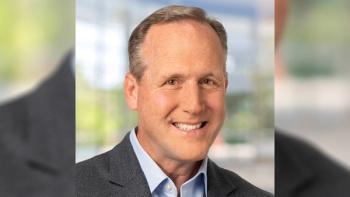
Mike Faddoul, Partner, Audit & Assurance, Crowe, makes the case that gross-to-net accounting deserves the same pre-launch rigor as commercial strategy.

An FDA advisory panel voted narrowly to recommend four unapproved peptides, BPC-157, KPV, TB-500, and MOTS-c.

Gerren McHam, vice president of Government and External Affairs, API Innovation Center, discusses what is compounding U.S. pharmaceutical supply chain vulnerabilities.

Dr. Gurinder S. Sidhu, senior medical director and U.S. Antiviral Medical Lead, Pfizer, discusses how Covid-19 remains a serious threat to the roughly 75% of American adults who qualify as high-risk, and pushes back against clinician complacency.
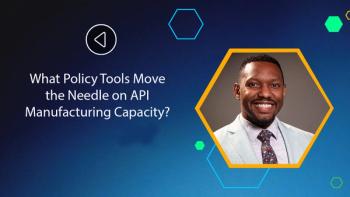
Gerren McHam, vice president of Government and External Affairs, API Innovation Center, outlines why reshoring API manufacturing requires more than investment incentives.
Advertisement
Advertisement
Trending on PharmExec
1
FDA Grants Ultomiris Accelerated Approval in the U.S. for Adults with Primary Immunoglobulin A Nephropathy
2
FDA Approves Hibsago (Bepirovirsen) for Chronic Hepatitis B
3
Roundup: Alcon Acquires Neurotech and Encelto, Ai Proteins Enters Research Collaboration and License Agreement with Astellas Pharma
4
Pharmaceutical Executive Daily: FDA Grants Ultomiris Accelerated Approval in the U.S.
5